
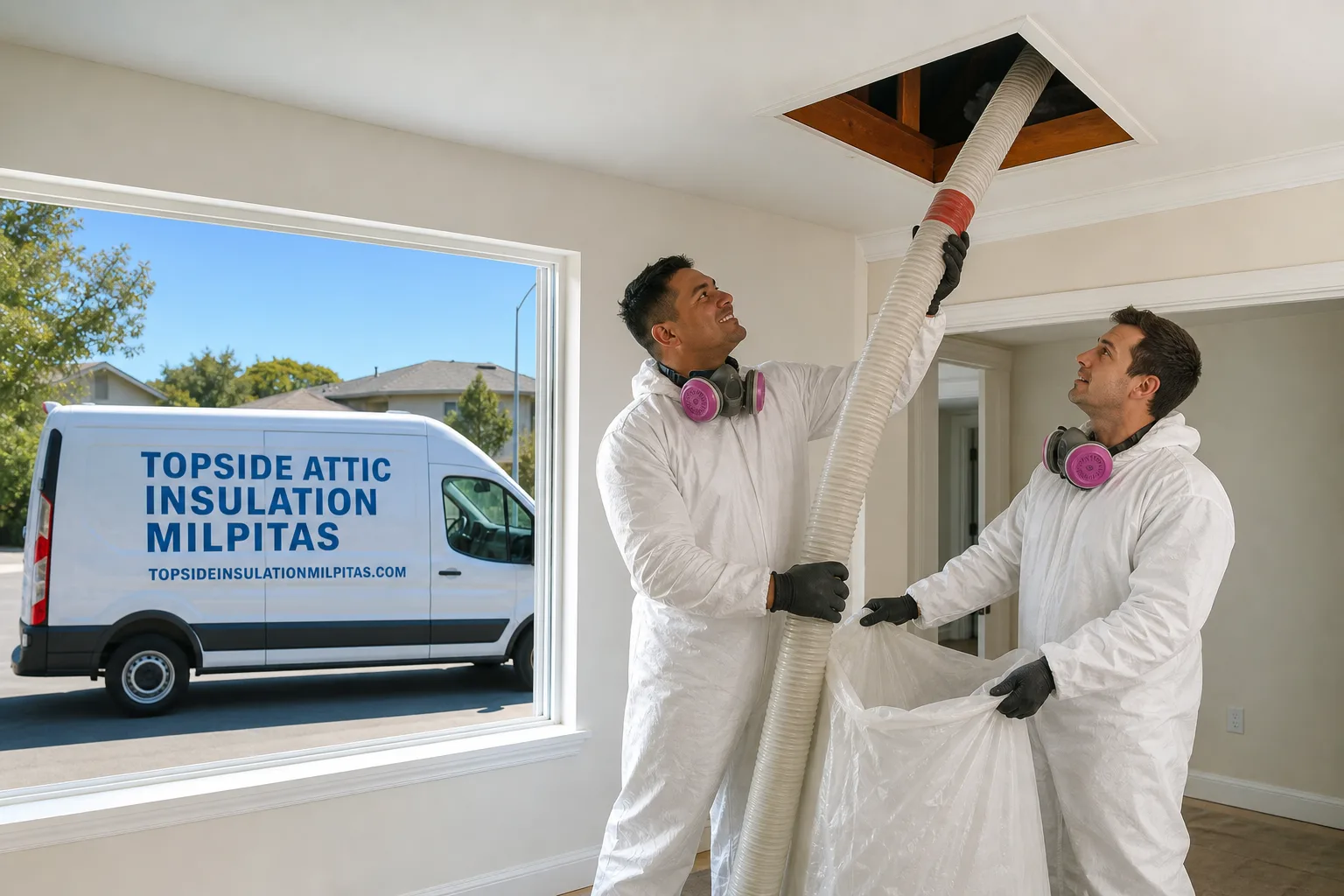
How Much Does Attic Air Sealing Cost in Milpitas?
Attic Air Sealing services in Milpitas, CA typically run between $950 and $2,800 for a single-family home, with most jobs landing around $1,400 to $1,900 once a blower-door test and all accessible penetrations are addressed. The range is wide because a 1,200-square-foot ranch off Calaveras Boulevard has a very different attic floor than a two-story newer build in The Villages or an older split-level near Milpitas High - square footage, access, and the number of can lights all push the number in different directions. Jobs that bundle air sealing with attic insulation removal and replacement tend to cost less per line item than air sealing scheduled as a standalone visit.
Attic Air Sealing Cost Breakdown (2026)
The table below reflects what Envelope Insulation Co. - operating as home base for Topside Attic Insulation Milpitas - sees across actual jobs in the Milpitas market. These are flat-price ranges, not time-and-materials estimates. Under Haven Standard Clause 1, you get a written price before anyone touches the attic.
| Line Item | Typical Range (Milpitas Market, 2026) | Notes |
|---|---|---|
| Blower-door test (pre-work) | $250 - $450 | Pressurization reading that shows, in one number, how much conditioned air the building envelope is losing. Required before sealing work begins. |
| Top-plate sealing (whole attic floor) | $400 - $900 | Sealing the gaps where interior wall framing meets the attic floor. A single top-plate gap the width of a pencil can lose as much air as a small open window. |
| Can-light sealing (per fixture) | $15 - $35 per fixture | Recessed lights are among the highest-volume leak points in Milpitas homes built between 1985 and 2005. A 2,000 sq ft home may have 20-40 fixtures. |
| Plumbing and electrical penetration sealing | $150 - $400 | Pipe chases, wiring runs, and HVAC boots that punch through the attic floor. Common in Milpitas tract homes where plumbing stacks were run through interior walls. |
| Attic hatch / pull-down stair sealing | $120 - $300 | Often overlooked. An unsealed pull-down stair is roughly equivalent to a 1-square-foot hole in your ceiling. |
| Blower-door test (post-work verification) | Included or $150 - $300 standalone | We publish before-and-after blower-door numbers on every applicable job. This is the documented evidence that the work changed something. |
| Full attic air sealing (bundled, 1,500-2,200 sq ft home) | $950 - $1,900 | Most common range for single-family homes in Milpitas neighborhoods like Sinnott, Curtner, and the Great Mall area. |
| Full attic air sealing (bundled, 2,200-3,500 sq ft home) | $1,700 - $2,800 | Larger footprints, multiple HVAC zones, higher can-light counts. Common in newer builds near Ed Levin County Park and along Jacklin Road. |
| Add-on when bundled with insulation removal/replacement | $600 - $1,200 (air sealing portion only) | Bundling almost always saves money. Insulation has to come out anyway; doing sealing at the same time eliminates a mobilization cost. |
What Drives the Price Up or Down
The single biggest variable is access. Milpitas homes built before 1990 – particularly the tracts off South Milpitas Boulevard and around Alviso Adobe Community Park – often have attics with limited headroom and crossing HVAC ductwork that slows down every penetration a technician has to reach. That adds labor time, which adds cost.
Can-light count is the second major factor. Homes built between 1985 and 2005 in Santa Clara County routinely have 24 to 48 recessed fixtures. At $15-$35 each to seal properly, that alone can add $360 to $1,680 to a job. Homes in the newer developments near Montague Expressway tend to have LED-integrated fixtures that are easier to address, which helps keep the number down.
Spray foam type also matters. Two-component spray foam (the professional-grade product used on top plates and large gaps) costs more per board-foot than caulk or mastic but is the correct material for irregular gaps and wide-open top plates. Jobs that rely entirely on caulk are often cheaper on the invoice and worse in the blower-door results. We use materials sourced from Icynene and Demilec for spray applications and document which product was used in the job record.
What Affects Attic Air Sealing Pricing in Milpitas
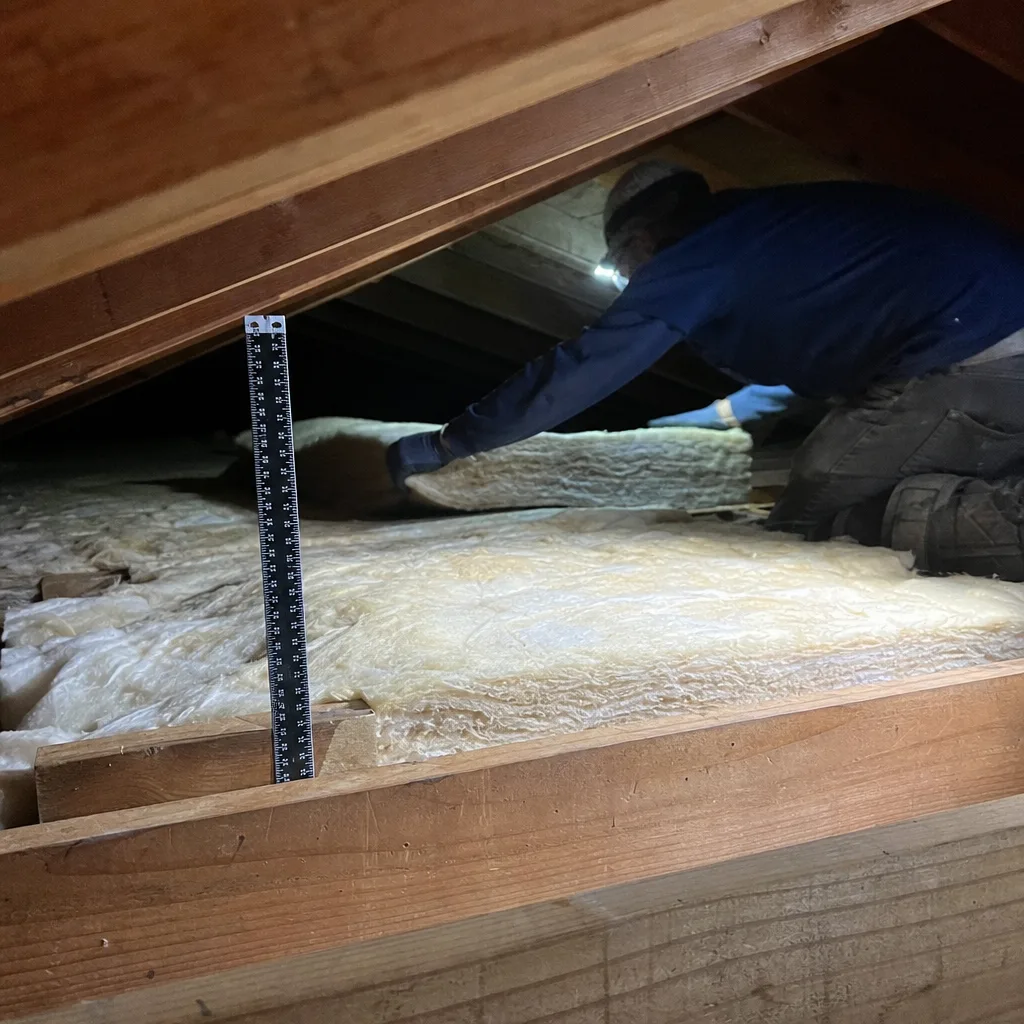
- Home size and attic footprint: Larger attic floors mean more linear feet of top plate to seal and more penetrations to find. A 2,800-square-foot home near Calaveras Hills will have roughly twice the top-plate perimeter of a 1,400-square-foot home in Sinnott, and the price scales accordingly.
- Attic accessibility and clearance: Low-pitch rooflines and HVAC equipment sitting on the attic floor both restrict movement. Some areas of a Milpitas attic may require a technician to crawl flat for 15-20 feet to reach a penetration – that time shows up in the labor column. We document inaccessible areas in the photo record rather than pretending they don’t exist.
- Existing insulation depth: If the attic floor has 10-14 inches of blown-in fiberglass already in place, some penetrations are buried and require pulling insulation back before sealing, then replacing it. This adds time and, in some cases, material cost for the insulation that gets disturbed.
- Number of recessed light fixtures: This is the variable most homeowners don’t anticipate. Milpitas tract homes from the 1990s – particularly around the Dixon Landing Road corridor – were built with large quantities of recessed cans as a standard feature. Each one is a direct hole in the thermal and air boundary of the home.
- Bundling with other envelope work: Attic Air Sealing in Milpitas costs less per line item when it’s done during the same mobilization as insulation removal, blown-in insulation, or radiant barrier installation. A standalone air-sealing visit carries a full mobilization cost; a bundled visit spreads that across multiple scopes of work.
- Local climate factors: Milpitas sits in a microclimate that produces genuine temperature swings – summer afternoons near the hills can hit 95-100°F while the bay side stays 15 degrees cooler. That diurnal swing causes building materials to expand and contract, which widens gaps around top plates over time. Homes that are 20 or more years old in Milpitas tend to have more aggregate leakage than comparable homes in more temperate coastal cities, which increases the scope of work needed to hit meaningful blower-door reductions.
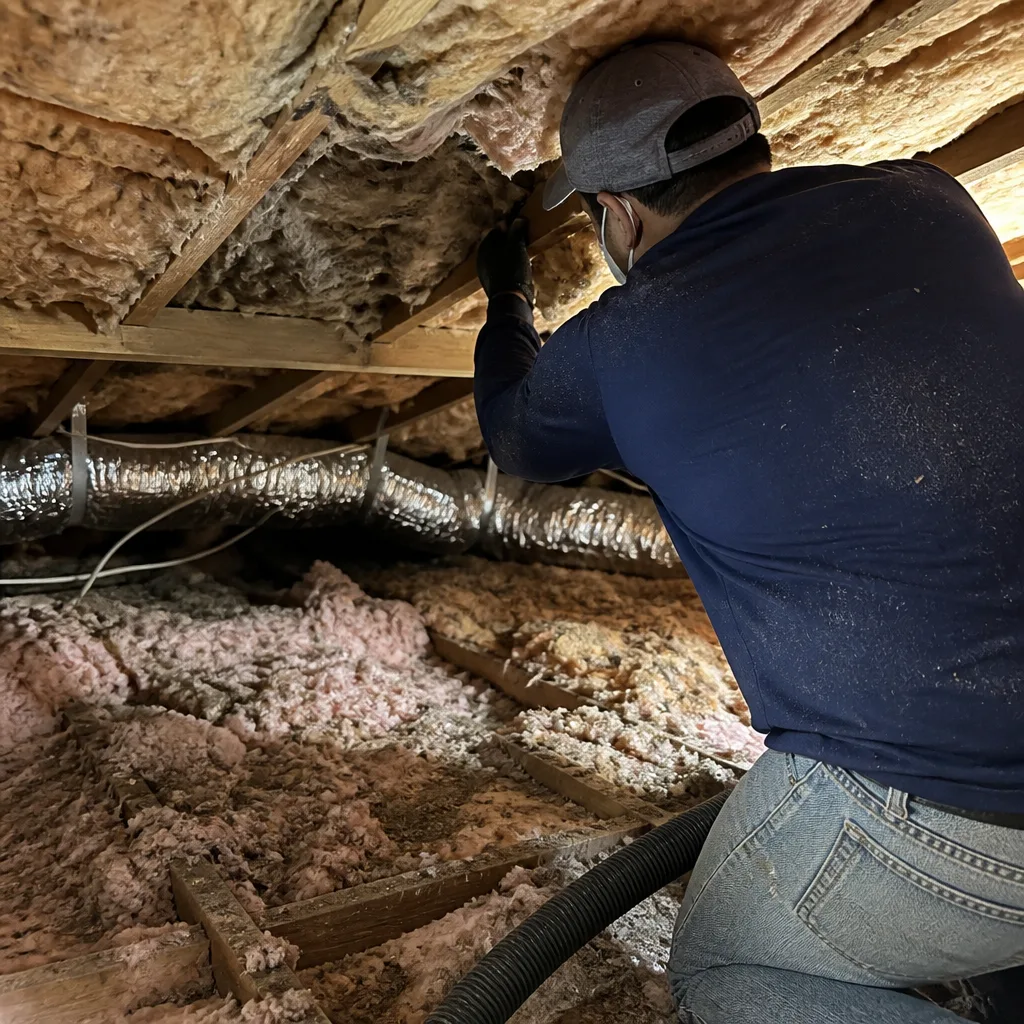 Before
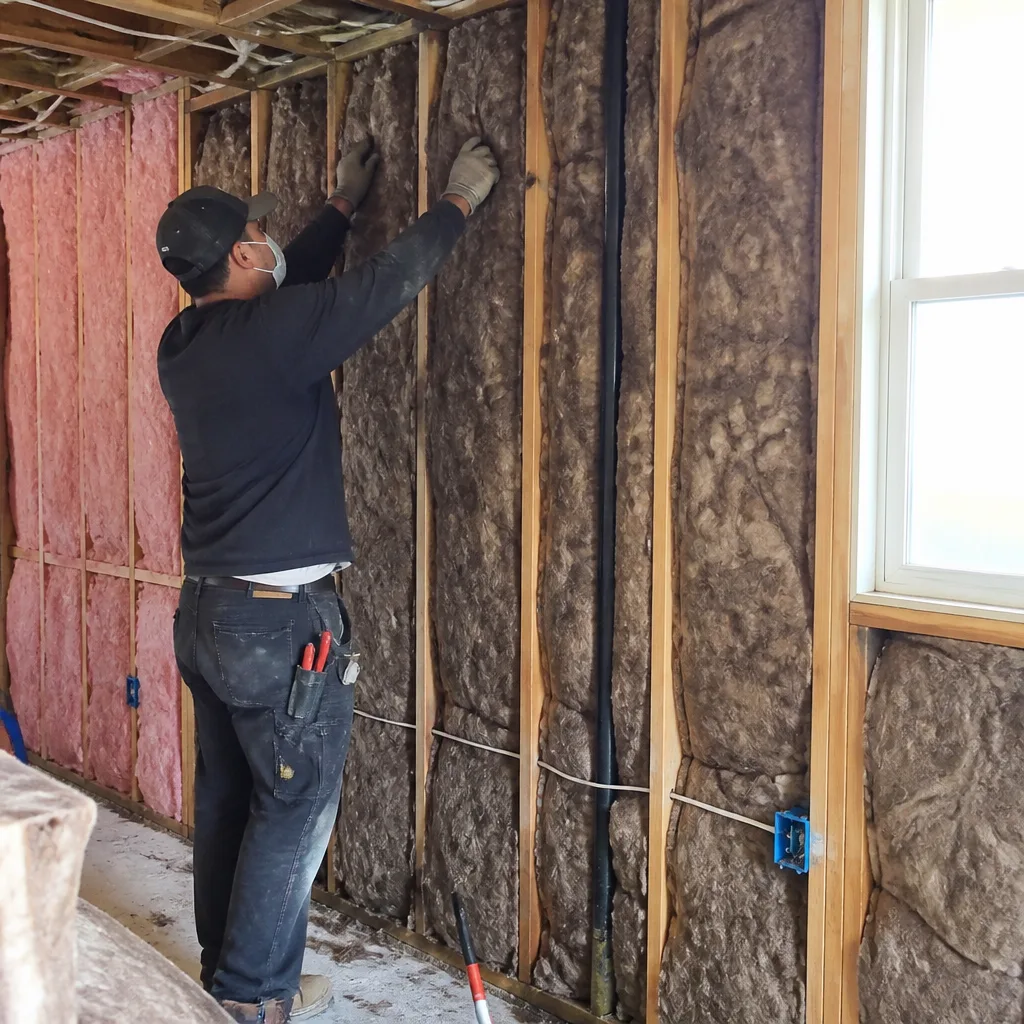 After
AfterWhat You Actually Get After the Work Is Done
This section is worth reading carefully, because the gap between what different contractors deliver at the end of a job is significant.
When we finish an attic air-sealing job in Milpitas, you get four things in writing before we leave: the pre-work blower-door reading, the post-work blower-door reading, a Documented Photo Record of the work performed, and a written scope confirming what was sealed and what materials were used. The 365-Day Done Right Promise covers everything in that scope – if it’s not done right, we make it right, full stop.
The blower-door numbers are the part most contractors skip, because they make the result verifiable. A typical Milpitas home we service reads between 3,800 and 5,200 CFM50 (cubic feet per minute at 50 pascals of pressure – the standard measurement of how much air a building is leaking) before sealing. After a thorough top-plate, can-light, and penetration seal, we routinely see that number drop to 2,100-2,900 CFM50. That’s not a marketing claim; it’s a number the homeowner can take to an independent auditor and verify.
If you have a competing estimate in hand and want a second read on it, bring it to us. We offer a Free Second Opinion on any written estimate – we’ll go through it line by line with you. That offer exists because we believe a homeowner who understands the scope they’re buying makes better decisions, not because we’re certain a competitor is wrong.
Is Attic Air Sealing Worth It in Milpitas?
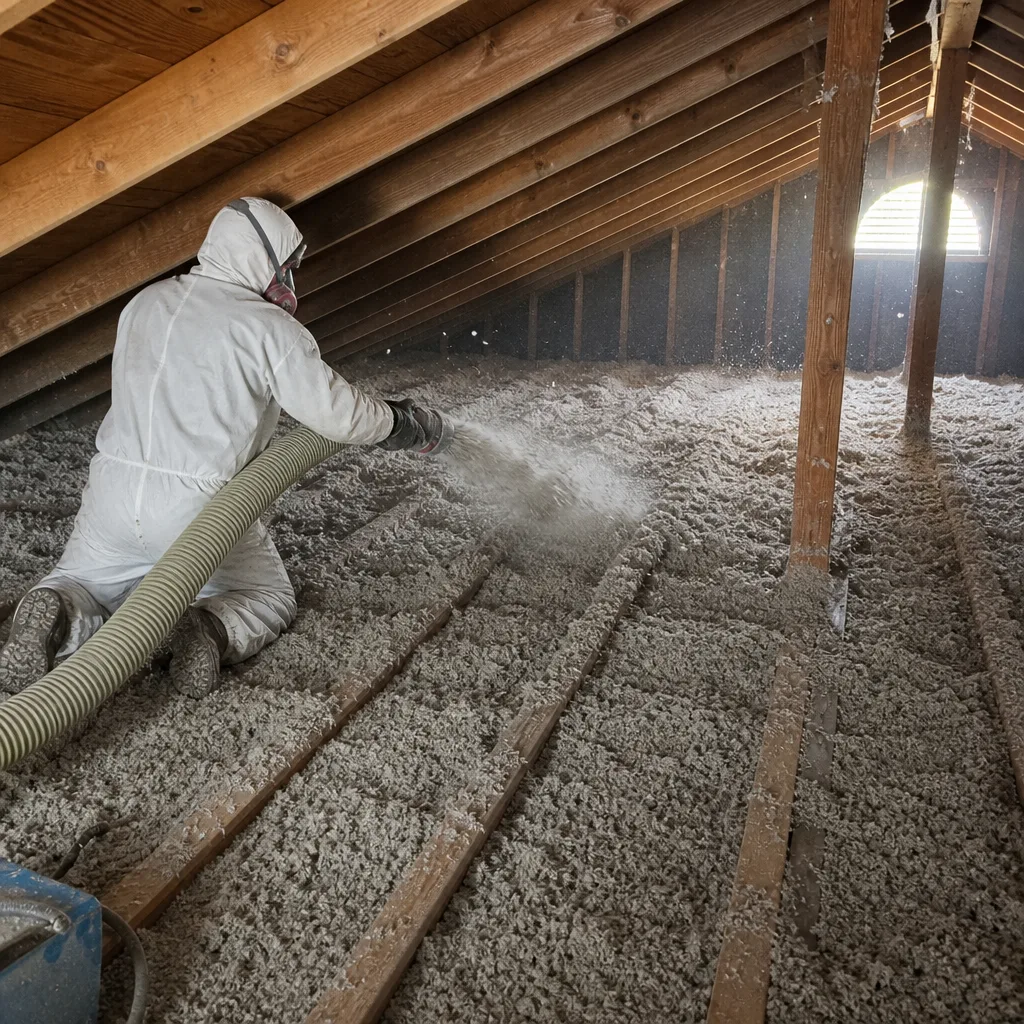
The short answer is: it depends on your current leakage rate. The honest longer answer is that most homes we test in Milpitas are leaking more than their owners expect, and air sealing is almost always the highest-return first step before adding insulation.
Here’s the core issue. Insulation slows conductive heat transfer – the movement of heat through solid materials. It does almost nothing to stop convective heat transfer, which is conditioned air physically moving through gaps. If your attic has six inches of blown-in fiberglass but unsealed top plates, you’re spending money heating and cooling air that’s leaving the building. The insulation R-value on the label is a lab measurement in still air; in a leaky attic, the real-world performance is considerably lower.
We won’t add insulation to an attic with unsealed top plates – not as a policy nicety, but because doing so would give you a number on paper (R-value) that doesn’t reflect what’s happening in the building. That’s not a position we’re willing to put our name on. Air sealing happens first. Then insulation. In that order, every time.
For a 1,800-square-foot home in Milpitas spending roughly $220-$280 per month on heating and cooling, a blower-door result that drops from 4,500 to 2,400 CFM50 typically corresponds to 15-25% reduction in envelope-related energy loss. At PG&E’s current residential rates in Santa Clara County, that can mean $400-$700 in annual utility savings – meaning a $1,500 air-sealing job often pays back within three to four years and continues producing savings for the life of the home.
The math changes for every building, which is why the pre-work blower-door test matters. It tells you what you’re actually dealing with before you commit to a scope of work.
How to Save on Attic Air Sealing in Milpitas
Bundle Work When Possible
The single most reliable way to lower the effective cost of air sealing is to schedule it alongside other attic work. If your insulation is 15 years old and compressed below effective R-value (common in Milpitas homes from the early 2000s), scheduling attic air sealing and insulation replacement together reduces the total cost because the mobilization, attic access, and setup are shared across both scopes. We see homeowners who schedule these separately pay 20-35% more in total than those who bundle from the start.
Check Available Utility Rebates
PG&E’s residential energy efficiency programs periodically offer rebates for air sealing work that meets specific verified-leakage-reduction thresholds. Because we provide before-and-after blower-door documentation on every applicable job, our customers have the paperwork those rebate programs require. Check PG&E’s current program offerings at pge.com before scheduling – the availability and amounts change, but documentation of measured results is almost always a requirement, and that documentation is included in every job we close.
Get a Blower-Door Test Before Committing to Scope
Some Milpitas homes test tighter than expected – particularly newer builds in the communities near Montague Expressway built after 2010, when Santa Clara County’s building code began requiring more rigorous envelope testing at construction. If your home tests at 2,200 CFM50 or below, the return on extensive air sealing is modest and a targeted fix (a specific leaky hatch or a handful of unsealed cans) may be all you need. Paying for a full-scope seal on a reasonably tight home is spending money you don’t need to spend. The blower-door number tells you where on that spectrum you are.
Ask About the Written Estimate Before Anything Else
Under Haven Standard Clause 1, you receive a flat written price before any work starts – no open-ended time-and-materials billing. When you’re comparing contractors, ask each one to put the scope and price in writing before they schedule the job. Any contractor who won’t do that is asking you to trust a verbal estimate, which is a meaningful financial risk on a job that can shift in scope once someone is in your attic.
To get a written estimate with no obligation, call (650) 770-8707 – a live person will answer and schedule a time that works for you. Estimates are free and come with a written price before any work is scheduled.
FAQs – Attic Air Sealing Cost in Milpitas
How much does attic air sealing cost in Milpitas, CA in 2026?
Most attic air sealing jobs in Milpitas run between $950 and $2,800, with the majority of single-family homes landing in the $1,400 to $1,900 range. Smaller homes (under 1,500 sq ft) in neighborhoods like Sinnott or near Murphy Avenue can come in around $950-$1,300, while larger homes with high can-light counts and limited attic clearance can reach $2,500 or above. Call (650) 770-8707 for a written estimate – it’s free and comes before any work is scheduled.
Is attic air sealing cheaper when bundled with insulation in Milpitas?
Yes, bundling almost always reduces the total cost. When air sealing is done during the same visit as insulation removal or blown-in insulation installation, the air-sealing portion of the job typically costs $600-$1,200 less than scheduling it as a standalone visit, because mobilization, attic setup, and crew time are shared across both scopes. If your insulation is also due for replacement – common in Milpitas homes that are 15 or more years old – scheduling both at once is the more cost-effective approach. Call (650) 770-8707 to talk through what makes sense for your specific situation.
How do I know if the air sealing actually worked?
The only reliable way to know is a before-and-after blower-door test – a pressurization reading, measured in CFM50, that shows exactly how much air the building envelope is losing at a standardized pressure. We run this test before and after every applicable job and publish both numbers in writing. A typical Milpitas home we work on drops from 4,000-5,000 CFM50 to 2,100-2,900 CFM50 after thorough top-plate, can-light, and penetration sealing. That’s a documented, verifiable result – not a description of how hard we worked. If you’ve received a quote from another contractor that doesn’t include post-work blower-door verification, ask them how you’ll know the work performed as promised.
Can I get rebates for attic air sealing in Milpitas?
PG&E’s residential efficiency programs do periodically offer rebates for verified air sealing work in Santa Clara County, but eligibility and amounts change and must be confirmed at the time of your project. What doesn’t change is the documentation requirement: most rebate programs require proof of measured leakage reduction, which means before-and-after blower-door readings. Because we provide this documentation on every applicable job, our customers have the records needed to apply. Check current PG&E offerings before your job date so you know what threshold the work needs to hit.
How long does attic air sealing take in a typical Milpitas home?
Most single-family homes in Milpitas take 4 to 8 hours for a full attic air-sealing scope, including pre- and post-blower-door testing. Larger homes with high can-light counts and restricted attic access – common in some of the older two-story homes near Milpitas High and along Calaveras Boulevard – can run 8 to 10 hours. Homes where insulation needs to be partially removed to access buried penetrations take longer. You’ll have an accurate time estimate in your written scope before the job is scheduled.
Why won’t you just add insulation without sealing first?
Because adding insulation over unsealed top plates and can lights doesn’t fix the underlying problem – it hides it. Insulation controls conductive heat transfer through solid materials; it does very little to stop conditioned air moving through gaps. A blower-door reading won’t improve meaningfully just because there’s more blown-in fiberglass on top. We’ve seen Milpitas homes with 14 inches of insulation and blower-door readings above 5,000 CFM50 because the air-sealing work was never done. Putting insulation in first and sealing later would require pulling the insulation back – costing more, not less. Seal first, then insulate. That sequence is not negotiable at Envelope Insulation Co.
A Note on Milpitas-Specific Conditions
Milpitas sits at the southern end of the bay where the topography creates a climate that’s more variable than the data suggests. The Calaveras Hills on the east side generate hot, dry afternoon conditions in summer that push attic temperatures above 140°F on exposed south-facing roofs. The bay influence on the west side brings overnight condensation that – in homes with inadequate attic ventilation and air sealing – works its way into the attic floor assembly and degrades insulation performance over time.
We see the combination of hot days, cool nights, and inadequate air sealing show up in Milpitas homes as higher-than-expected energy bills even when the insulation looks adequate during a visual inspection. The visual inspection doesn’t catch air leakage; the blower-door test does. That’s why we start there on every job.
Older Milpitas neighborhoods – particularly the tracts developed in the 1970s and early 1980s around the area now near the BART station – were built under building codes that didn’t require envelope air sealing as a defined scope. Many of those homes have never had their top plates or can lights sealed in 40-plus years. In those cases, the blower-door reading before work often exceeds 5,500 CFM50, and the post-sealing result makes a measurable difference in how the home performs through a Milpitas summer.
Homes in the newer phases of Milpitas development – the townhome communities near the Great Mall and the single-family builds near Jacklin Road constructed after 2015 – generally test tighter because Santa Clara County’s Title 24 requirements became meaningfully stricter in that period. That doesn’t mean they’re perfectly sealed; it means the baseline is better and targeted sealing of specific penetrations often delivers a focused, efficient scope rather than a comprehensive one.
Wes Okafor has worked through enough Milpitas attics since 2016 to know that every neighborhood in this city has its own set of patterns – which is why every job starts with a blower-door reading rather than an assumption about what the attic needs.
Key Takeaways
- Attic air sealing in Milpitas costs $950-$2,800 for most single-family homes, with the typical job running $1,400-$1,900.
- The biggest cost drivers are home size, can-light count, attic accessibility, and whether existing insulation needs to be moved to reach buried penetrations.
- Bundling with insulation removal or replacement reduces the effective cost of air sealing by $600-$1,200 compared to a standalone visit.
- The only way to verify air sealing worked is a before-and-after blower-door test. We publish both numbers on every applicable job.
- A written price comes before any work starts – Haven Standard Clause 1, no exceptions.
- The 365-Day Done Right Promise covers all completed work. If it’s not right, we make it right.
- PG&E rebates for air sealing require documented leakage-reduction data – which is included in every job record we close.
- Air sealing always comes before insulation. Always. Adding insulation first and sealing later costs more and delivers worse results.
Get a Written Estimate for Attic Air Sealing in Milpitas
If you’re ready to find out what your attic is actually doing to your energy bills, start with a blower-door test and a written estimate. Wes Okafor and the team at Envelope Insulation Co. – operating as Topside Attic Insulation Milpitas – have been documenting before-and-after results in homes across Milpitas since 2016. Every estimate is free, every price is flat and in writing before any work begins, and every job closes with a Documented Photo Record and blower-door verification.
Call (650) 770-8707 – a live person answers, no voicemail loop, no callback window. Or bring us a written estimate from another contractor and we’ll read it with you as a Free Second Opinion at no charge. Under the Haven Standard, you have the information you need before you make a decision – that’s the only way we operate in Milpitas.
Pricing reflects the Milpitas market as of 2026. Topside Attic Insulation Milpitas offers free estimates – call (650) 770-8707.
Written by Wes Okafor, Owner at Envelope Insulation Co. (Topside Attic Insulation Milpitas), serving Milpitas, CA since 2016.
What Our Customers Say
"Turned up on time, protected the hallway, and the written scope matched what was actually done."
- Bruno S."They air-sealed the attic floor before insulating and showed me the blower-door number before and after. The upstairs is finally the same temperature as downstairs."
- Marisol D."Two other companies quoted to blow more insulation on top of what was there. These were the only ones who said the existing material had to come out first, and explained why."
- Clifford E.