
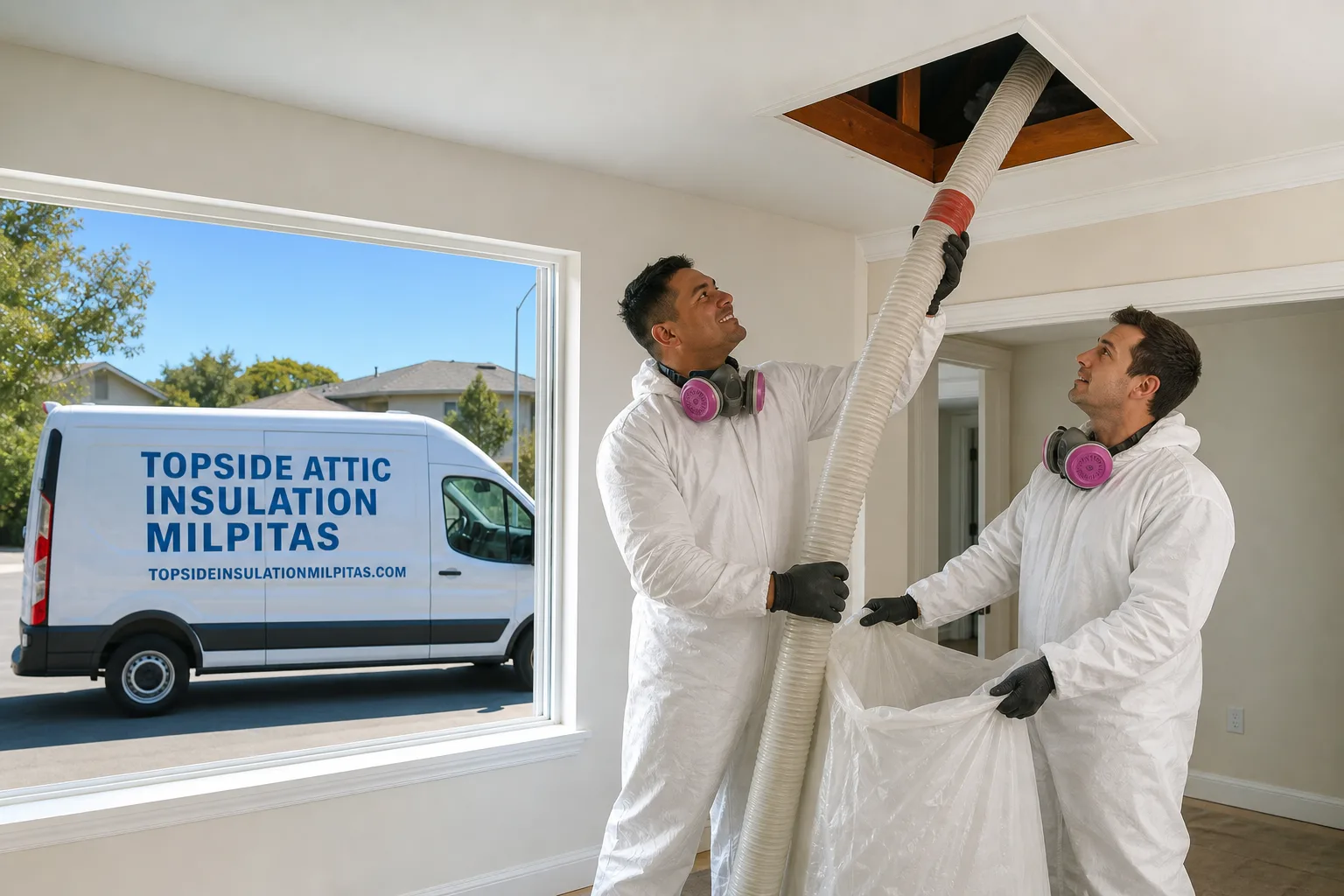
How Much Does Wall Insulation Cost in Milpitas?
Our Wall Insulation services in Milpitas, CA typically cost between $1,800 and $6,500 for a standard single-story home, depending on wall area, insulation type, and whether the walls are open (new construction or after drywall removal) or closed (retrofit into existing walls). Most Milpitas homeowners paying for a closed-cavity retrofit on a 1,500-2,000 sq ft home land somewhere between $2,400 and $4,200. That range covers blown-in cellulose or fiberglass into closed walls – the most common approach here – with labor, air sealing of penetrations, and a documented photo record included.
Wall Insulation Cost Breakdown (2026)
These are real numbers from the Milpitas market as of 2026. Every job at Envelope Insulation Co. starts with a written price before any work begins – that’s Haven Standard Clause 1, not a sales promise. The table below reflects what homeowners here actually pay, not a national average scraped from a home-improvement aggregator.
| Insulation Type / Scope | Typical Cost Range (Milpitas, 2026) | Best For |
|---|---|---|
| Dense-pack cellulose (closed-wall retrofit, per 1,000 sq ft of wall) | $900 - $1,400 | Older walls with no insulation or settled batts |
| Dense-pack fiberglass (closed-wall retrofit, per 1,000 sq ft) | $950 - $1,500 | Moisture-sensitive climates; walls near plumbing |
| Open-wall batt insulation (new construction or during remodel) | $600 - $1,100 per 1,000 sq ft | Studs exposed before drywall goes up |
| Closed-cell spray foam (open walls only) | $2,400 - $4,200 per 1,000 sq ft | Garages, unvented crawl walls, rim joists |
| Open-cell spray foam (open walls) | $1,100 - $1,900 per 1,000 sq ft | Interior partition walls, sound control |
| Air sealing only (top plates, penetrations, can lights) before insulation | $350 - $900 | Required before any blown-in work; not optional here |
| Full single-story home retrofit (1,500-2,000 sq ft, dense-pack) | $2,400 - $4,200 | Most common Milpitas project type |
| Full two-story home retrofit (2,500-3,500 sq ft) | $4,500 - $7,200 | Larger homes in Berryessa-adjacent neighborhoods |
| Insulation removal and replacement (existing failed batts) | $1,200 - $2,800 additional | Rodent-damaged or moisture-compromised walls |
A few things push costs toward the higher end of those ranges in Milpitas specifically. Homes built in the 1960s and 1970s along Calaveras Boulevard and the older Sunnyhills neighborhood often have undersized stud cavities – 2×4 framing at 16 inches on center rather than the 2×6 framing you see in post-1990s construction. That limits the R-value you can physically achieve and sometimes requires a second pass or a different material strategy. Homes near the Alviso Slough area can also have elevated ambient moisture, which makes material selection more consequential: dense-pack cellulose treated with borate handles humidity differently than unfaced fiberglass batts, and the cost difference between those two options is real.
Labor in the South Bay runs higher than the national average – figure roughly 40-55% of total project cost is labor. The materials themselves (Knauf blown-in fiberglass, GreenFiber cellulose, Icynene spray foam) are priced consistently; what varies is how long access takes and how many penetrations need sealing before the crew can start blowing.
What Affects Wall Insulation Pricing in Milpitas
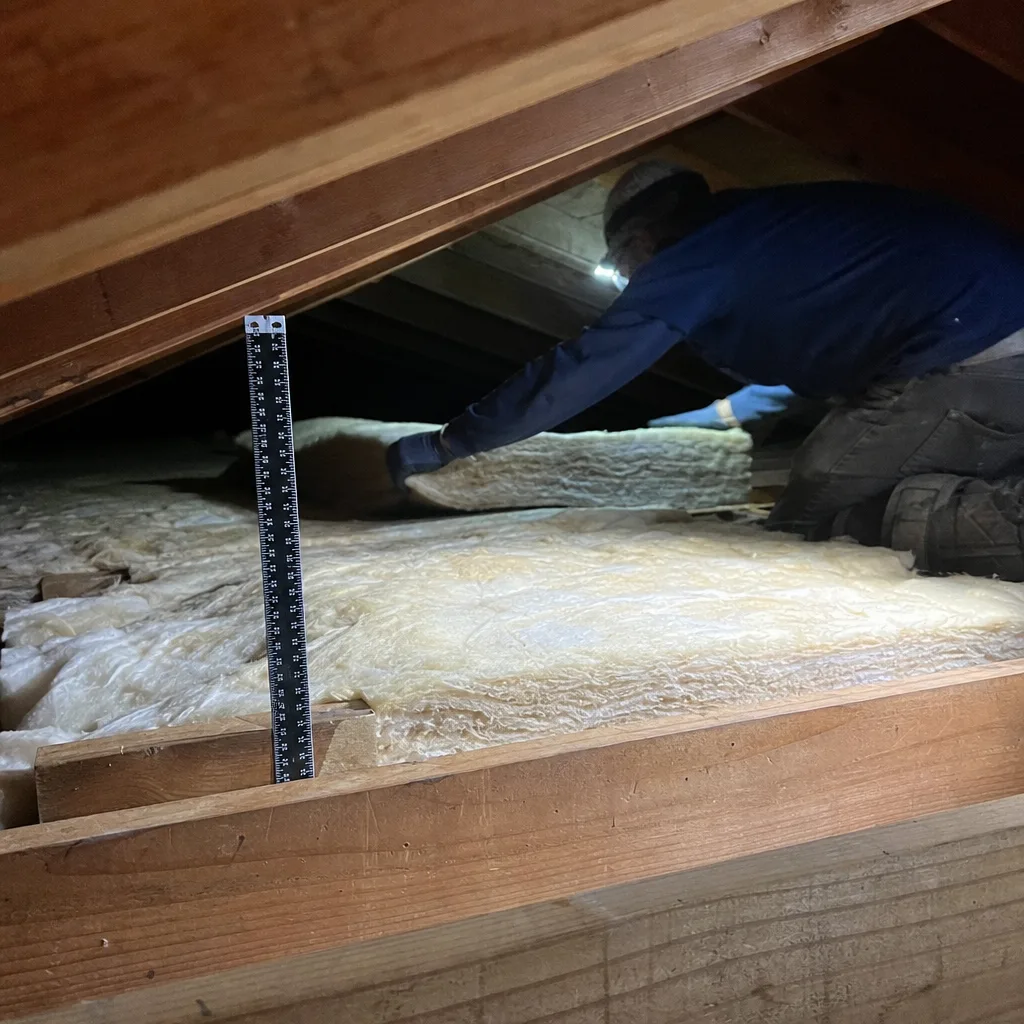
These are the six variables that move a Milpitas wall insulation quote up or down the most. Most of them become clear during an initial walkthrough – which is why we do the assessment before we write the price, not after.
- Open vs. closed walls. If studs are exposed (during a remodel or new construction), labor drops significantly – the crew can install batts directly. Retrofitting into closed walls requires drilling small access holes, filling the cavity under pressure, and patching. That process adds time, and time is what you’re paying for in this market.
- Linear feet of exterior wall. Most Milpitas pricing is quoted per square foot of wall area, not per room. A ranch-style home on Jacklin Road with a large perimeter has more wall surface than a two-story with the same footprint – and costs more accordingly.
- Material choice. Dense-pack cellulose from GreenFiber and dense-pack fiberglass from Knauf sit in similar price territory. Spray foam – particularly the closed-cell product from Icynene or Demilec – costs two to four times more per square foot but achieves higher R-value per inch and doubles as an air barrier. For most retrofit walls, dense-pack cellulose is the better dollar-for-dollar choice.
- Existing insulation condition. Many homes in Milpitas built before 1980 have original fiberglass batts that have settled, gotten wet, or been displaced by rodents. If the existing material is failing, it needs to come out before anything goes in. Insulation removal adds $1,200 to $2,800 to a typical project depending on wall area and access.
- Air sealing scope. At Envelope Insulation Co., air sealing is a hard prerequisite – not an upsell. Penetrations, top plates, electrical boxes, and any gaps between framing members get sealed before we blow a single cubic foot of insulation. In some Milpitas homes, particularly those with added-on rooms or previous DIY work around Alviso-side properties, the air sealing scope can be substantial and adds to total project cost – but skipping it means the insulation underperforms from day one.
- Permit requirements. The City of Milpitas Building Department (under Santa Clara County jurisdiction) generally does not require a permit for adding insulation to existing closed walls through small access holes – that falls under maintenance and repair. However, if the project involves removing and replacing large sections of drywall, or if it’s part of a larger remodel, a building permit may be required. We clarify permit status on every written scope before work starts. Never assume – confirm it in writing.
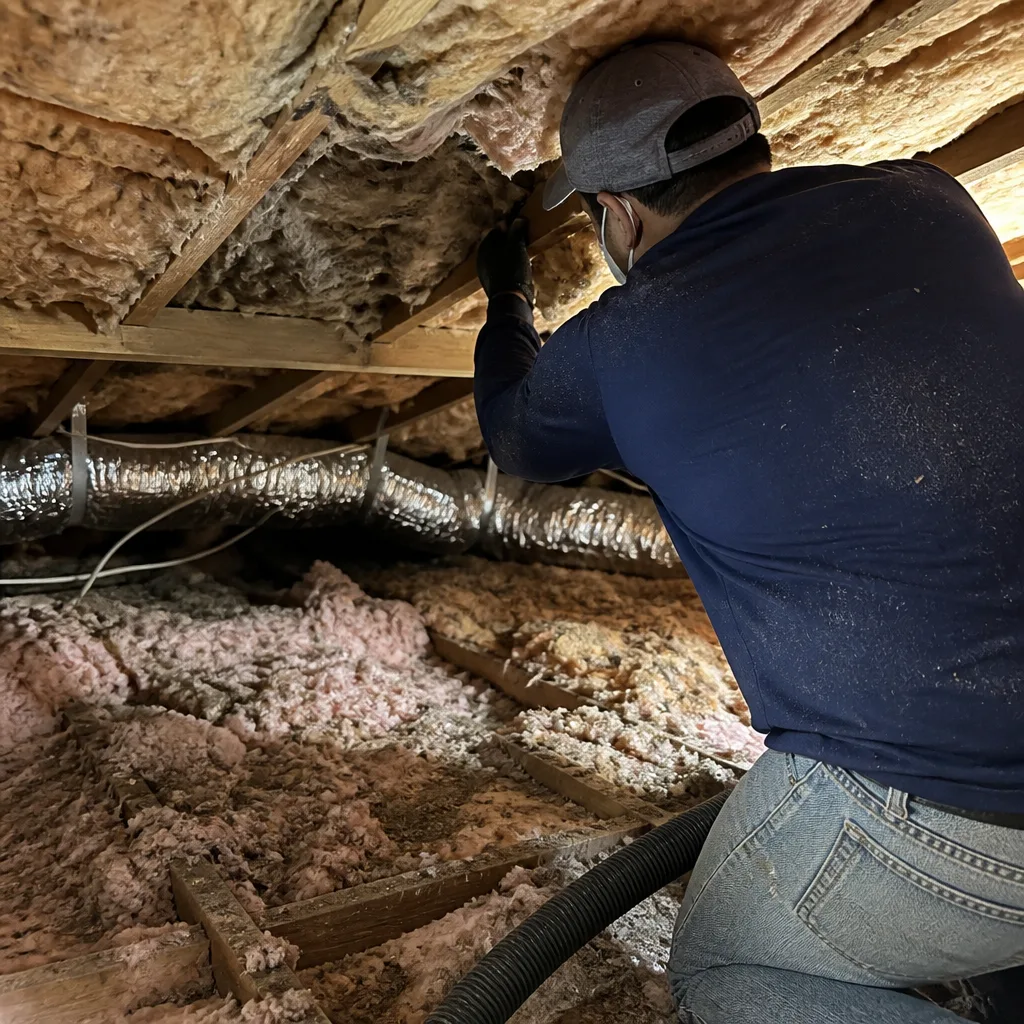 Before
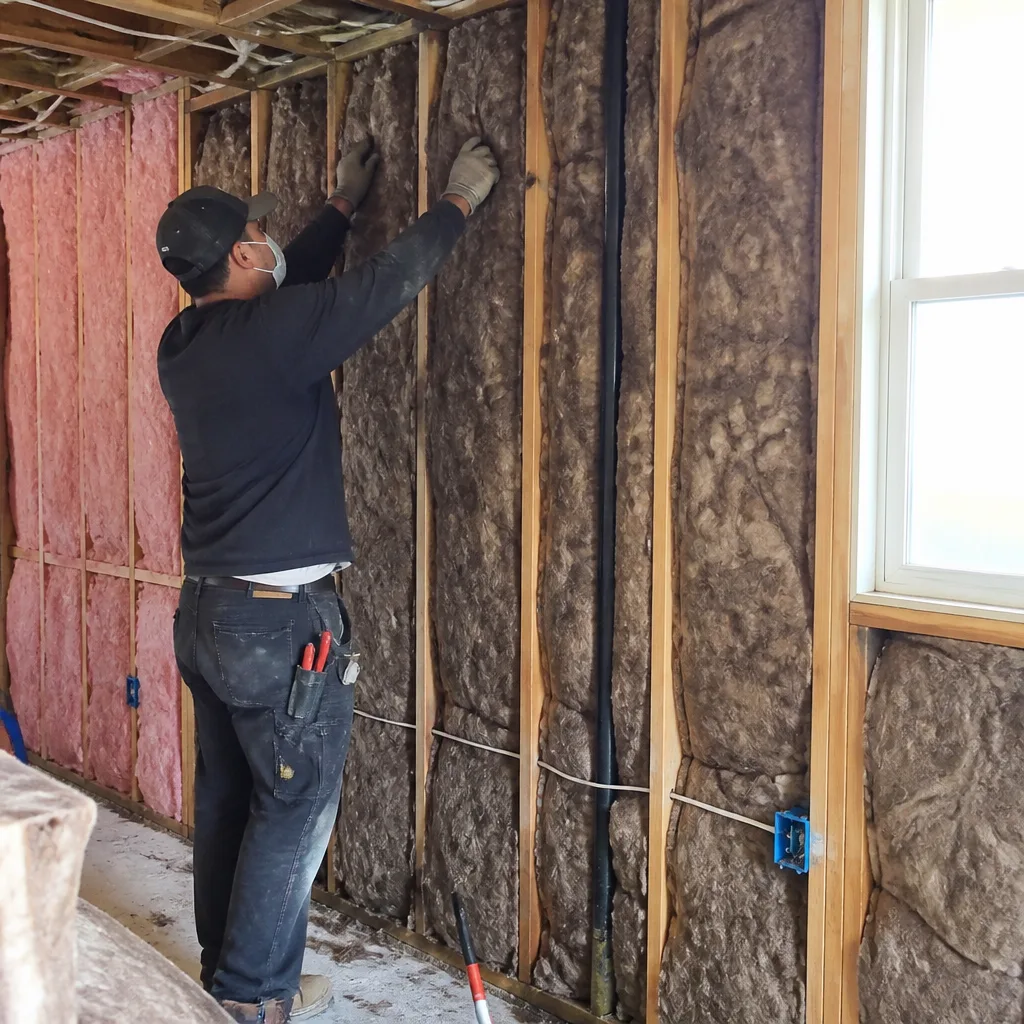 After
AfterWall Insulation in Milpitas: What the Local Climate Actually Demands
Milpitas sits at the southern end of San Francisco Bay, and its climate is genuinely different from San Jose a few miles south. The morning marine layer rolls in off the Bay from May through September, keeping temperatures 5-8 degrees cooler in neighborhoods closer to the 237 corridor than in homes up near the hills. That moisture-carrying marine air matters for wall insulation selection.
In our work on homes in the Montague area and near Great Mall, we see condensation-related insulation failures more often than in drier South Bay cities. Fiberglass batts in walls that weren’t properly air-sealed trap moisture in the cavity, compress over time, and lose meaningful R-value. Dense-pack cellulose, treated with borate during manufacturing, handles this environment better – it absorbs and releases moisture without the structural degradation you get with faced batts that were never the right tool for this climate.
Milpitas also sits in the wildland-urban interface zone near Ed Levin County Park. Homes on the eastern slopes face a different concern: radiant heat gain through walls during the late afternoon in summer. In those locations, combining wall insulation with a wall insulation strategy that includes thermal mass or reflective materials can make a measurable difference to cooling loads – and that’s the kind of detail we document in the blower-door results we leave with every homeowner.
How Wes Okafor Thinks About Wall Insulation Scoping
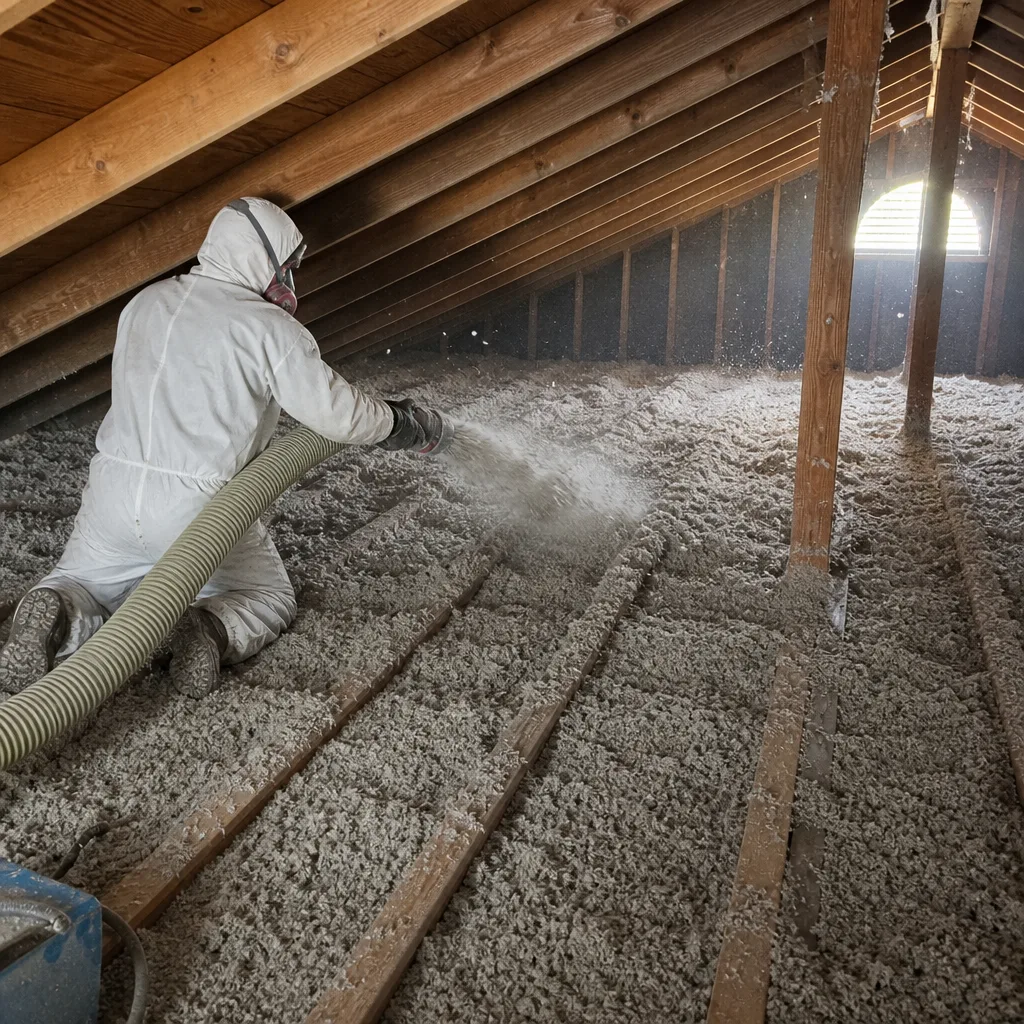
Wes Okafor, who leads the technical work at Envelope Insulation Co., has been through enough Milpitas homes since 2016 to have a clear view of where projects go wrong. The single most common mistake he sees from competing bids: insulation installed without prior air sealing, in homes where the wall cavities connect to an unsealed attic above. In that configuration, the blower-door reading – the pressurization test that shows how much air your building envelope is losing – barely moves after insulation is added, because the air still moves freely through the thermal boundary. The insulation looks right. The performance isn’t there.
Every scope Wes signs off on includes a pre-insulation air sealing phase. That’s not because it adds to the invoice; it’s because installing insulation before sealing the envelope is the equivalent of adding weather-stripping to a door that doesn’t close all the way. You can see the problem. On applicable jobs – wall retrofits on homes that have enough surface area to justify it – we run a blower-door test before and after. The before-and-after numbers go in the documented record the homeowner receives when we’re done. If the numbers don’t move the way the scope predicted, that’s a 365-Day Done Right Promise situation, and we make it right.
How to Save on Wall Insulation in Milpitas
There are a few legitimate ways to reduce the total cost of a wall insulation project without cutting corners on performance. There’s also one way that looks like savings and isn’t – and it’s worth naming it directly.
Combine Wall and Attic Work
If your attic insulation is also undersized or failing, scheduling both projects at the same time reduces mobilization cost. The crew, the blower-door equipment, and the access setup happen once. On a combined attic and wall project, most Milpitas homeowners save $400-$900 compared to scheduling them separately. Ask for both scopes on a single written estimate and compare the bundled number to the two individual quotes.
Use the PG&E Energy Efficiency Rebate Programs
PG&E’s residential rebate programs for insulation apply to Santa Clara County, and Milpitas homeowners are eligible. As of 2026, insulation rebates for existing homes run up to $0.10 per square foot of wall area insulated, with additional incentives for whole-home air sealing work that meets a documented ACH50 target – that’s air changes per hour at 50 pascals, the unit the blower-door test measures. The rebate doesn’t pay for the project, but on a $3,500 job it can offset $200-$400. We include documentation of the work in a format that supports rebate applications – it’s part of the Documented Photo Record that goes to every homeowner.
Get the Work Done During Off-Peak Scheduling Windows
January through early March is slower for insulation work in the Bay Area. We’re upfront about this: if you have flexibility on timing, scheduling during that window sometimes creates room on the invoice. We don’t manufacture scarcity or run limited-time promotions, but contractor availability in Milpitas is genuinely tighter from April through October when remodel season overlaps with energy-efficiency retrofits driven by summer utility bills.
Get a Second Opinion on Any Written Estimate
If you’ve already received a written bid from another contractor, bring it to us. We’ll read it with you, line by line – that’s the Free Second Opinion that’s part of how we operate. The goal isn’t to undercut the number; it’s to make sure you understand what the scope includes and what it doesn’t. Missing air sealing in a bid is common. Missing insulation removal when removal is clearly needed is also common. Those omissions look like savings until the job is done.
Don’t Confuse Cheaper Material With Better Value
Unfaced fiberglass batts are the cheapest wall insulation product available. They are also the least appropriate choice for a closed-wall retrofit in Milpitas’s climate. Batts can’t be blown into a closed cavity without cutting the wall open, and if a contractor is quoting batt installation on an existing wall without mentioning drywall removal, ask them to explain the sequence. Dense-pack cellulose or blown-in fiberglass in a closed retrofit costs more per square foot but lasts longer and performs at its rated R-value when the cavity is properly filled under pressure.
For a written price before any work starts, call (650) 770-8707. The estimate is free, the scope is written, and we don’t start until you’ve signed off on both the price and the work plan.
What the Job Looks Like, Start to Finish
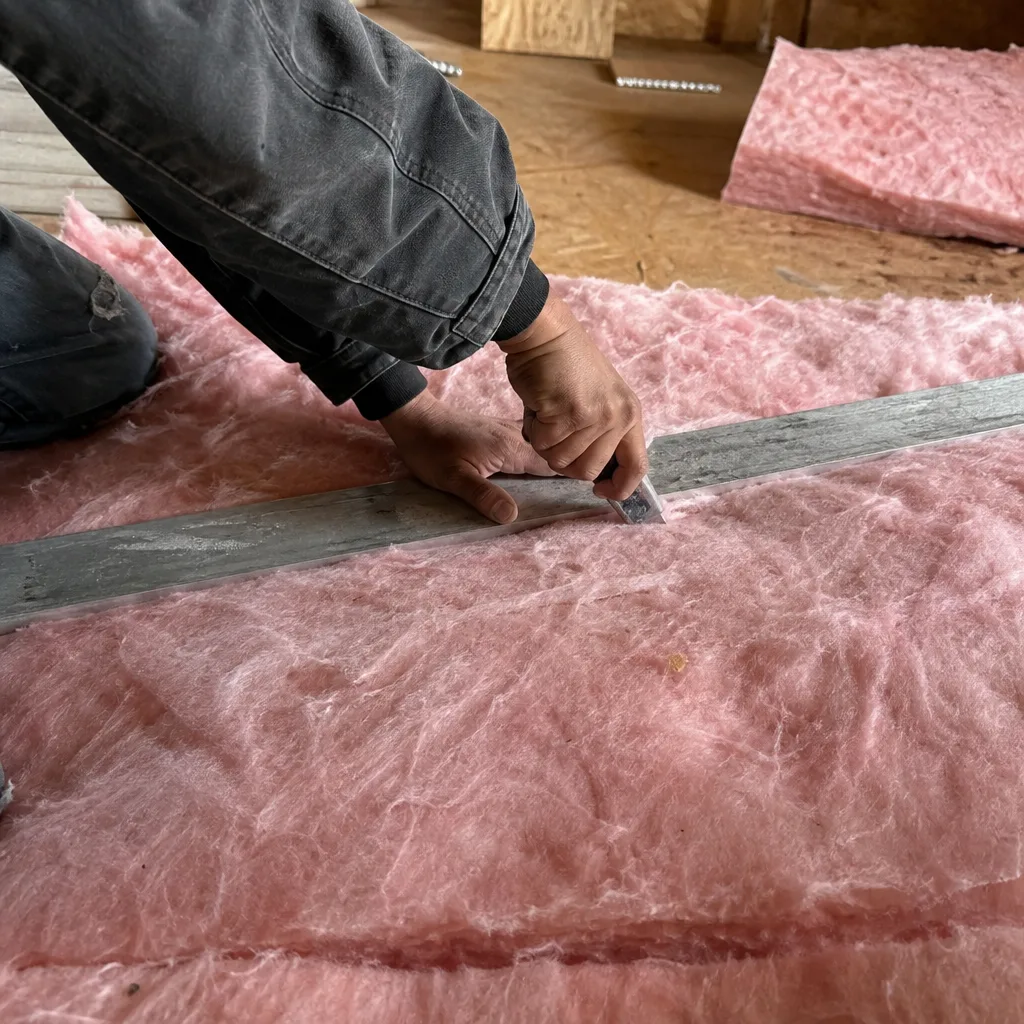
Milpitas homeowners who haven’t had a wall insulation retrofit before often want to know what the actual process looks like – not in vague terms, but specifically. Here’s the sequence on a typical closed-wall dense-pack job.
Assessment and Written Price
A technician walks the home, measures wall area, checks existing insulation via a small probe or thermal camera, and assesses air sealing needs. The written scope and flat price come from that assessment – not from a national pricing model. No work starts without the written price in your hands.
Air Sealing
Before insulation goes in, we seal top plates, penetrations through framing, electrical boxes, and any other identified bypass points using appropriate sealants – often low-expansion spray foam for large gaps and acoustic caulk for smaller penetrations. This is the phase that most competing bids leave out or quote separately as an add-on. At Envelope Insulation Co., it’s required, not optional, and it’s in the written scope before you agree to anything.
Drilling Access Holes
For closed-wall retrofits, 2-inch holes are drilled through either the interior drywall or exterior siding, typically at stud-bay intervals. Most Milpitas homes have the holes drilled from the exterior to avoid interior finishing work. The holes are plugged and painted to match after the fill is complete.
Dense-Pack Fill
A fill hose is inserted to the bottom of each stud bay. Material is blown in under pressure until the cavity reads as fully packed via resistance feedback on the hose. A properly dense-packed cavity runs at 3-3.5 lbs per cubic foot for cellulose – that’s the density that prevents settling over time and eliminates the thermal bypass you get with loose or improperly filled cavities.
Blower-Door Test (Applicable Jobs)
On jobs where a before-and-after blower-door reading is warranted, we run the test at the end of the air-sealing phase and again after insulation is complete. The numbers go into your documented record. A typical Milpitas home that starts at 3,800-4,500 CFM50 before sealing (CFM50 – cubic feet per minute of air leakage at 50 pascals of pressure) often reaches 2,200-2,900 CFM50 after a wall and attic air seal. That reduction is the documented evidence that the work performed as intended.
Documented Photo Record
Before we leave, you receive a Documented Photo Record: photos of the access holes before and after, the fill points, any notable conditions we found (pest evidence, moisture staining, failed prior insulation), and the blower-door readings on applicable jobs. That record is yours, not filed somewhere in our system. It supports rebate applications, future home sale disclosures, and the 365-Day Done Right Promise if anything needs revisiting.
FAQs – Wall Insulation Cost in Milpitas
How much does wall insulation cost in Milpitas for a typical 1,800 sq ft home?
A closed-wall dense-pack retrofit on a 1,500-2,000 sq ft single-story Milpitas home typically runs $2,400 to $4,200 with air sealing included. That range covers material (GreenFiber cellulose or Knauf blown-in fiberglass), labor, access hole drilling and patching, and the Documented Photo Record. If the existing insulation needs to come out first, add $1,200-$2,000 to that range. For an exact written number, call (650) 770-8707 – the estimate is free and the price is written before anyone starts work.
Is it cheaper to insulate walls or the attic in Milpitas?
Attic insulation is almost always cheaper per square foot than wall insulation, because attics are open and accessible. Blown-in attic insulation in Milpitas typically runs $1.20-$2.10 per square foot of ceiling area, while closed-wall retrofit work runs $1.80-$3.50 per square foot of wall area due to the drilling and pressurized fill process. That said, wall insulation is often the higher-impact project for homes that already have attic insulation but still feel drafty – particularly in Milpitas homes along the 237 corridor where wind-driven infiltration through wall framing is a known issue.
Do Milpitas homeowners need a permit for wall insulation?
For most closed-wall retrofits – drilling small access holes and filling with blown-in material – the City of Milpitas does not require a building permit, as the work is classified as maintenance rather than alteration. If the project involves removing and replacing significant sections of drywall, or is part of a permitted remodel, permit requirements change. We confirm permit status on every written scope before work begins – that’s not a courtesy, it’s part of the written price process. Call (650) 770-8707 if you want to discuss your specific situation before scheduling an assessment.
How long does wall insulation installation take in Milpitas?
A typical single-story Milpitas home with 1,500-2,000 sq ft of wall area takes one full day, sometimes one and a half days if the air sealing scope is substantial. Larger two-story homes, or homes with complex framing from additions, can run two days. The timeline is included in the written scope before work starts – along with a named technician and a text when they’re on the way, which is the on-time arrival protocol under the Haven Standard.
Is spray foam worth the extra cost for wall insulation in Milpitas?
Closed-cell spray foam runs $2,400-$4,200 per 1,000 sq ft of open wall area – roughly three to four times the cost of dense-pack cellulose. For closed-wall retrofits, spray foam isn’t an option at all (the cavity is sealed; foam can’t be distributed evenly through a drilled access point the way dense-pack material can). For open walls during a remodel, spray foam makes sense in specific locations: rim joists, garage walls adjacent to living space, and unvented crawlspace walls where moisture control and R-value per inch both matter. For standard exterior walls on a typical Milpitas single-family home, dense-pack cellulose or blown-in fiberglass delivers comparable thermal performance at a fraction of the cost. We’ll say so on your written scope if spray foam isn’t the right call – that’s the kind of recommendation that makes the long-term relationship work.
Can wall insulation lower my energy bills enough to justify the cost in Milpitas?
Milpitas homes with no wall insulation or badly settled original batts typically see 15-25% reductions in heating and cooling costs after a full wall retrofit combined with air sealing – based on blower-door improvements we’ve measured on homes in this market since 2016. At current PG&E rates and typical Milpitas utility bills, that can translate to $280-$520 per year in savings on a mid-size home. Payback period on a $3,000 project at those savings rates runs roughly 6-10 years. That estimate is conservative – it doesn’t include utility rebates, which reduce the upfront cost, or the value of improved comfort in rooms that currently run 5-8 degrees warmer or cooler than the rest of the house.
Key Takeaways
- Wall insulation in Milpitas costs $1,800-$6,500 for a whole home; most single-story retrofits land between $2,400 and $4,200.
- Dense-pack cellulose and blown-in fiberglass are the right tools for closed-wall retrofits in Milpitas’s marine-influenced climate – not batts, which can’t be installed without opening the wall.
- Air sealing before insulation is not optional. Without it, the insulation underperforms from day one, and the blower-door numbers will show it.
- PG&E rebates apply to Milpitas homeowners and can offset $200-$400 on a typical project when proper documentation is provided.
- Every Envelope Insulation Co. project starts with a written price, closes with a Documented Photo Record, and is backed by the 365-Day Done Right Promise.
- Before-and-after blower-door readings are included on applicable jobs so you can verify the air-sealing result in a single number – not just take our word for it.
Get a Written Price for Wall Insulation in Milpitas
If you’re researching wall insulation costs in Milpitas, you’ve covered the main variables on this page. The next step is a written number specific to your home. Our assessment is free, the price is written before anyone lifts a tool, and the scope tells you exactly what’s included – air sealing, insulation type, access hole patching, and documentation.
Wes Okafor and the team at Envelope Insulation Co. have been doing this work in Milpitas and across the South Bay since 2016 – 9,000+ homes sealed and insulated, every one with a written price and a documented record on the way out. If you’ve already received a written bid from another contractor, bring it. We’ll read it with you under our Free Second Opinion policy, and if anything’s missing, you’ll know before you sign anything.
To schedule a free assessment and get a written price for wall insulation or any building envelope service, call (650) 770-8707. A live person answers – no voicemail, no callback window measured in business days.
Written by Wes Okafor, Owner at Envelope Insulation Co., serving Milpitas, CA since 2016.
Pricing reflects the Milpitas market as of 2026. Topside Attic Insulation Milpitas offers free estimates – call (650) 770-8707.
What Our Customers Say
"The winter gas bill dropped by about a third. They had estimated a quarter, so they under-promised."
- Genevieve R."They photographed rodent damage in the old insulation that we had no idea about, and priced the exclusion work separately so we could decide."
- Harriet N."Crawl space encapsulation done properly. Photographs of the vapour barrier at every seam, and the damp smell in the hallway is gone."
- Ainsley P.