
Rockwool Attic Insulation: The Milpitas Owner’s Guide
Rockwool attic insulation installed in Milpitas typically runs $2.80 to $4.20 per square foot for batt or loose-fill applications, with most single-family homes in the 1,200 to 2,400 square foot range falling between $3,400 and $8,900 for a complete attic replacement. We stock Rockwool Comfortbatt, Comfortboard, and AFB evo lines on our Milpitas trucks, and we can usually start the same day you call. Most homeowners discover their Rockwool insulation has failed when they notice the upstairs bedrooms won’t stay cool through a Milpitas August afternoon, or when they pop the attic hatch and find batts compressed to half their labeled thickness, blackened with dust tracking from bypass leaks, or dislodged entirely around can lights and top plates.
Which Rockwool Models This Applies To
Rockwool’s residential attic line breaks into three families, and matching the right one matters for both fire rating and compression recovery. Comfortbatt R-30 and R-38 batts are the most common retrofit choice in Milpitas attics; they’re 15.25 inches wide to fit standard joist bays on 16-inch centers, and they’re the ones we see compressed most often by homeowners who stored holiday decorations on top. Comfortboard 80 and 110 are rigid boards, usually found in raised-heel truss applications or as a thermal break layer; if your attic has these, the failure mode is typically edge gaps from shrinkage or improper cutting around penetrations. AFB evo is the acoustic/fire batts line, sometimes used in attic floors where there’s a living space below and a fire-resistance rating is required, like in Milpitas townhomes built after 2018 near the Transit Area Specific Plan.
To identify what you have, check the printed facing or bag remnants for the black-and-red Rockwool logo and density rating. Comfortbatt runs 0.7 to 1.2 pounds per cubic foot depending on R-value; Comfortboard is much denser at 8 pounds per cubic foot. The OEM Rockwool product is what we recommend for attic floors, not aftermarket mineral wool from lesser-known suppliers, because Rockwool’s binder system holds up to Milpitas’s temperature swings better. Generic mineral wool can sag when attic temps hit 140°F in July, which they do regularly in Milpitas’s inland valley climate. We carry OEM Rockwool on every truck; if your joist spacing is non-standard, we field-cut to fit rather than jamming oversized batts and leaving gaps.
Signs Your Rockwool Attic Insulation Is Failing
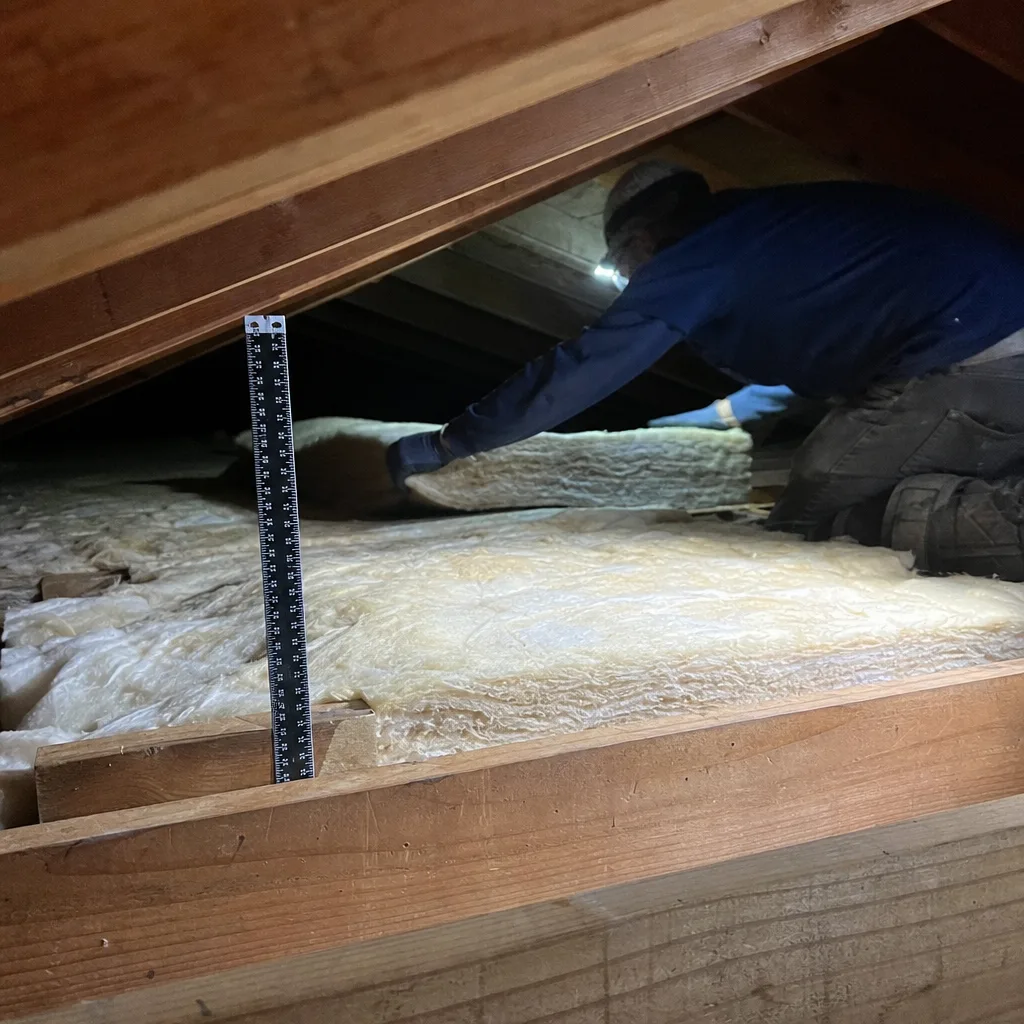
- Uneven temperatures room-to-room. Rockwool batts that have been walked on or compressed by storage lose their loft, and R-value drops proportionally. A Comfortbatt R-38 compressed to 6 inches performs closer to R-19. In Milpitas’s 1960s and 1970s tracts near the Great Mall corridor, we find this constantly; the original installer left batts loose, and decades of HVAC service calls have trampled them flat in the access path.
- Black streaking or dust staining on the batt faces. This is filtered dirt from air moving through the insulation, not mold. It means your attic floor has bypass leaks, pulling conditioned air up through electrical penetrations, top plates, or can light housings. Rockwool is dense enough to act as a filter, so the dirt collects where the air moves. The insulation isn’t the root problem, but it’s telling you the envelope is leaking.
- Dislodged or fallen batts around fixtures. Rockwool is heavier than fiberglass per inch, so poorly supported batts around can lights or chimney chases can slide out of place over time. In Milpitas’s newer builds, we see this where spray foam was used for air sealing but Rockwool batts were added later without proper retention wires or mesh.
- Moisture staining or crusting on the underside of the roof deck. Rockwool is hydrophobic and won’t hold water like cellulose, but if it’s blocking soffit vents or was installed against the roof deck without proper baffles, condensation forms. Milpitas’s winter temperature inversions, where fog sits in the valley while the hills stay clear, create conditions where attic ventilation mistakes show up as wet OSB.
- Ice dam evidence in winter, or excessive AC runtime in summer. Rockwool’s advertised R-value assumes full loft and no wind washing. If your eaves are open to wind because baffles are missing, or if the batts don’t extend fully to the top plate, the effective R-value at the edge can drop 30% or more. We measure this with a thermal camera; the dark band at the eaves is unmistakable.
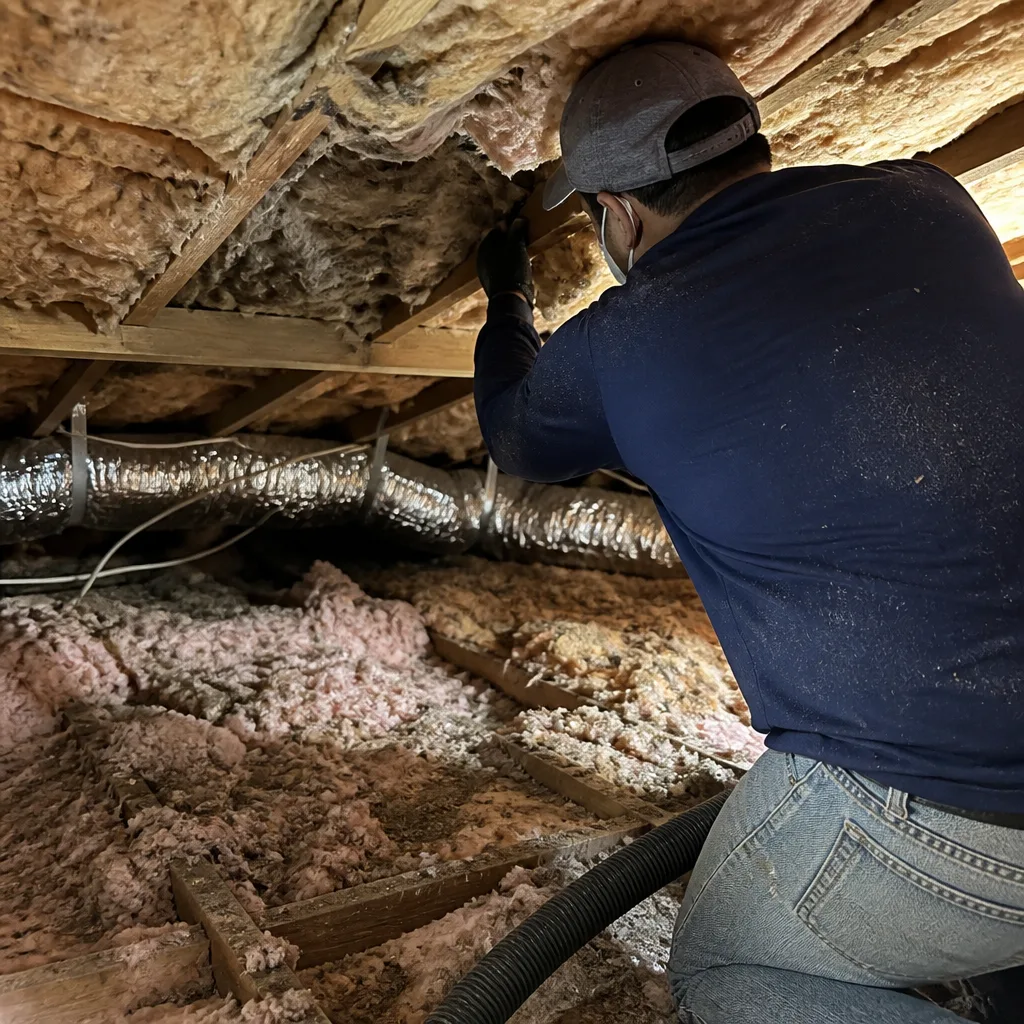 Before
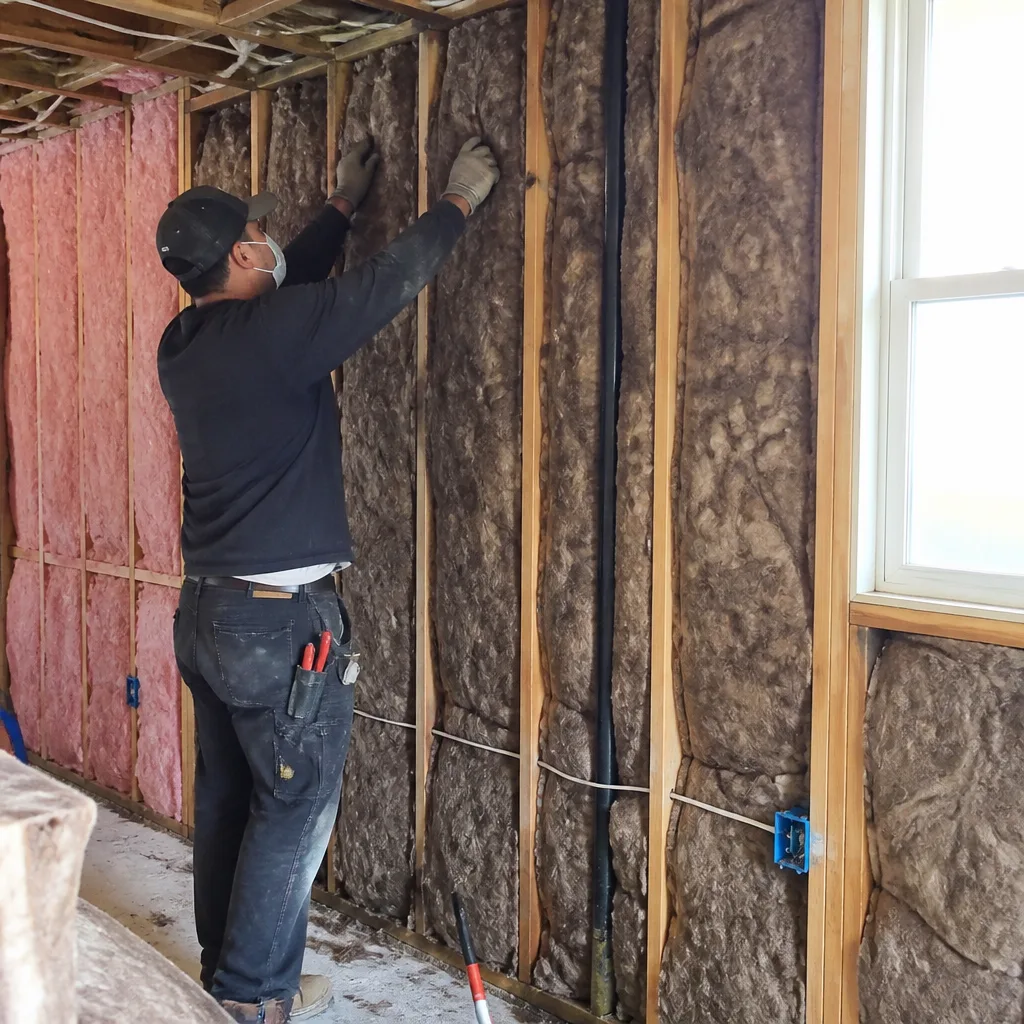 After
AfterReplacement Cost & What’s Included
Most complete Rockwool attic replacements in Milpitas run between $3,400 and $8,900, with the spread driven by three factors: attic square footage, whether we’re removing existing material or adding over it, and how much air sealing is required before the insulation goes in. A typical 1,800 square foot attic with removal, top plate and penetration sealing, and new Comfortbatt R-38 installed falls around $5,200 to $6,800. We don’t quote per-square-foot numbers over the phone without seeing the space; joist height, headroom for crew movement, and the presence of active knob-and-tube wiring all move the price.
Every Rockwool replacement includes removal and responsible disposal of the old material, installation of baffles at every soffit vent to maintain airflow, air sealing of all accessible top plates and penetrations with fire-rated caulk and foam, and the new Rockwool batts or loose-fill cut and placed to full labeled thickness. Under Haven Standard Clause 1, you get a written price before any work starts, a written scope, and a written warranty. On applicable jobs, we run a blower-door test before and after, a pressurization reading that shows in one number how much air your envelope was losing, and we hand you the printed report both times. The 365-Day Done Right Promise covers all completed work.
DIY or Call Us?
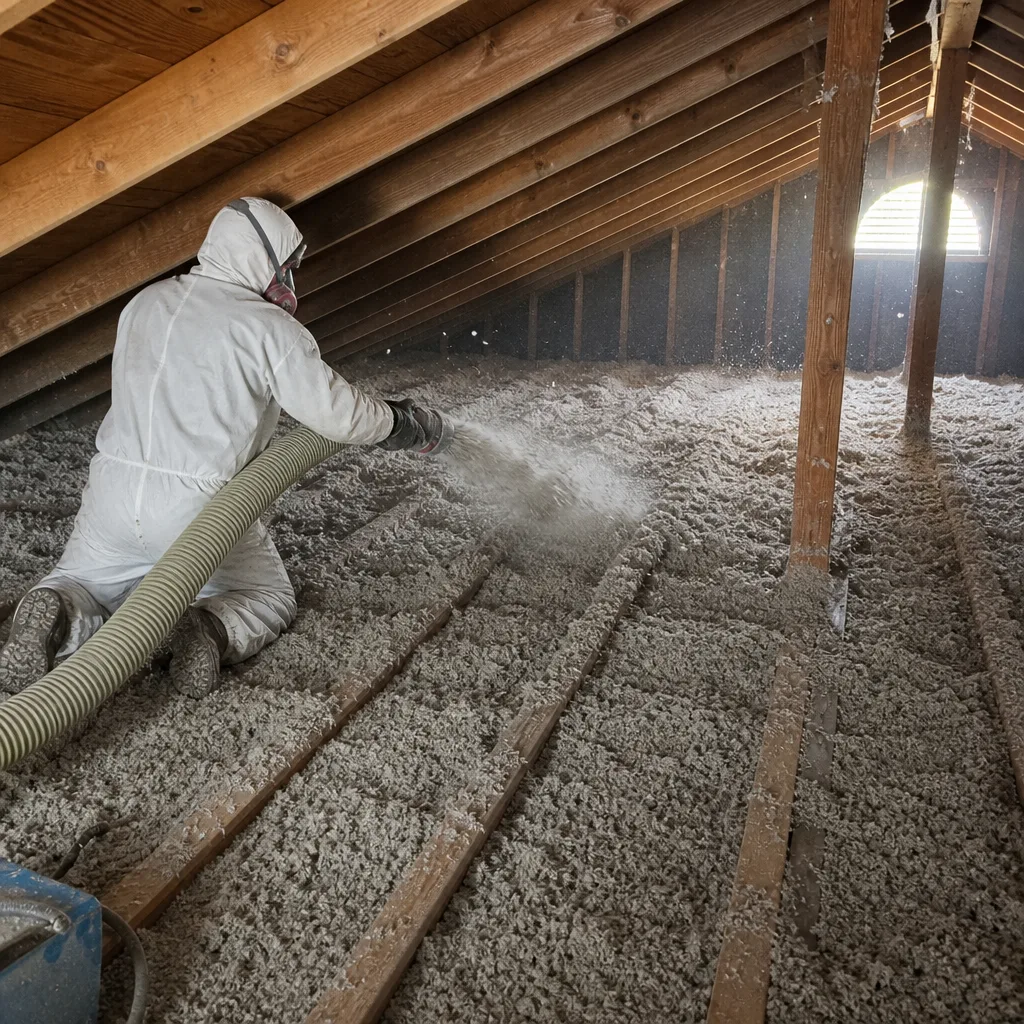
There’s no high-tension danger in handling Rockwool, but there are real ways DIY goes wrong. You can safely pop the hatch, measure your joist spacing, and photograph any labels on existing batts to confirm the product line. What you likely cannot do safely or effectively is air seal the attic floor from above; working around energized electrical, identifying which penetrations are open to conditioned space, and maintaining soffit ventilation while adding insulation requires experience and the right PPE for fiberglass and mineral wool dust.
The R-value on the bag means nothing if the air is still moving through the wall - seal first, then insulate. We’ve been called to Milpitas attics where a homeowner added new Rockwool over old without sealing, and the blower-door number barely moved. The insulation looked fine; the performance didn’t. If you want to know what you’re actually dealing with, call us at (650) 770-8707. We’ll read your attic with you, show you what we find, and give you a written price before anyone lifts a tool.
FAQs
Rockwool mineral wool itself does not degrade chemically; the basalt and slag fibers are inert. What fails is the installation: compression, displacement, or the air sealing that should have preceded it. In Milpitas’s climate, with attic temperatures cycling between 40°F winter nights and 140°F summer afternoons, improperly supported batts can sag or slide within 10 to 15 years. We’ve pulled 30-year-old Rockwool that was still structurally sound but performing poorly because it was never sealed underneath. Call (650) 770-8707 for an attic assessment; estimates are free.
Spot repair is possible if the existing Rockwool is uncompressed, dry, and only dislodged in specific areas. We can re-secure batts, fill gaps with matching material, and air seal the bypasses that caused the problem. Full replacement makes sense when more than 30% of the attic is compressed below labeled thickness, when there’s active rodent contamination, or when the original installation omitted air sealing and you’re addressing the root cause. We stock matching Rockwool on our Milpitas trucks for either approach. Call (650) 770-8707 and we’ll tell you which path fits your attic.
A typical 1,500 to 2,000 square foot attic with removal, air sealing, and new Rockwool batts takes one full day for a two-person crew. Larger attics, those with limited hatch access requiring material hoisting, or jobs with extensive knob-and-tube rewiring coordination can run into a second day. We don’t rush the air sealing; it’s the step that determines whether your new insulation performs. You’ll get a written schedule with your written price before work starts.
We stock Rockwool Comfortbatt, Comfortboard, and AFB evo lines on every Milpitas truck, in R-values from R-13 through R-38. For loose-fill applications or specific fire-rated assemblies, we pull from our San Jose warehouse with same-day availability. Topside Attic Insulation Milpitas is an independent service provider, not affiliated with Rockwool; we source from multiple manufacturers including Rockwool, Owens Corning, Johns Manville, and others so we can match what’s appropriate for your home rather than pushing a proprietary product. Call (650) 770-8707 to confirm availability for your specific model.
Ready to get your attic performance on paper? Call (650) 770-8707. A live person answers 24/7, and we’ll schedule a free estimate with a written price before any work starts. Every job closes with a Documented Photo Record, and on applicable work you’ll receive before-and-after blower-door numbers so you can see the change you paid for.
Written by Wes Okafor, Owner, Topside Attic Insulation Milpitas at Topside Attic Insulation Milpitas, serving Milpitas and nearby areas.