
Attic Batt Insulation in Milpitas, CA
Attic batt insulation in Milpitas typically runs between $1.50 and $3.20 per square foot installed, and most single-story homes in the area land between $1,800 and $4,500 for a full attic job – depending on existing conditions, the R-value you’re targeting, and whether air sealing needs to happen first. Most jobs are completed in a single day.
Batt insulation – pre-cut fiberglass or mineral wool panels sized to fit between attic joists – is one of the most straightforward ways to upgrade an under-insulated attic with our Attic Insulation services in Milpitas. The material installs cleanly between framing bays, holds its shape over time, and when it goes in over a properly air-sealed attic floor, it performs very close to its labeled R-value in real-world conditions. That last part matters more than most homeowners realize.
At Topside Attic Insulation Milpitas, we don’t install batt insulation over an unsealed attic. That’s not a caveat buried in a contract – it’s the first step of every job. Before any material goes down, our technicians seal the top plates, can lights, and penetrations that allow conditioned air to bypass the insulation layer entirely. The air sealing happens first, documented, or the batts don’t go in. If you’d like to understand the full scope of what we do above your ceiling, our Attic Insulation in Milpitas page covers every part of the service. To talk through your specific attic, call (650) 770-8707 – a live person answers every time, no voicemail, no callback window.
Wes Okafor has led Topside Attic Insulation Milpitas as part of Envelope Insulation Co. since the company began operating under The Haven Standard in 2016. In that time, the crew has completed work in more than 9,000 homes – every one with a written price before work started and a documented photo record when the crew left.
When You Need Attic Batt Insulation
Batt insulation is the right call in several specific situations. Here’s how those situations typically show up in Milpitas homes:
- Your home was built between 1970 and 1995, and the existing insulation is thin or compressed. Many homes in the Milpitas area – particularly in the Sinnott, Alviso, and Landess Avenue corridors – were originally insulated to standards that are well below current California Title 24 minimums. Compressed or flattened batts lose a significant portion of their rated R-value because the air pockets that give fiberglass its thermal resistance have been crushed out of the material. In many cases, removal and replacement is more cost-effective than topping off.
- You’re seeing wide temperature swings between your upstairs rooms and the rest of the house. When upper-story bedrooms run noticeably hotter in summer and colder in winter than the rooms below, the attic floor assembly is usually the first place to look. Milpitas sits in a climate zone (Zone 12) where summer attic temperatures regularly exceed 140 degrees Fahrenheit – batts installed at the right R-value, over sealed penetrations, measurably reduce that heat load into living space.
- Your HVAC system is running longer cycles without reaching setpoint. If your air conditioner is running nearly continuously on a 95-degree day in July and still not reaching 75 inside, the attic assembly is a likely contributor. A blower-door test – a pressurization reading that shows, in one number, how much conditioned air the building envelope is losing – can confirm whether air bypassing the insulation layer is part of the problem.
- You’re replacing HVAC equipment and want the duct and insulation systems to be sized and addressed together. A new air handler paired with an under-insulated attic frequently results in equipment that’s oversized for what the home actually needs once the envelope is tightened. Addressing insulation at the same time makes the new equipment more efficient from day one.
- Rodent activity or a previous attic cleaning has left the existing insulation contaminated or disturbed. In areas of Milpitas near the marshlands and the edges of Ed Levin County Park, attic rodent intrusion is a recurring problem. Contaminated insulation holds odor, can harbor pathogens, and loses its installed R-value when it’s been tunneled through or compressed. Removal, sanitization, and fresh batt installation is the correct sequence in these cases.
- You’re planning a remodel that opens the ceiling, and you want to reset the insulation to current code before closing it back up. California Title 24 requires R-38 as the minimum attic insulation standard in most of the Bay Area, including Milpitas. If an open-ceiling remodel gives you access to the attic floor, that’s the lowest-cost moment to bring the insulation up to current standard.
Our Attic Batt Insulation Process
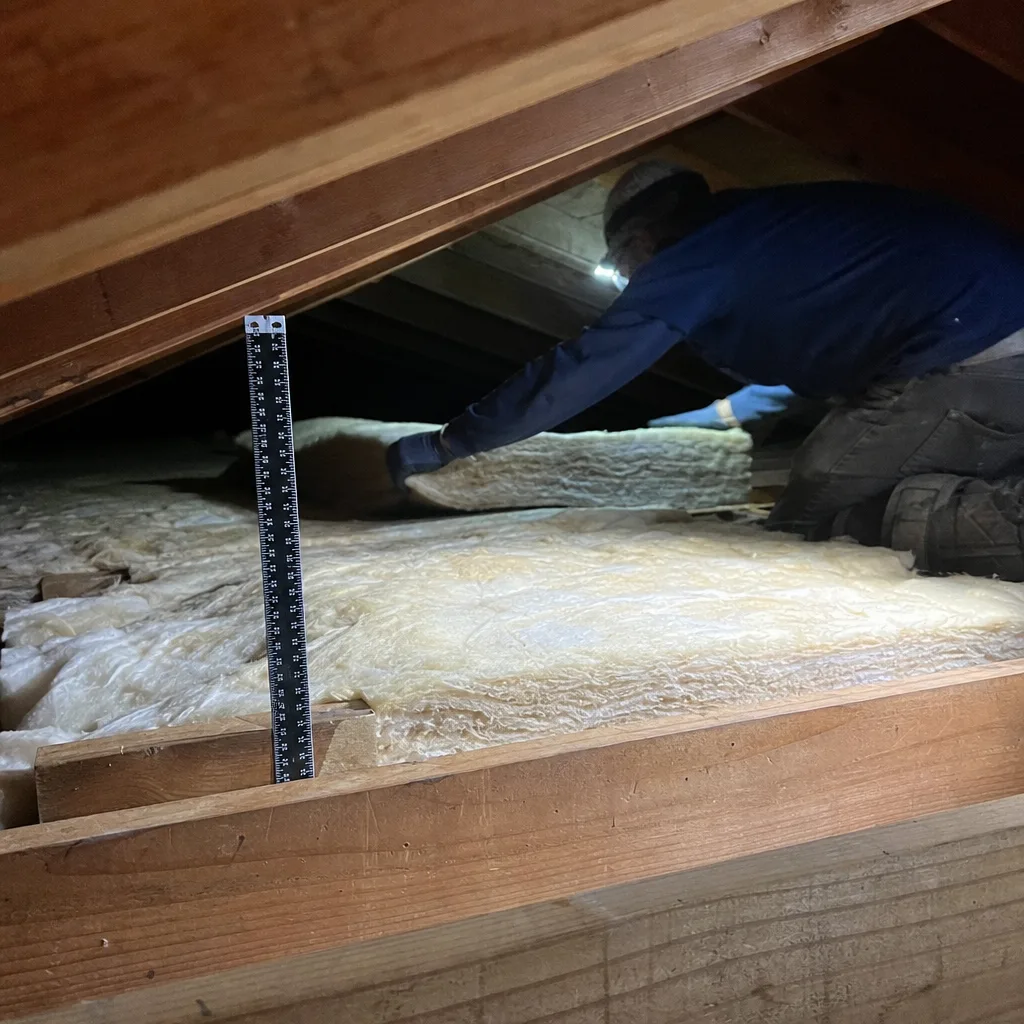
Every job follows the same documented sequence. Nothing gets skipped because the schedule is tight or because the previous step was inconvenient. Here’s what the process looks like from the first visit to the last photo.
- Written scope and price before any work starts. Under Haven Standard Clause 1, the price is flat, written, and delivered before anyone lifts a tool. We measure the attic square footage, assess the current insulation depth and condition, check for moisture issues or signs of rodent activity, and identify every air-sealing location that needs attention. The written scope includes the target R-value, the materials we’re using – typically Owens Corning EcoTouch or mineral wool batts, depending on the application – and the exact air-sealing work that precedes installation. You see the number before you decide.
- Air sealing of the attic floor – before insulation. This step is not optional and is not an upsell. Top plates (the wood framing at the top of every interior wall), recessed can lights, plumbing and electrical penetrations, and HVAC chases are sealed using the appropriate material for each location – typically fire-rated caulk, foam, or sheet metal and fire-block foam for the larger openings. In a typical Milpitas home built before 2000, this sealing work addresses 20 to 40 individual penetrations before a single batt goes in.
- Blower-door test before and after air sealing (where applicable). On jobs where air sealing is a primary scope item, we run a blower-door test before the attic work begins and again after the sealing is complete. The result is a single number – CFM50, the volume of air in cubic feet per minute moving through the envelope at 50 pascals of pressure. We publish both numbers so you can see the change you paid for. A house that reads 3,800 CFM50 before sealing and 2,300 after is a verifiably tighter house – not a feeling, a measurement.
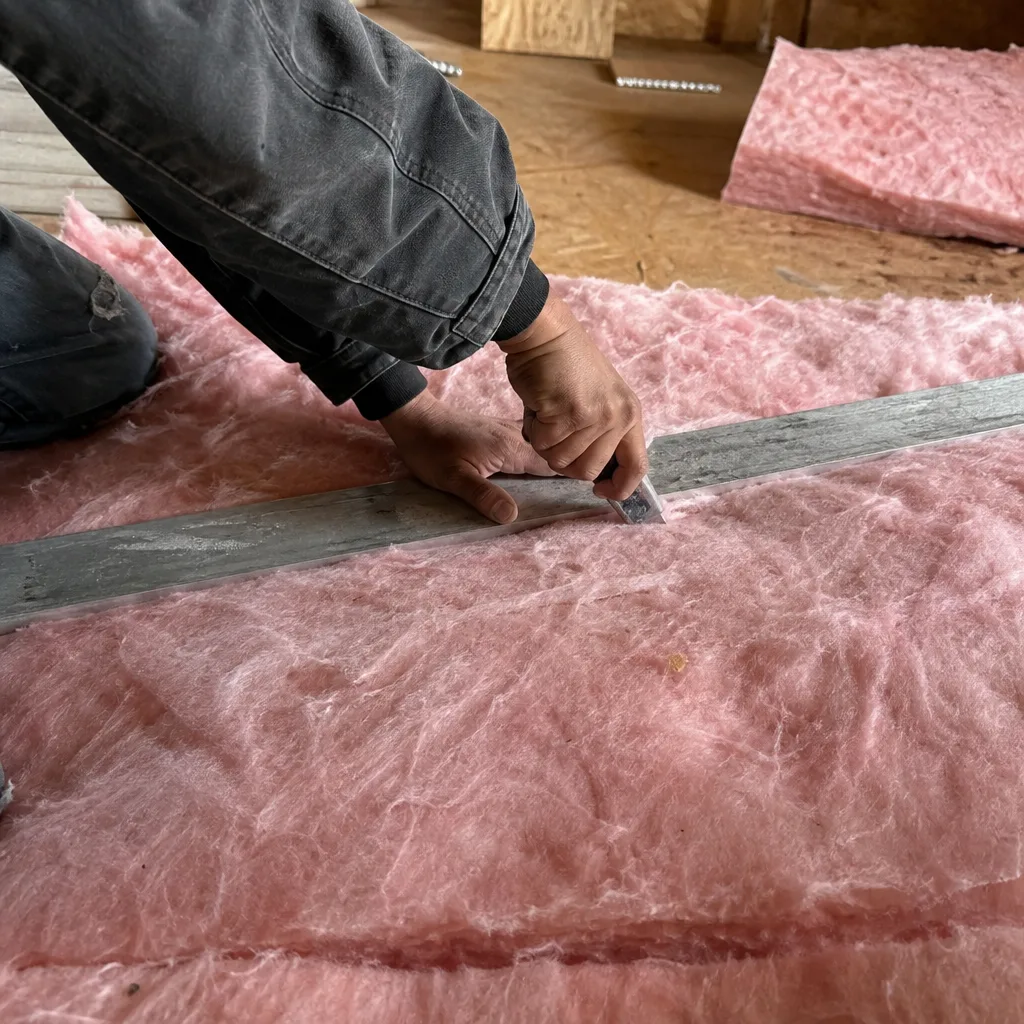
- Batt installation to the specified R-value. With the attic floor sealed, batts are cut and fitted between the joist bays without compression. Compression is where batt performance falls apart – a fiberglass batt compressed to 80% of its rated thickness loses roughly 15 to 20% of its labeled R-value because the air pockets that do the thermal work get squeezed out. We cut around obstructions rather than folding the material. For most Milpitas attics targeting R-38, that means approximately 12 inches of fiberglass batt or 9 to 10 inches of Owens Corning mineral wool, depending on the joist depth available.
- Documented photo record. Every visit closes with a photo record included in the job documentation – wide shots showing coverage, close-ups of the sealed penetrations, and depth-check photos showing insulation thickness at multiple locations. You get this documentation when we leave, not if you request it later.
- 365-Day Done Right Promise. If the installation doesn’t perform as scoped – if there’s a missed penetration, an incorrectly cut batt, or any workmanship issue – we come back and make it right. The promise is written, it applies to every completed job, and it doesn’t require escalating through a service department.
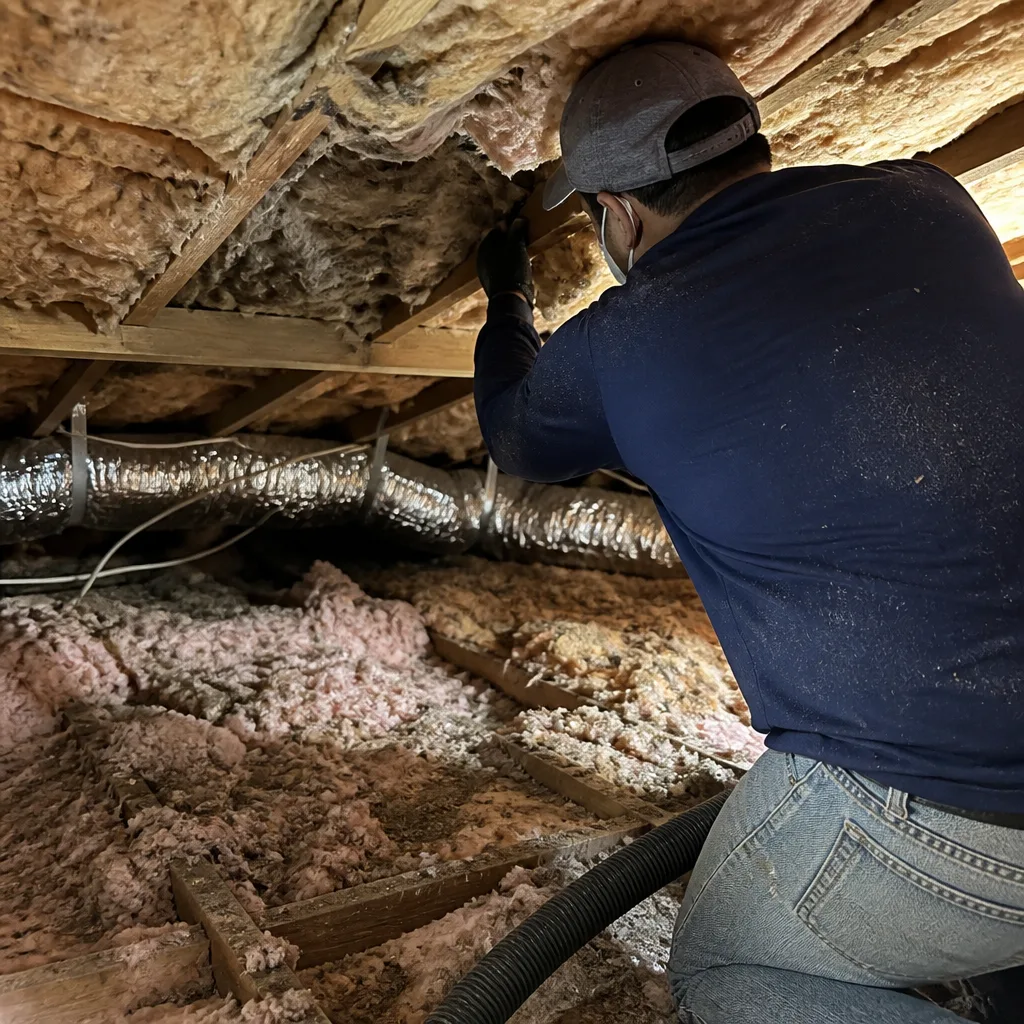 Before
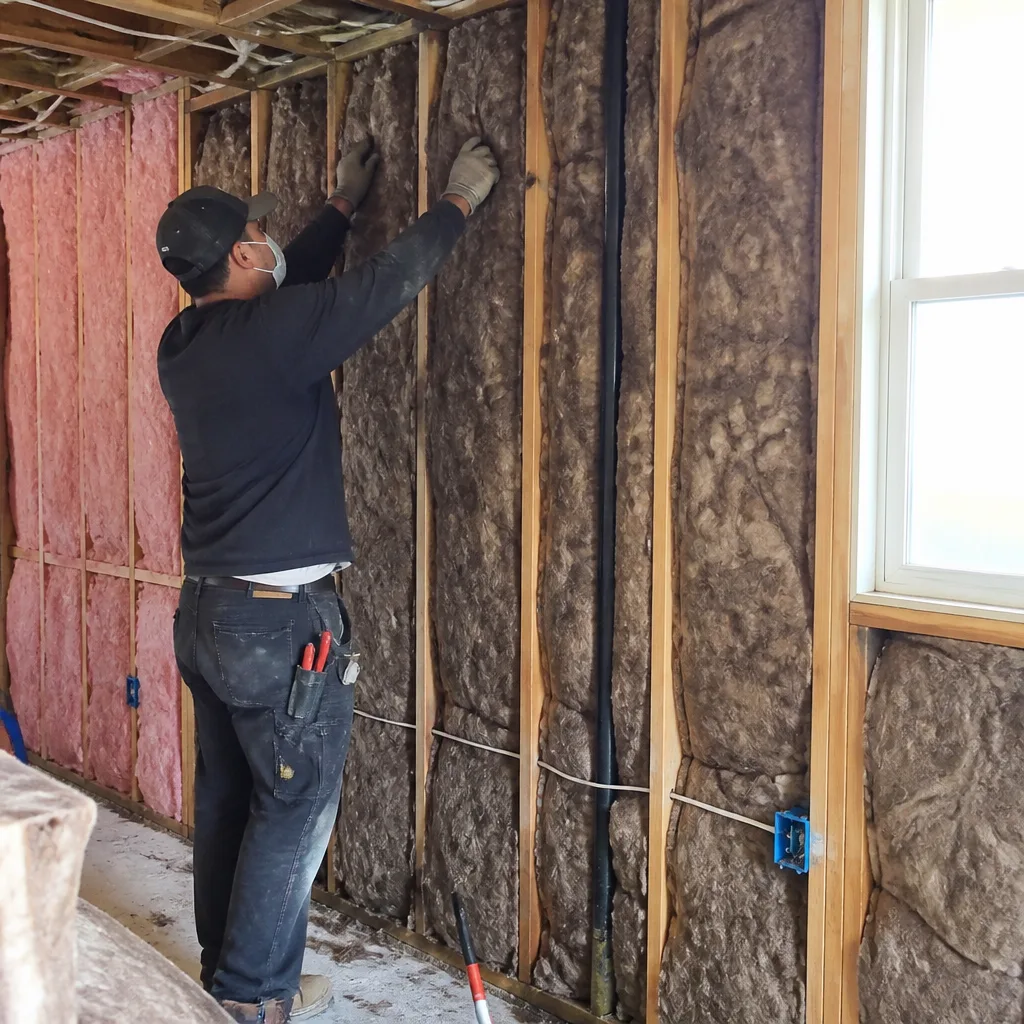 After
AfterAttic Batt Insulation Pricing in Milpitas
Most attic batt insulation jobs in Milpitas fall in the ranges below. These are installed costs – materials and labor combined – not material-only figures.
| Scope | Typical Installed Range |
|---|---|
| Partial attic, 400-700 sq ft (e.g., addition or garage attic) | $700 – $1,600 |
| Standard single-story home, 1,000-1,500 sq ft attic | $1,800 – $3,200 |
| Larger single-story or two-story home, 1,500-2,500 sq ft attic | $3,000 – $5,500 |
| Removal and replacement (existing contaminated or depleted insulation) | Add $0.80 – $1.50/sq ft for removal |
| Air sealing (top plates, can lights, penetrations) | $400 – $1,200 depending on penetration count |
Several factors push a job toward the higher end of these ranges in Milpitas specifically:
- Low attic clearance. Homes near the Milpitas BART station and in the newer townhome developments along Abel Street often have tighter attic access points and lower overall ceiling clearances, which adds time to both the air sealing and installation work.
- Elevated penetration counts. Homes with recessed lighting throughout – common in Milpitas homes built in the late 1990s and 2000s – can have 30 to 50 individual can lights punching through the ceiling plane, each one requiring individual sealing before insulation goes in.
- Target R-value. R-38 is the California Title 24 minimum for most of the Bay Area. Homes targeting R-49 or R-60 require deeper joist bays or a combination of batt and another layer, which affects material cost.
- Existing material condition. If the existing insulation is contaminated, vermin-damaged, or contains regulated materials, removal adds cost and changes the sequence of the job.
Under Haven Standard Clause 1, the price we quote is the price you pay. There are no line items that appear after the work is done. If you have a written estimate from another contractor, bring it to us – we offer a free second opinion on any written quote, and we’ll read it with you and tell you specifically what we see in it.
To get a written price for your Milpitas attic, call (650) 770-8707. The estimate is free, and the price comes before any work starts.
FAQs – Attic Batt Insulation
What R-value do I need for attic batt insulation in Milpitas?
California Title 24 requires a minimum of R-38 for attic insulation in most of the Bay Area, including Milpitas, which sits in Climate Zone 3. For most homes, R-38 is a reasonable target – it’s approximately 12 inches of standard fiberglass batt. Homes that run HVAC equipment more heavily, have south- or west-facing rooflines, or are located in the warmer microclimate pockets of Milpitas near the foothills sometimes benefit from going to R-49, which reduces the heat load meaningfully during July and August when attic temperatures spike. We’ll walk through the right target for your specific attic during the assessment. Call (650) 770-8707 to schedule.
Can batt insulation be installed over my existing insulation?
Sometimes, but not always, and the condition of what’s already there matters more than the depth. If the existing insulation is clean, dry, and free of contamination, adding a layer of batts over it is a legitimate approach – the existing material still contributes to the total R-value. If the existing insulation is compressed, moisture-damaged, or shows signs of rodent activity (tunneling, nesting, contamination), removal is the right first step. Installing new batts over compromised material doesn’t recover the performance loss – it just adds cost on top of a problem that’s still there. We’ll assess and document what we find, and the written scope will tell you which path applies to your attic.
Why does air sealing have to happen before the batt insulation goes in?
Insulation slows heat transfer by trapping still air in its fiber matrix. Air sealing stops conditioned air from moving through gaps and bypassing the insulation entirely. If you install batts without sealing the penetrations first, warm attic air in summer – or cold air in winter – moves directly through the openings in the ceiling plane and into living space. The insulation doesn’t stop that movement; it only works on heat that’s trying to conduct through a still air layer. In a pre-2000 Milpitas home, those unsealed top plates, can lights, and plumbing chases can account for as much conditioned-air loss as a window left open. The blower-door numbers before and after sealing make this concrete – we publish both so you can see the measured difference. That’s why, at Topside Attic Insulation Milpitas, air sealing is a hard prerequisite and not a line item you can opt out of.
How long does attic batt insulation installation take in a typical Milpitas home?
Most standard jobs – air sealing plus batt installation in a 1,200 to 1,800 square foot attic – are completed in a single day. Larger homes or attics with extensive penetration counts (30 or more can lights is not unusual in Milpitas homes built between 1995 and 2010) sometimes run into a second morning. Removal-and-replacement jobs add time, typically a half to a full day depending on the volume of material. We’ll give you a specific time estimate in the written scope so you’re not waiting for a crew to finish without a clear window. To get your written scope and price, call (650) 770-8707.
Key Takeaways
- Attic batt insulation in Milpitas typically costs $1,800 to $4,500 installed for a standard single-story home, depending on attic size, existing conditions, and R-value target.
- California Title 24 requires R-38 minimum for attic insulation in Milpitas – most homes built before 2000 fall short of this standard.
- Air sealing – of top plates, can lights, and penetrations – must happen before batts go in for the insulation to perform near its labeled R-value.
- We document before-and-after blower-door readings on applicable jobs so you can see the air-sealing result in a single measurable number, not just a technician’s word.
- Every job includes a written price before work starts, a documented photo record when the crew leaves, and the 365-Day Done Right Promise in writing.
- Wes Okafor and the crew at Topside Attic Insulation Milpitas have been doing this under The Haven Standard since 2016 – with a written scope and documented record on every job.
Schedule Your Attic Batt Insulation Assessment in Milpitas
If your attic is under-insulated, running old compressed batts, or has never had the penetrations properly sealed, the work to fix it is straightforward – the written price comes before anything else, and the documentation comes when we leave. There’s no reason to guess at what the job will cost or what was done.
Our broader home page covers the full building-envelope service line if you’re looking at more than just the attic. For attic-specific options beyond batts – including blown-in insulation and radiant barrier – the Attic Insulation in Milpitas page covers the full picture.
To schedule a free written estimate for attic batt insulation in Milpitas, call (650) 770-8707. A live person picks up – no voicemail, no callback window measured in business days. We’ll assess your attic, document what we find, and give you a flat written price before anything else happens.
Written by Wes Okafor, Owner at Topside Attic Insulation Milpitas, serving Milpitas since 2016.