
Last updated September 24, 2026
The Complete Guide to Insulation in Milpitas
The city of Milpitas recorded 27 days above 90°F in summer 2023 while neighborhoods two miles west stayed under 85°F. That gap matters because the same insulation spec can’t serve both, yet most contractors quote them identically. In this guide and our more guides & resources, you’ll learn how Milpitas’s thermal microclimate - shaped by its position between San Francisco Bay and the Diablo foothills - changes what your attic, walls, and crawl space actually need. We’ll map neighborhood-specific conditions to R-values, explain why air sealing must come first, and show you what documented proof of performance looks like so you stop buying insulation that looks right on paper but behaves wrong in your ZIP code.
Quick Answer
Insulation in Milpitas requires higher attic R-values than generic Bay Area advice suggests - typically R-49 to R-60 for hillside homes in Sinnott and Ranch neighborhoods, and R-38 to R-49 for flatland areas near the bay - with mandatory air sealing before any material is added. The most common materials are blown fiberglass, cellulose, and open-cell spray foam, each with trade-offs in cost, air-sealing contribution, and moisture management - a topic we explore in our Insulation Cost Breakdown: The Milpitas Homeowner’s Reference for 2026. A proper job includes pre- and post-work blower-door testing to verify the building envelope’s actual performance, not just code compliance.
Table of Contents
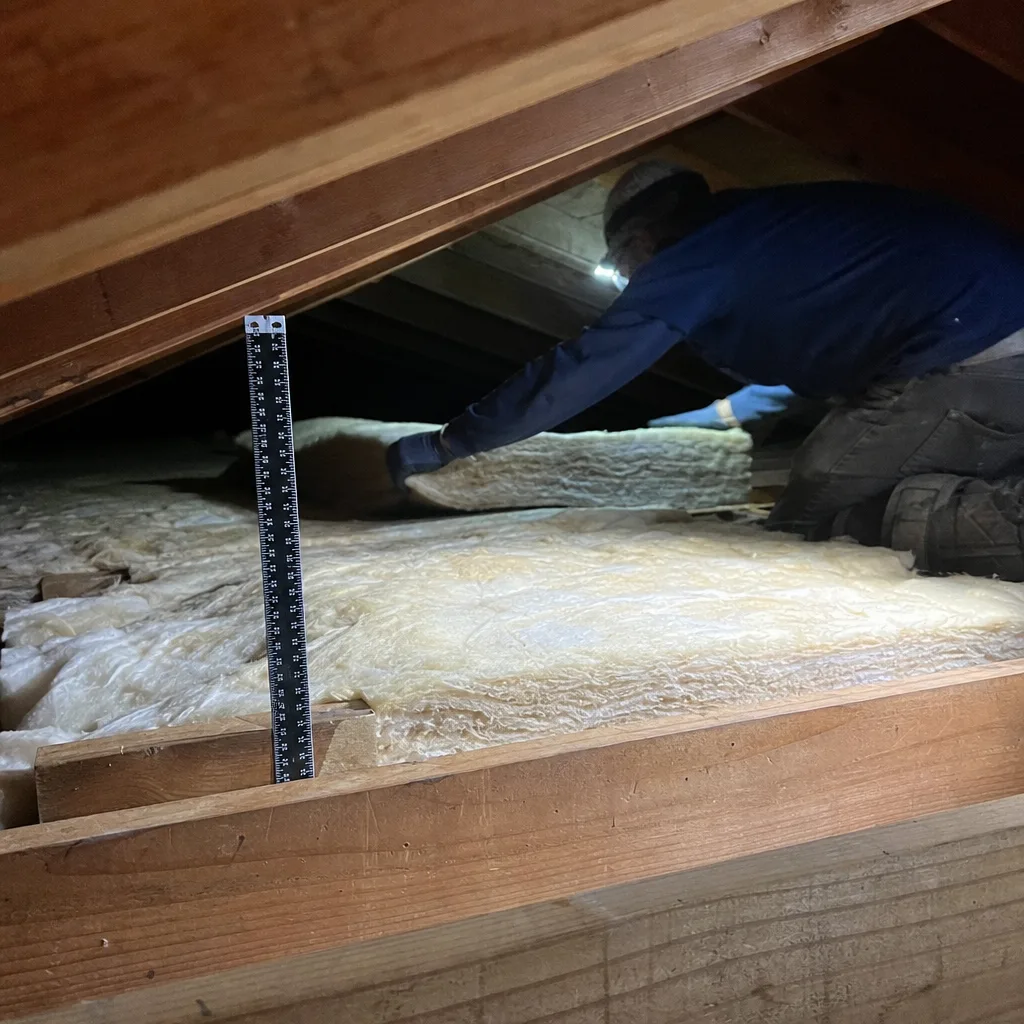
- How Milpitas’s Thermal Microclimate Changes Your Insulation Needs
- Neighborhood-by-Neighborhood: What Sinnott, Ranch, and Flatland Homes Need
- Why Air Sealing Must Come First: The Blower-Door Rule
- Three Materials, Honest Trade-Offs: Blown Fiberglass, Cellulose, Open-Cell Spray Foam
- Title 24 Minimums vs. Performance That Moves Your Utility Bill
- What Documented Proof of Performance Looks Like
- What Insulation Costs in Milpitas: Real Price Ranges
- Common Mistakes to Avoid
- When to Call a Professional
- Frequently Asked Questions
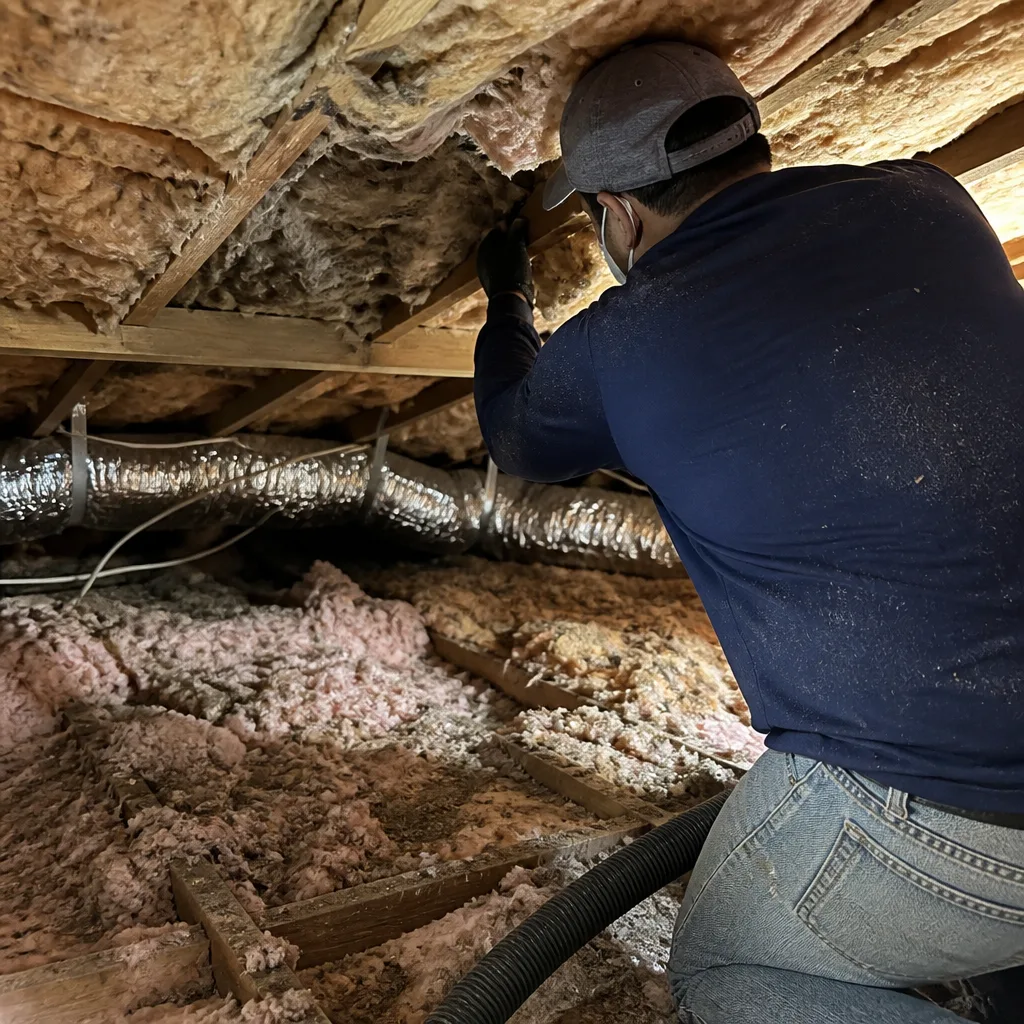 Before
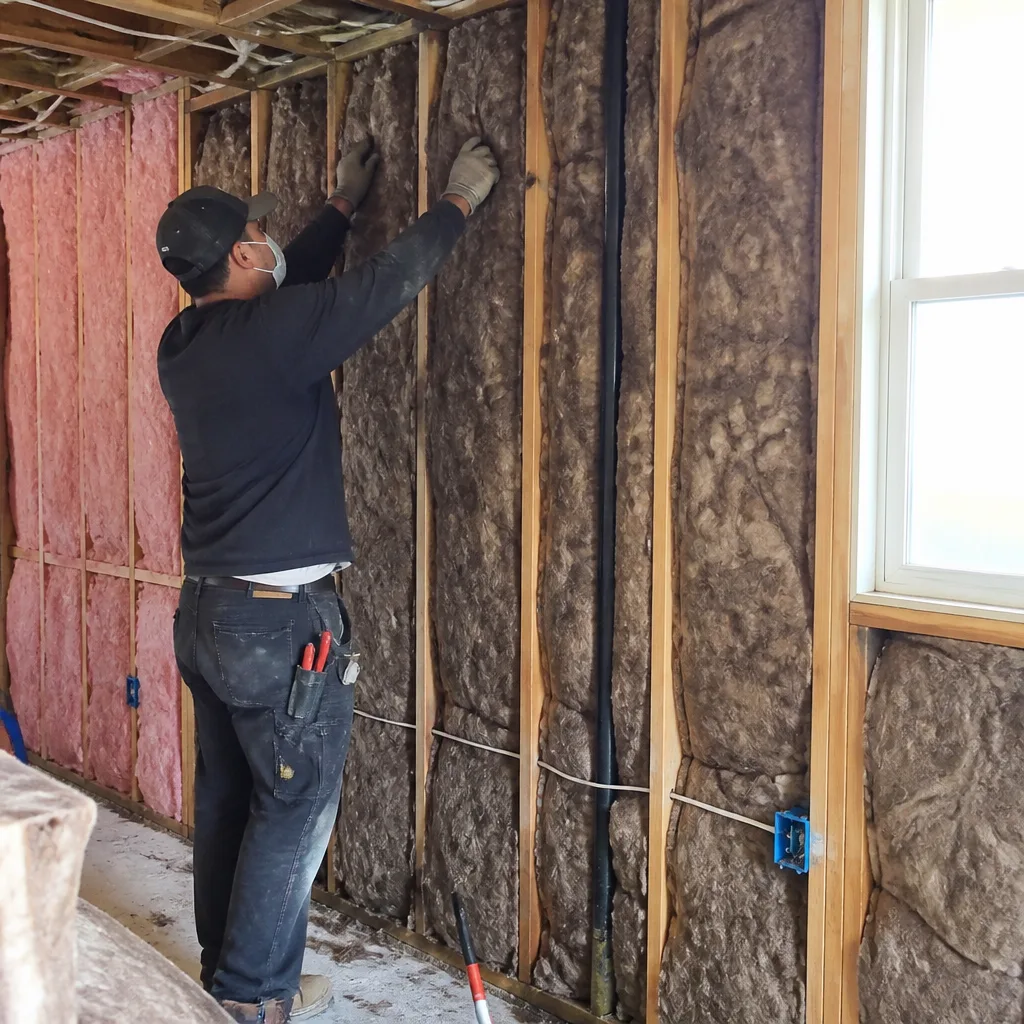 After
AfterHow Milpitas’s Thermal Microclimate Changes Your Insulation Needs
Milpitas sits in a narrow corridor where marine air from the bay collides with rising heat from the Santa Clara Valley floor and the Diablo foothills. The result is a city with at least three distinct thermal zones - not the uniform “Bay Area mild” that most insulation contractors assume.
Here’s what that means in practice. West Milpitas, near the wetlands and the 880 corridor, sees more marine layer penetration and slower morning warm-ups. Mid-city neighborhoods like Sinnott experience sharper daily temperature swings - 55°F at dawn, 95°F by 3 p.m. - because they’re shielded from bay breezes by the terrain. East Milpitas, climbing toward the foothills, accumulates heat longer into the evening and sees more sustained high temperatures during Santa Ana events.
These patterns change how insulation performs. In high-swing zones, the attic becomes a heat battery - absorbing radiation all day, releasing it into living spaces for hours after sunset. That makes R-value alone an incomplete metric. You need materials that also manage thermal lag, and you need an air barrier tight enough that conditioned air isn’t escaping while the attic is still radiating downward.
The California Energy Commission’s climate zone map puts most of Milpitas in Zone 4, but that classification was drawn with a broad brush. We’ve measured attic temperatures 18°F higher in Ranch neighborhood homes than in comparable floor plans near Jacklin Road on the same July afternoon. The insulation specification should reflect that difference, not ignore it.
Key implications for Milpitas homeowners:
- Attic R-values at the high end of Title 24’s range pay back faster here than in cooler Bay Area cities
- Radiant barrier effectiveness varies dramatically by neighborhood orientation and roof color
- Crawl spaces in east Milpitas need vapor management that west-side homes may not
- Air sealing priority rises with temperature swing amplitude - the harder your HVAC works, the more expensive every leaked CFM becomes
Most competitors quote from a standard Bay Area spec sheet. We start with a blower-door test and thermal imaging scan to see what your specific envelope is actually doing.
Neighborhood-by-Neighborhood: What Sinnott, Ranch, and Flatland Homes Need
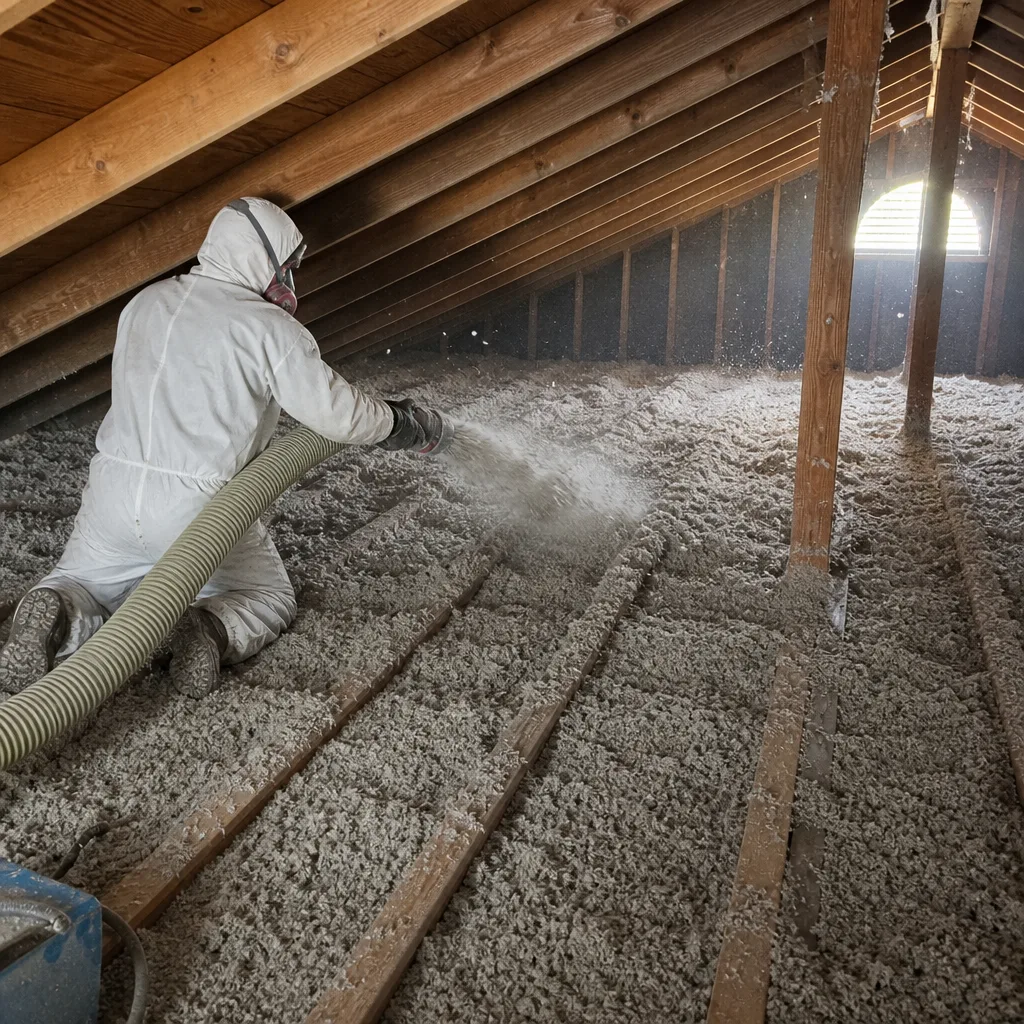
Not all Milpitas ZIP codes experience the same thermal load. Here’s how we adjust specifications based on where you live.
Sinnott and Mid-City (Flat-to-Gentle Slope, 95035)
These 1950s-1970s subdivisions feature low-slope roofs with minimal overhangs and original R-19 batts that have settled to R-13 or below. The thermal challenge is afternoon heat gain through the roof deck, compounded by ductwork that often runs through the vented attic.
Our typical spec for Sinnott:
- Attic: R-49 to R-60 blown fiberglass or cellulose over complete air sealing
- Priority repairs: top plate sealing, can light enclosures, duct boot connections
- Radiant barrier: generally not cost-effective given roof pitch and orientation mix
We’ve found that Sinnott homes built 1965-1978 often have unsealed top plates - the horizontal framing member where interior walls meet the ceiling - that leak conditioned air directly into the attic. A blower-door test with a thermal camera makes this visible in about 90 seconds.
Ranch and Foothill Adjacent (East Milpitas, 95035)
Higher elevation, more sun exposure, and newer construction (1980s-2000s) with complex rooflines. These homes often have better original insulation but worse air sealing - the trade-off of faster construction cycles during the tech boom.
Our typical spec for Ranch:
- Attic: R-60 blown material or open-cell spray foam at roofline for conditioned attic
- Priority repairs: chase sealing around fireplaces, wire penetrations in top plates, garage attic common walls
- Radiant barrier: worth evaluating on south- and west-facing roof sections
Ranch homes with cathedral ceilings or bonus rooms over garages present the hardest envelope problems in Milpitas. The knee walls and sloped ceiling cavities are rarely air-sealed properly during original construction, creating thermal bypasses that defeat whatever R-value exists.
Flatland West (Near Wetlands, 95035)
Closer to the bay, these homes see more humidity and less extreme heat. The threat is less thermal and more moisture-related - vapor drive from crawl spaces, condensation in attic sheathing during marine layer mornings.
Our typical spec for flatland west:
- Attic: R-38 to R-49 sufficient if air sealing is thorough
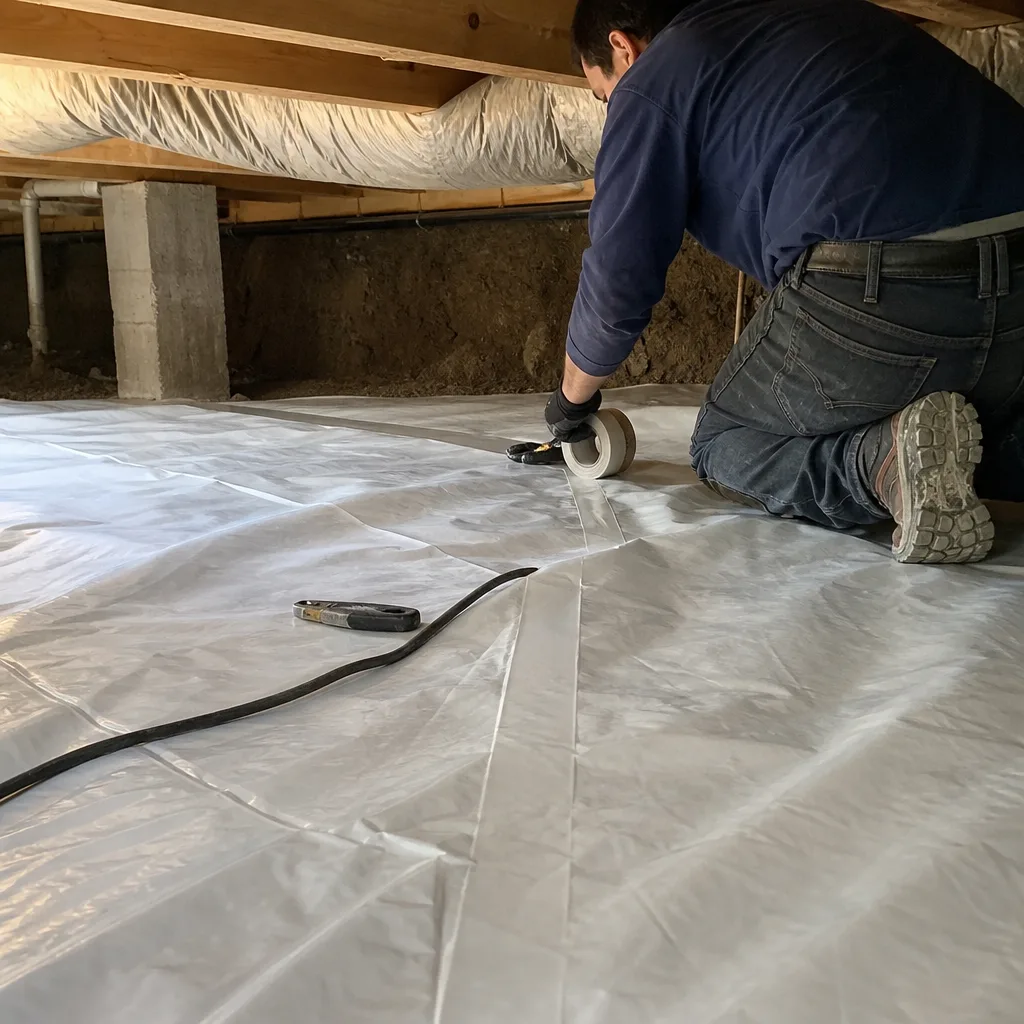
- Crawl space: vapor barrier and perimeter sealing often higher priority than attic upgrades
- Material preference: cellulose or treated fiberglass with attention to vapor permeability
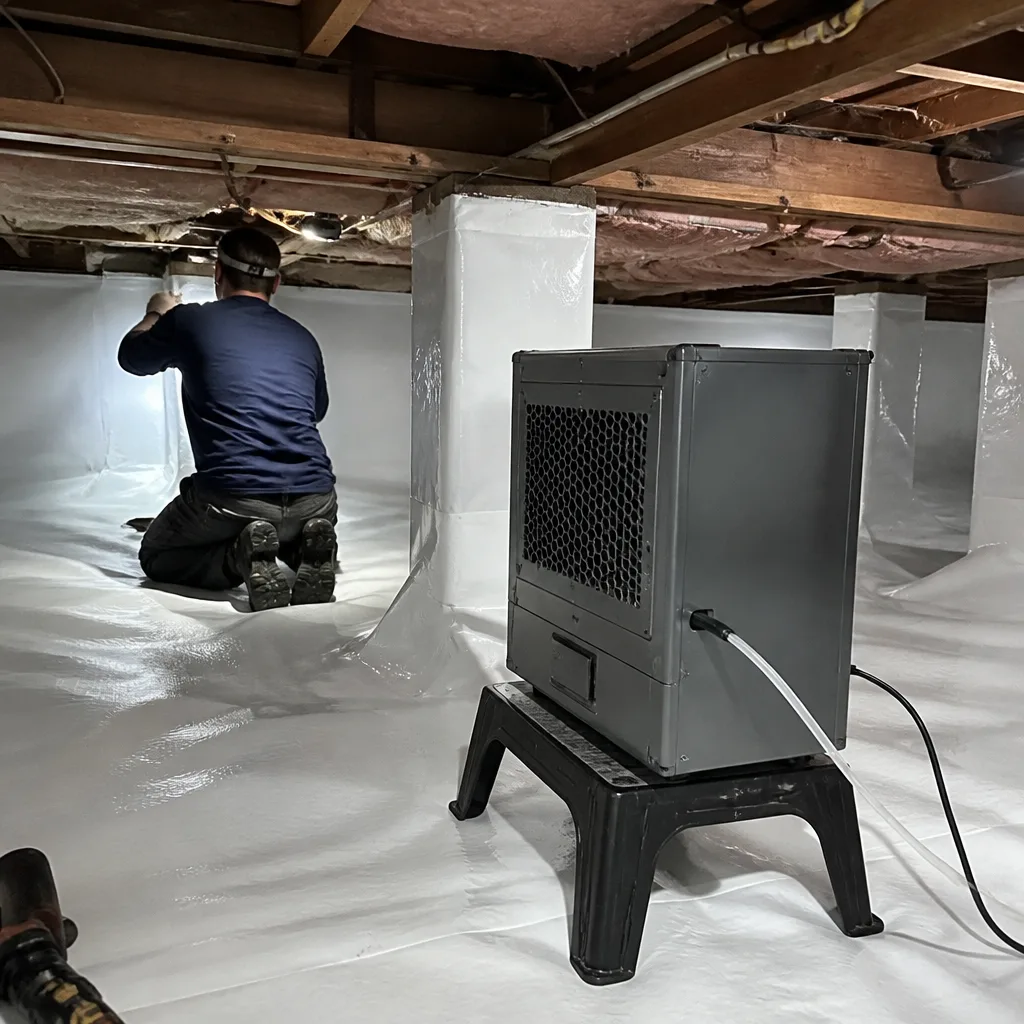
Crawl space encapsulation in Milpitas is often the better first investment in these neighborhoods. We’ve seen homes with dry-looking attics and saturated crawl space joists that were driving 40% of the heating load through conduction.
Why Air Sealing Must Come First: The Blower-Door Rule
We will never blow insulation over an unsealed attic floor. That’s not a preference - it’s a building science imperative that our Milpitas insulation work follows on every job.
Here’s why. Insulation slows heat transfer, but it does not stop air movement. Fiberglass and cellulose are air-permeable materials - wind washing through them reduces effective R-value by 20% to 50% depending on velocity. More critically, warm moist air that leaks through insulation into cold attic spaces in winter condenses on sheathing, creating the exact moisture problems that homeowners hired insulation to prevent.
The industry rule we follow: if a blower-door test shows more than 7 ACH50 (air changes per hour at 50 Pascals of pressure), air sealing is mandatory before insulation is added. Below 5 ACH50, the envelope is tight enough that insulation can proceed with standard detailing. Between 5 and 7 ACH50, we seal the highest-impact leaks first, then retest.
What we seal before insulating:
- Top plates - the horizontal 2×4 or 2×6 where every interior wall meets the ceiling drywall; typically unsealed in pre-1990 Milpitas construction, leaking hundreds of CFM
- Recessed can lights - especially non-IC-rated fixtures from the 1970s and 1980s; we install fire-rated enclosures or replace with airtight LED units
- Duct boots and penetrations - the sheet metal collar where HVAC supply lines enter the ceiling; gaps here dump conditioned air directly into the attic
- Chimney and flue chases - framed openings around masonry or metal chimneys that create straight vertical passages from basement to attic
- Wire and plumbing penetrations - often oversized holes drilled by electricians and plumbers with no subsequent sealing
- Attic access hatch or pull-down stair - frequently the single largest leak in the attic plane; we build sealed, insulated boxes or upgrade to airtight assemblies
The sequence matters. We’ve been called to Milpitas homes where a previous contractor blew R-38 cellulose over an attic floor with 12 ACH50 leakage. The insulation performed like a filter, not a thermal barrier - dirty, compressed, and ineffective within three years. Removing that material to do the sealing first costs more than doing it right the first time.
Under Haven Standard: Have it in writing - every scope document specifies the air-sealing sequence and the target ACH50 before insulation is added.
Three Materials, Honest Trade-Offs: Blown Fiberglass, Cellulose, Open-Cell Spray Foam
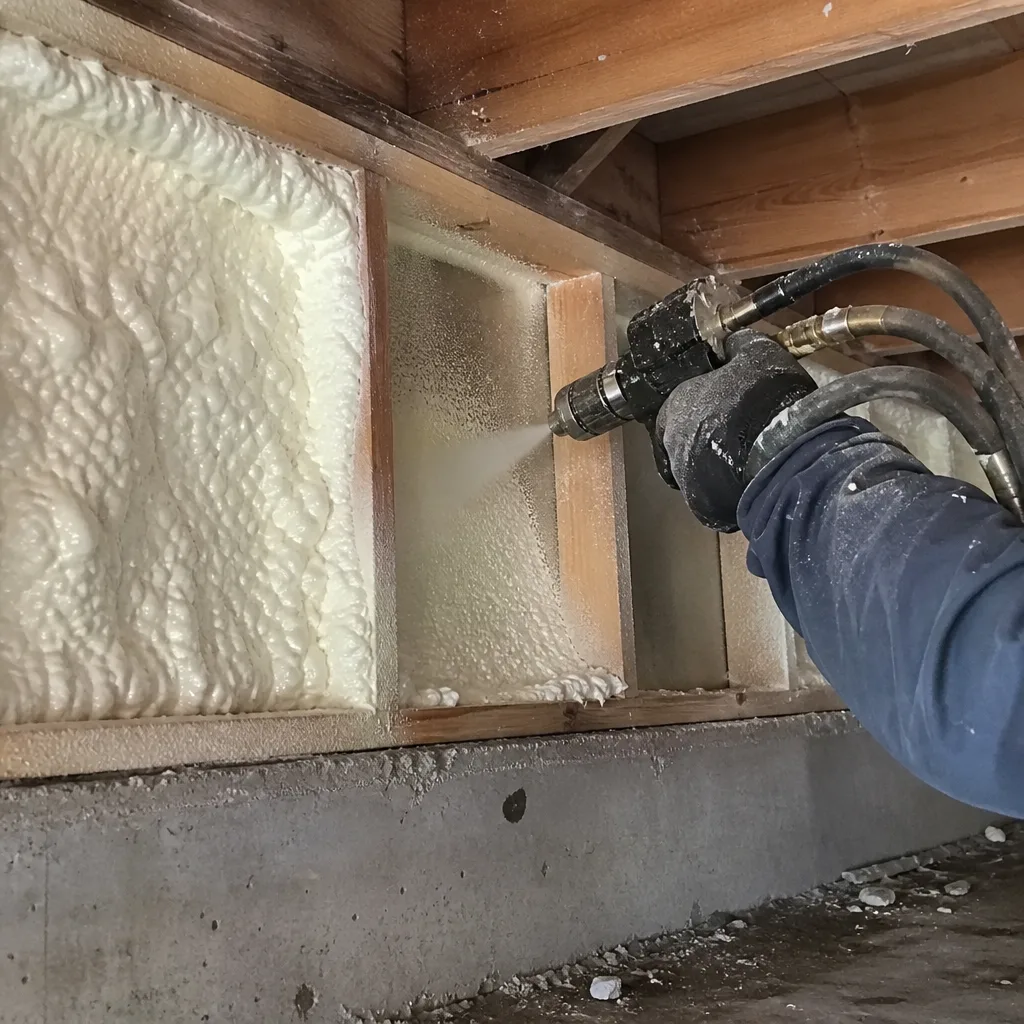
Most Milpitas attics get one of three materials. Here’s how they actually perform, with costs and caveats that marketing brochures omit - and whether DIY vs Professional Insulation: The Milpitas Homeowner’s Decision Guide fits your situation.
Blown Fiberglass (Knauf Jet Stream, Owens Corning AttiCat, CertainTeed InsulSafe)
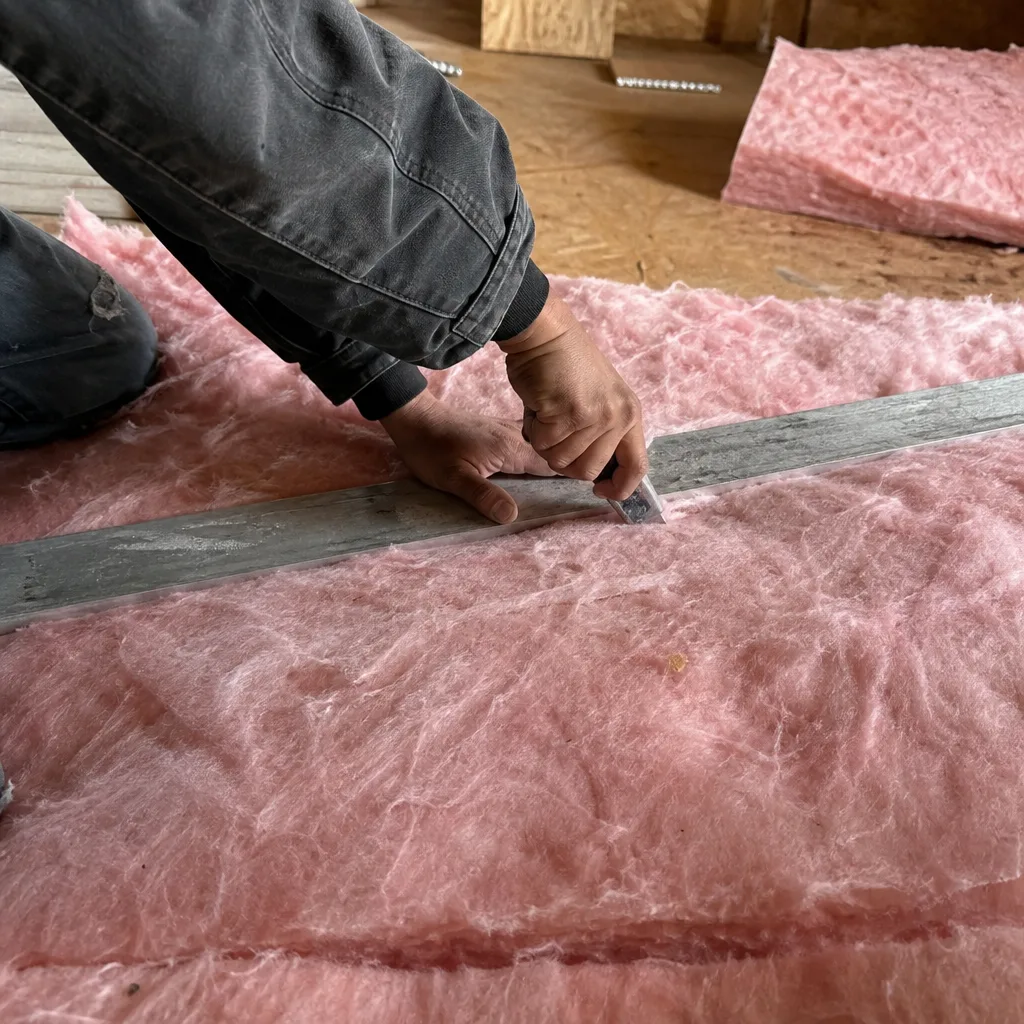
Loose-fill fiberglass blown to depth with a hose. The dominant material in California retrofits because it’s fast to install and doesn’t settle significantly if density is correct.
Effective R-value: R-2.2 to R-2.5 per inch, so R-49 requires about 20 inches. Cost in Milpitas: most attic jobs run $2.80-$4.20 per square foot, including air sealing prep. Best for: Standard vented attics with good access, where cost per R-value is the primary driver.
Trade-offs: Fiberglass is vapor-permeable and air-permeable - it does not air seal. It performs poorly if wind washing occurs. Some homeowners report dust migration in homes with very leaky return plenums. We source from Knauf and CertainTeed; no proprietary lock-in.
Cellulose (GreenFiber, Nu-Wool, or damp-spray systems)
Ground paper treated with borate fire retardant, blown dry or sprayed damp. Higher density than fiberglass, which reduces convection and provides modest air-sealing benefit at high thickness.
Effective R-value: R-3.2 to R-3.8 per inch, so R-49 requires 14-16 inches. Cost in Milpitas: $3.20-$4.80 per square foot with prep. Best for: Homes where sound dampening matters, or where the attic floor has irregular joist spacing that fiberglass bridges poorly.
Trade-offs: Cellulose can settle 10-20% if installed too dry or at too low density - we verify depth at multiple points and document with photos. It absorbs moisture more readily than fiberglass; in Milpitas homes with roof leaks or bathroom venting into attics, we fix those first or specify fiberglass. Borate treatment makes it unpalatable to rodents, which matters in some neighborhoods.
Open-Cell Spray Foam (Icynene, Demilec Sealection)
Water-blown polyurethane applied as a liquid that expands to fill cavities. Creates both insulation and air barrier in one application, though it’s not a vapor barrier at standard thickness.
Effective R-value: R-3.6 to R-3.8 per inch; R-49 requires 13+ inches, which is rarely cost-effective in attics. More commonly applied at 5-7 inches (R-19-R-26) at the roofline to create a conditioned attic. Cost in Milpitas: $5.50-$8.50 per square foot of roof deck. Best for: Complex attics with HVAC equipment and ductwork that can’t be moved; cathedral ceilings; bonus rooms with sloped ceilings.
Trade-offs: Higher upfront cost. Requires careful moisture management - we never apply open-cell foam to a roof deck without verifying the existing moisture content and specifying ventilation or dehumidification strategy. Not DIY-removable; future wiring or plumbing changes are harder. We source from Icynene and Demilec.
Spray foam insulation in Milpitas makes most sense when the attic is being converted to conditioned space or when ductwork relocation is prohibitively expensive. For standard vented attics, blown material with meticulous air sealing typically delivers better return on investment.
Title 24 Minimums vs. Performance That Moves Your Utility Bill
California’s Title 24 Building Energy Efficiency Standards set the legal floor for insulation in new construction and alterations. In Milpitas’s climate zone, the prescriptive attic R-value minimum is R-38 for retrofits and R-49 for new construction. But compliance and performance are different metrics.
We’ve tested Title 24-compliant homes that still leak 6 ACH50 and carry $400+ summer cooling bills. The code specifies insulation thickness, not installation quality, and it says nothing about air sealing beyond rough requirements that are rarely verified in the field.
What Title 24 misses that matters in Milpitas:
- Grade I installation quality - the code allows Grade III (gaps and compression) in some retrofit scenarios; we require Grade I (full contact, no voids) on every job
- Top plate and penetration sealing - not separately inspected in most jurisdictions; we treat it as mandatory
- Duct leakage - Title 24 sets 15% leakage maximum, but a leaky duct in an unconditioned attic wastes more energy than R-value differences
- Thermal bridging - code doesn’t address conductive heat flow through framing members that bypass insulation
- Actual vs. labeled R-value - settled, wind-washed, or moisture-compromised insulation performs below its labeled rating
Our performance target for Milpitas homes: attic R-value appropriate to neighborhood thermal load, air leakage below 5 ACH50, and duct leakage below 10% if ducts run through unconditioned space. We document each metric before and after work so the homeowner sees the change, not just the invoice.
The difference shows up in utility data. A Sinnott home we completed in 2022 - original R-19 batts, 8.2 ACH50, $340 average summer bill - post-work R-49 cellulose, 3.1 ACH50, $187 average summer bill. The R-value improvement mattered, but the air sealing reduction mattered more.
What Documented Proof of Performance Looks Like
Every contractor says they do quality work. We show you the numbers, because data outlasts promises.
Here’s what you should receive from any insulation contractor in Milpitas - see our How to Hire a Insulation Contractor in Milpitas: A Step-by-Step Guide - and what we deliver on every job under Haven Standard:
- Written scope and written price before any work starts - flat price, no open-ended allowances, no “we’ll see once we’re in there” surprises. This is Haven Standard Clause 1.
- Pre-work blower-door test - pressurization reading in CFM50 and ACH50, with a thermal imaging scan showing leak locations. You keep the report.
- Documented Photo Record - photos of every sealed penetration, every insulation depth measurement, every critical detail. Included on every job, not available on request.
- Post-work blower-door test - same metrics, same equipment, same technician where possible. The before-and-after comparison shows exactly how much the envelope improved.
- Certificate of completion - R-value achieved, materials used, air leakage results, warranty terms, and the 365-Day Done Right Promise in writing.
What this looks like in practice: a Milpitas homeowner in the Ranch neighborhood received a pre-work reading of 4,200 CFM50 (7.8 ACH50 in their 3,200 sq ft home), thermal images showing 34°F temperature differential at can lights and top plates, and a photo record of 47 images. Post-work: 1,890 CFM50 (3.5 ACH50), thermal images showing 4°F maximum differential, and 52 additional photos including depth gauge readings at 12 locations. The certificate specified R-60 Knauf Jet Stream, sealed top plates, six can light enclosures, and the 365-Day Done Right Promise.
That’s documentation you can take to a home inspector, an appraiser, or your own records. It’s also how we verify our own work - the crew lead reviews every photo set before the job is closed.
9,000+ homes sealed and insulated since 2016 - every one with a written price before work started and a documented record when the crew left.
What Insulation Costs in Milpitas: Real Price Ranges
These are actual price ranges for Milpitas homes we’ve quoted in 2023-2024, based on 1,200-2,400 sq ft conditioned floor area with standard attic access. Every job includes air sealing prep; we do not quote insulation-only work.
| Service | Typical Range | What Drives Price |
|---|---|---|
| Attic air sealing + blown fiberglass (R-49) | $3,200 - $5,800 | Attic square footage, existing access condition, can light count, duct boot accessibility |
| Attic air sealing + blown cellulose (R-49) | $3,600 - $6,400 | Same factors; cellulose requires more precise density verification |
| Attic air sealing + blown material to R-60 | $4,200 - $7,200 | Depth required; some attics need raised heel truss modifications for full depth |
| Open-cell spray foam at roofline (conditioned attic) | $8,500 - $14,000 | Roof deck square footage, pitch complexity, HVAC relocation needs |
| Crawl space encapsulation + vapor barrier | $4,500 - $8,500 | Crawl space height, perimeter linear footage, existing moisture damage |
| Insulation removal + replacement (attic) | $2,800 - $5,500 additional | Contamination level (rodent, mold), disposal fees, deck repair needs |
Factors that push Milpitas jobs toward the higher end: post-1980 construction with complex rooflines and multiple attic compartments; homes with original knob-and-tube wiring that must be addressed before insulation contact; attics with HVAC equipment that requires platform building or relocation planning; and hillside homes with limited crew access.
Under Haven Standard: Free Second Opinion on Any Written Estimate - bring us a competing quote and we’ll read it with you, line by line, to compare scope and specifications.
Common Mistakes to Avoid
- Blowing insulation over knob-and-tube wiring - still present in 15% of pre-1975 Milpitas homes; this creates a fire hazard and violates code. We identify and require remediation before insulating.
- Ignoring the garage attic common wall - the firewall between house and garage attic is often unsealed and uninsulated, a major thermal bypass and fire safety gap in Ranch and Sinnott homes.
- Installing radiant barrier without addressing air leaks - reflective foil helps with radiant heat but does nothing for convective losses; in leaky Milpitas attics, the air sealing ROI is 3-5x higher.
- Specifying R-38 for east hillside homes - Title 24 allows it, but summer heat gain in Ranch and foothill-adjacent neighborhoods makes R-49 the practical minimum for comfort and bill reduction.
- Skipping the blower-door test - without measured before-and-after data, you’re buying a material installation, not a verified performance improvement. Demand the numbers.
- Using bath fans as attic ventilation strategy - venting moist bathroom air into the attic, even through a duct, loads the space with humidity that degrades insulation and grows mold. We verify termination to exterior on every job.
- Assuming new construction was done right - Milpitas homes built 1995-2010 often have the worst air sealing we’ve measured, rushed during boom cycles with no field verification.
When to Call a Professional
Call for an assessment if your summer cooling bills exceed $250/month, you feel temperature differences of more than 3°F between rooms on the same floor, or you’ve noticed ice damming on north-facing roof sections in winter (a sign of attic air leakage and inadequate insulation). Also call before any major HVAC replacement - a smaller, properly sized system often suffices after envelope improvements, and we can coordinate with your HVAC contractor.
Topside Attic Insulation Milpitas offers free estimates in Milpitas. A live person answers calls 24/7 - no voicemail loops, no callback windows measured in business days. Call (650) 770-8707 to schedule. We’ll bring a blower door and thermal camera to the first visit, show you what your envelope is actually doing, and deliver a written price before any work starts.
Frequently Asked Questions
Most attic insulation jobs in Milpitas run $3,200 to $6,400 for air sealing plus blown material to R-49, depending on attic size, access difficulty, and the number of penetrations that need sealing. Open-cell spray foam at the roofline for a conditioned attic typically costs $8,500 to $14,000. Call (650) 770-8707 for a written estimate on your specific home - estimates are free, and we provide a Free Second Opinion on any written quote you’ve already received.
Repair is rarely cost-effective for insulation that’s compressed, contaminated, or past 20 years. Spot-adding material over settled batts creates uneven thermal layers and hides air leaks. In most Milpitas homes we assess, removal and replacement with proper air sealing delivers better performance and often qualifies for higher utility rebates. Call (650) 770-8707 and we’ll evaluate what’s actually in your attic.
No - and any contractor who offers same-day installation without a blower-door test and written scope is skipping steps that determine whether the work will perform. Our process: assessment with testing, written price and scope for your approval, then scheduled installation with the same crew lead who assessed your home. Under Haven Standard: Have it in writing, always.
R-49 to R-60 for most Milpitas homes, with R-60 preferred in east hillside neighborhoods like Ranch that see more sustained heat. West flatland homes near the bay may perform adequately at R-38 to R-49 if air sealing is thorough. The specific target depends on your neighborhood’s thermal load and your comfort priorities - we measure and recommend, not guess.
No. Attic and crawl space work doesn’t require you to vacate. We contain our work area, run exhaust ventilation during spray foam applications, and schedule those for mornings when occupants can step out for the 2-4 hour cure window if preferred. Our technicians are background-checked and uniformed; you receive a text when your crew is on the way with a named technician.
Yes, measurably - but the reduction depends on what else is wrong. A leaky duct system in an unconditioned attic wastes more energy than low R-value alone. Our Milpitas customers typically see 15-35% heating and cooling cost reduction after combined air sealing and insulation, with the higher end coming from homes that started above 7 ACH50. We document pre- and post-work blower-door numbers so you can verify the envelope improvement independent of weather variables.
The Bottom Line
Milpitas insulation isn’t a commodity purchase - it’s a performance decision that should be matched to your neighborhood’s actual thermal conditions, not a generic Bay Area spec. Start with measured air leakage, seal before you insulate, choose materials based on honest trade-offs not marketing claims, and demand documented proof that the work performed. The right sequence saves money, prevents moisture damage, and delivers utility reductions you can verify on your bill. The wrong sequence - insulation over leaks, R-value without air sealing, compliance without measurement - leaves you with a thicker version of the same problem.
Written by Wes Okafor, Owner at Topside Attic Insulation Milpitas, serving Milpitas since 2016.