
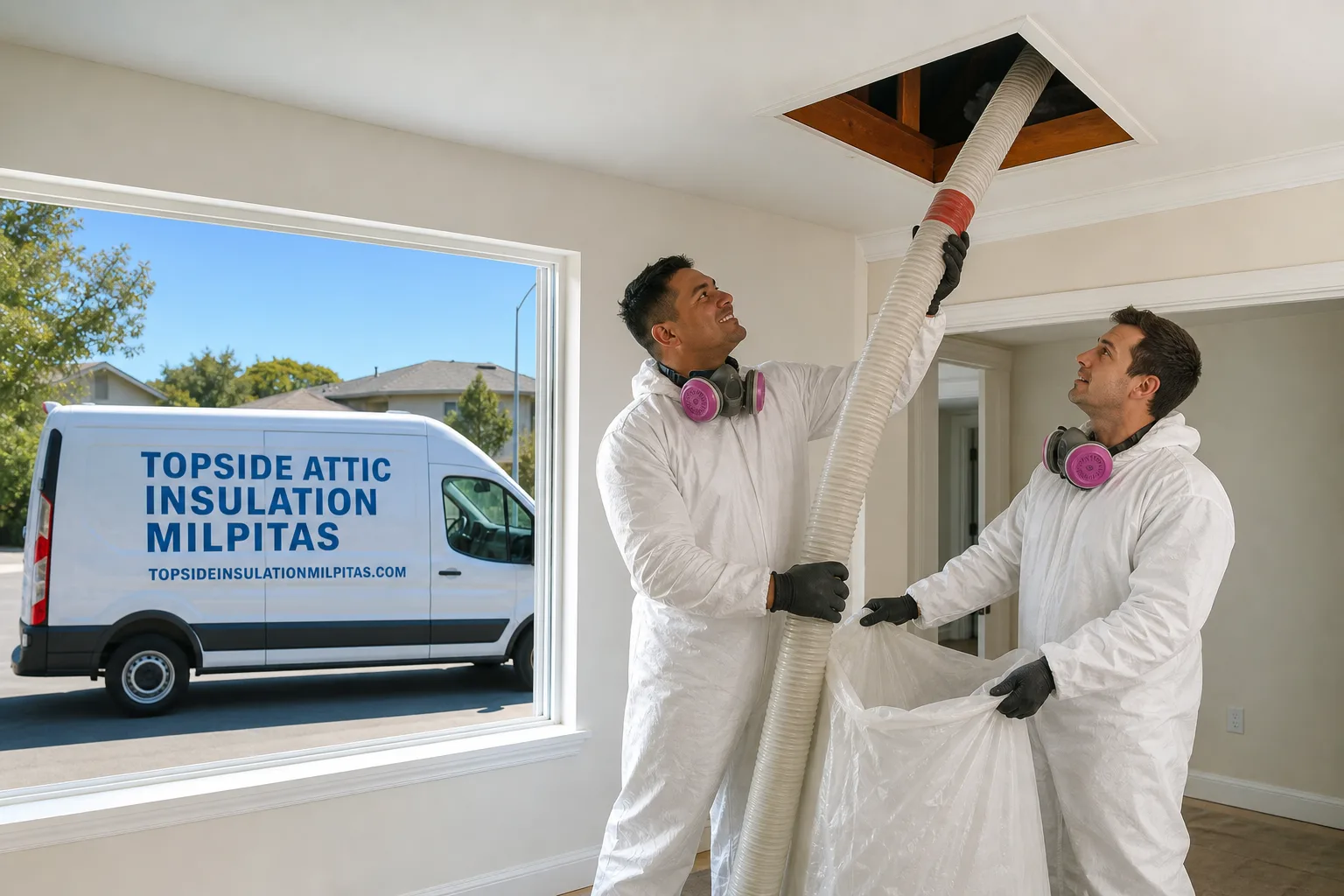
How Much Does Blown-In Insulation Cost in Milpitas?
Blown-in insulation in Milpitas, CA typically costs between $1,800 and $4,500 for a standard attic in a single-family home, with most jobs landing around $2,400 to $3,200 once air sealing is factored in. The range is wide because attic square footage, existing R-value, access conditions, and whether the attic floor needs to be sealed before insulation is added all move the number significantly. At Envelope Insulation Co., a written price is confirmed before any work starts – no surprises on job day.
Blown-In Insulation Cost Breakdown (2026)
The table below reflects actual Milpitas market pricing as of 2026. These are the line items that appear on a written scope from Envelope Insulation Co., not ballpark estimates pulled from national averages.
| Service / Line Item | Typical Price Range | Notes |
|---|---|---|
| Blown-in cellulose or fiberglass, attic (up to 1,000 sq ft) | $1,800 – $2,600 | Assumes accessible hatch, no existing material removal |
| Blown-in cellulose or fiberglass, attic (1,000 – 1,800 sq ft) | $2,400 – $3,600 | Most common range for Milpitas single-family homes built 1970-2000 |
| Blown-in cellulose or fiberglass, attic (1,800 – 2,500 sq ft) | $3,200 – $4,500 | Larger footprints in Sinnott / Montague corridor neighborhoods |
| Attic air sealing (top plates, can lights, penetrations) | $400 – $950 | Completed before insulation is blown – this is not optional at Envelope |
| Insulation removal / old material haul-off | $600 – $1,400 | Common in homes with vermiculite, rodent-compromised batts, or wet insulation |
| Blown-in wall insulation (dense-pack cellulose) | $3,000 – $5,500 | Per project; requires drilling – less common but effective in older Milpitas ranch homes |
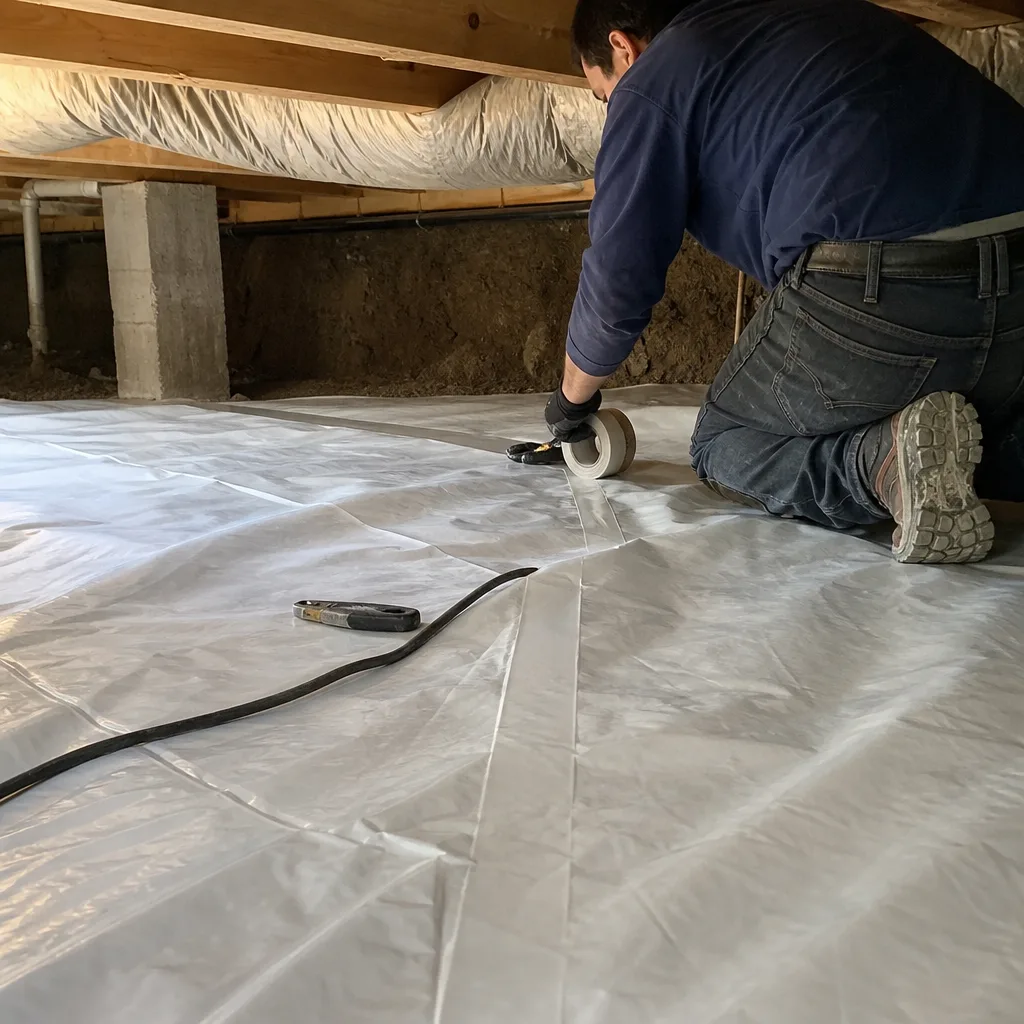
| Crawl space blown-in or batt upgrade | $1,200 – $2,800 | Varies significantly by clearance height and moisture conditions |
| Blower-door test (pre and post air sealing) | Included on applicable jobs | Before-and-after CFM50 readings documented in writing |
A few things drive these numbers in the Milpitas market specifically. The city sits at roughly 50 to 150 feet elevation across most of its residential grid, but homes closer to the Alviso Slough and the western edge of Dixon Landing Road deal with higher ambient humidity – which means existing insulation in those areas tends to show moisture absorption and compaction more frequently than homes in the Hillside or Ranch areas farther east. Compressed or wet insulation loses R-value and often needs removal before new material goes in, adding $600 to $1,400 to the job.
Material costs for cellulose blown-in (sourced from GreenFiber at Envelope) run roughly $0.35 to $0.55 per square foot for material alone. Fiberglass blown-in from Owens Corning or Johns Manville runs slightly higher, around $0.45 to $0.65 per square foot for material, but often installs faster in tight attic bays. Labor in the South Bay market has risen about 12% since 2024, which is reflected in the ranges above.
What Affects Blown-In Insulation Pricing in Milpitas
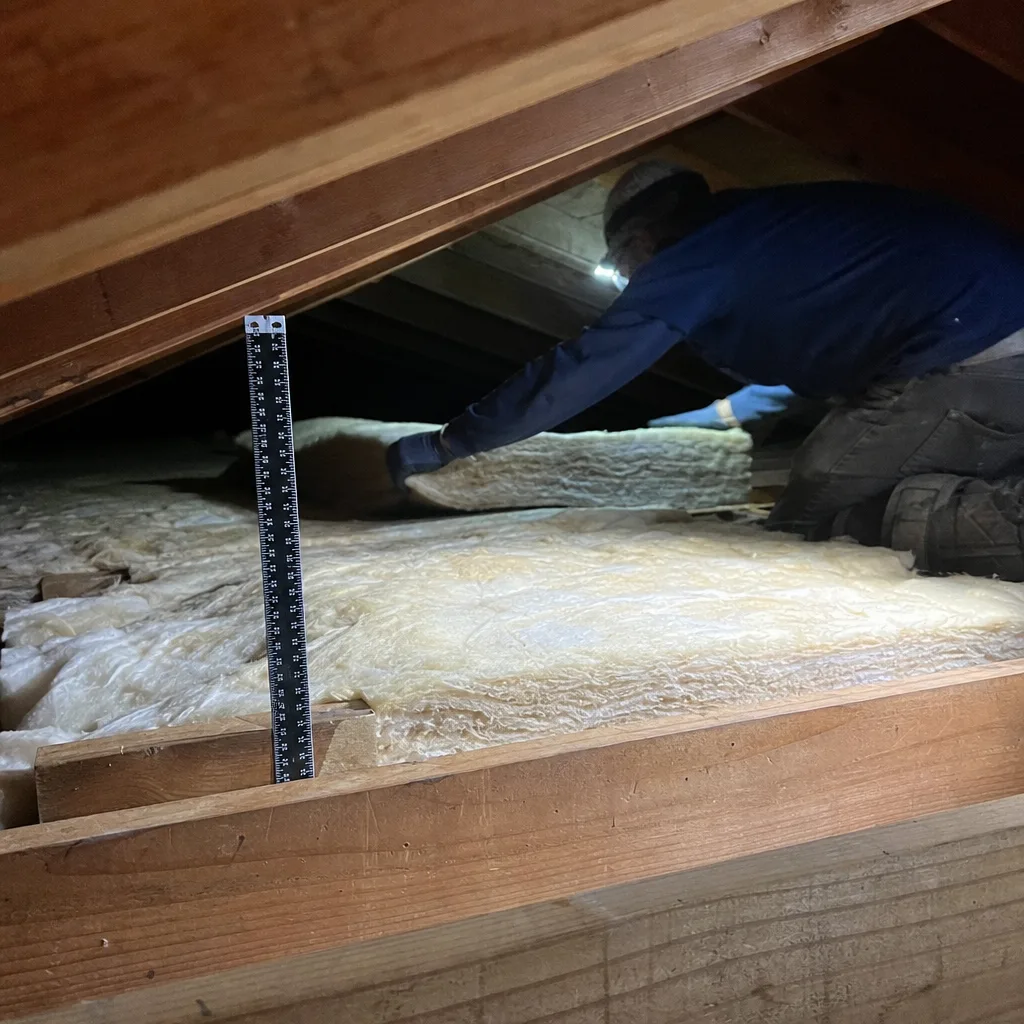
- Attic square footage and configuration: A straightforward 1,200 sq ft attic with one hatch and clear floor access costs considerably less to insulate than a same-size attic with knee walls, a split-level floor, or HVAC equipment sitting in the middle of the space. Many Milpitas homes built in the late 1970s and 1980s in the Sunnyhills neighborhood have attics with partial knee walls and low-pitch sections that require hand-packing rather than machine blowing, which adds time and labor cost.
- Existing insulation condition and depth: California Title 24 requires attic insulation to reach R-38 minimum in Climate Zone 4, which Milpitas falls under. Homes with only 3 to 4 inches of original fiberglass batts – common in pre-1990 construction – are starting from roughly R-11 to R-15. Getting to R-38 means adding 8 to 10 additional inches of blown material. If the existing layer is degraded, rodent-contaminated, or wet, it needs to come out first.
- Air sealing scope: At Envelope Insulation Co., attic air sealing is a hard prerequisite – not an add-on you can decline. The reasoning is straightforward: blowing insulation over an unsealed attic floor is like stuffing a sweater into a drafty window frame. The before-and-after blower-door numbers (a pressurization reading in CFM50 – cubic feet per minute at 50 Pascals – that shows how much conditioned air a home is losing) consistently show that air sealing alone accounts for 40 to 60% of the performance gain. Sealing can runs, top plates, and plumbing penetrations before insulating typically costs $400 to $950 depending on the number of can lights and penetrations present.
- Access difficulty: Attic hatches in many Milpitas townhomes and condos in the Parc Place and Dixon Landing developments are sized to code minimum – 22 by 30 inches – which is tight for hose management and crew movement. Difficult access can add $150 to $400 to a job and limits how efficiently material can be distributed across far corners.
- Material choice: Cellulose blown-in is the most common choice for Milpitas attics – it has a slightly higher R-value per inch than fiberglass blown-in (R-3.7 per inch versus R-2.7 to R-3.0), settles less over time than loose fiberglass, and performs better in the Bay Area’s mixed-humid climate. Fiberglass blown-in (Owens Corning or Johns Manville product) is sometimes preferred in attics with active moisture concern because it does not absorb water the way cellulose can in extreme conditions. Spray foam (Icynene or Demilec) at the roofline for an unvented attic assembly costs considerably more – typically $6,000 to $14,000 for a full roof deck application – but is a different scope entirely.
- Permit requirements: Santa Clara County and the City of Milpitas generally do not require a building permit for like-for-like insulation additions in existing attics, but work that modifies the attic’s ventilation configuration or alters the thermal boundary (such as converting to an unvented attic with spray foam at the roof deck) typically does. Wes Okafor reviews permit requirements during the written scope phase so the homeowner knows before work starts, not after.
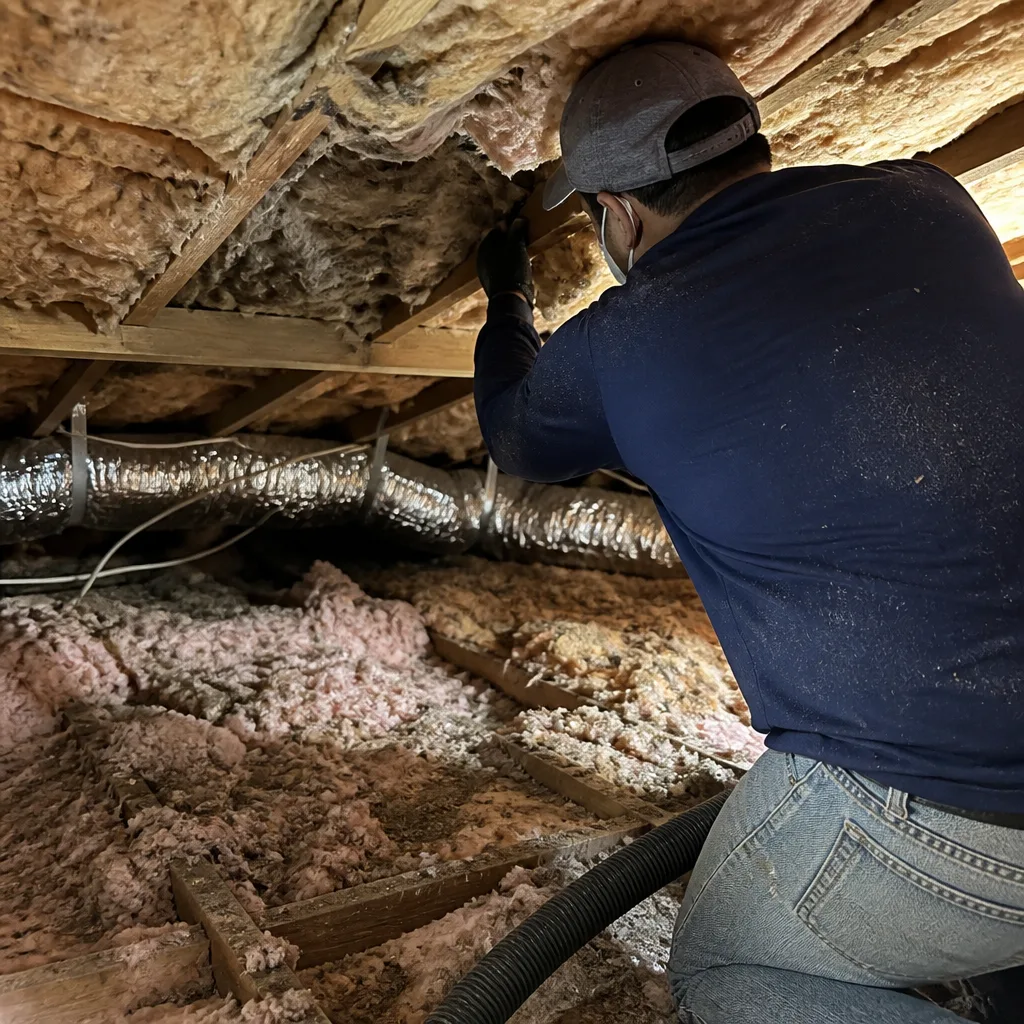 Before
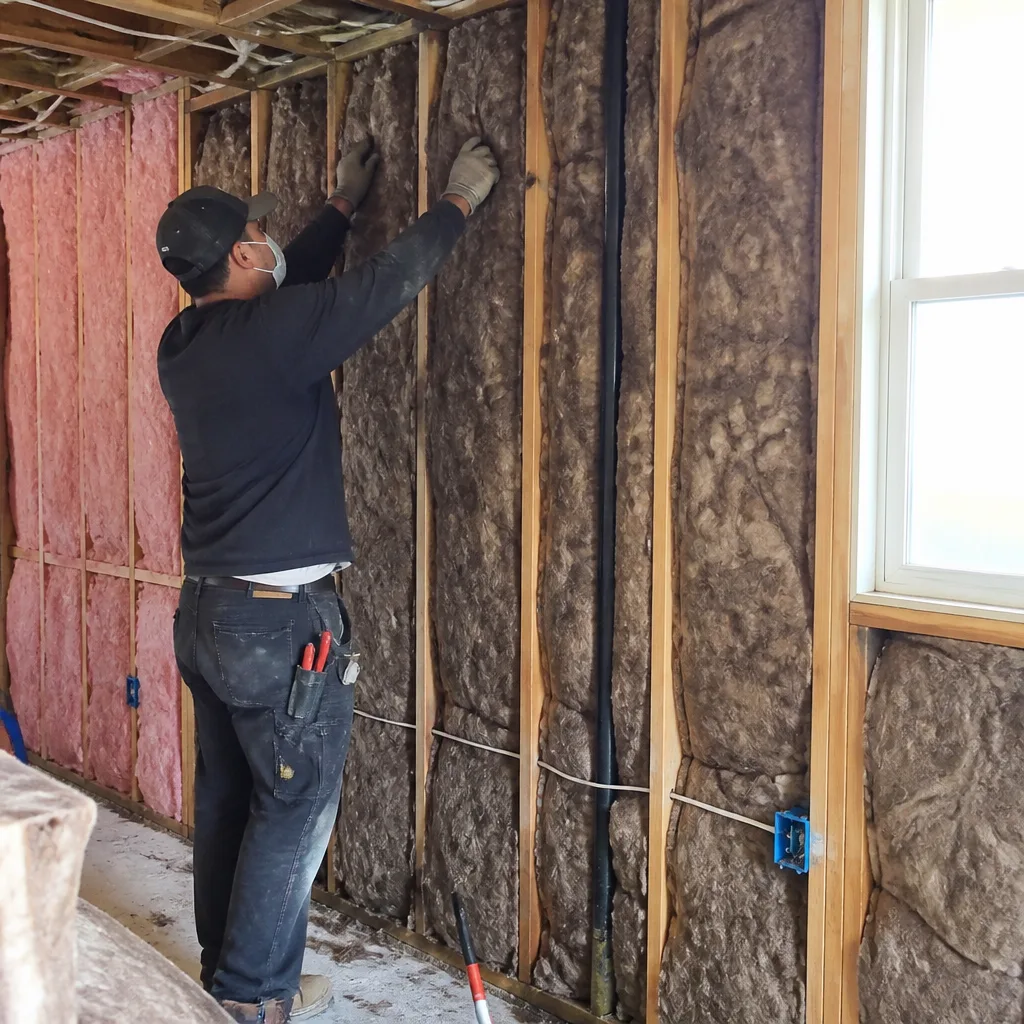 After
AfterMilpitas Climate and Why It Matters for Insulation Performance
Milpitas sits in IECC Climate Zone 3C (marine) transitioning to 4C at its eastern edges near the Diablo foothills. In practical terms, this means summers are warm but not extreme (peak daytime temperatures in July and August run 85 to 98 degrees Fahrenheit in the inland neighborhoods around Abel Street and Calaveras Boulevard), and winters are mild but persistently cool and damp from November through March.
The climate here does not produce the brutal heat loading of Fresno or the cold loads of Sacramento, but it does create a condition that many homeowners underestimate: the temperature delta between a poorly insulated attic and the living space below can reach 30 to 40 degrees Fahrenheit on a mid-July afternoon, even when the outside air is only 90 degrees. That delta drives HVAC runtime, and runtime drives energy bills. We regularly measure attic air temperatures above 130 degrees in Milpitas homes with R-11 or less in the attic floor, even in what most residents would call a moderate Bay Area summer.
The marine influence also means moisture management matters. Cellulose performs well here – but only when it is installed dry, over a properly air-sealed floor. Vapor drive in this climate zone runs inward during summer and outward in winter, which means the attic floor is not under extreme vapor stress – but poorly sealed penetrations will still allow conditioned air to carry moisture into the attic cavity over time, leading to mold risk in the structural framing. Sealing before insulating is not just a performance issue; it is a long-term durability issue.
How to Save on Blown-In Insulation in Milpitas
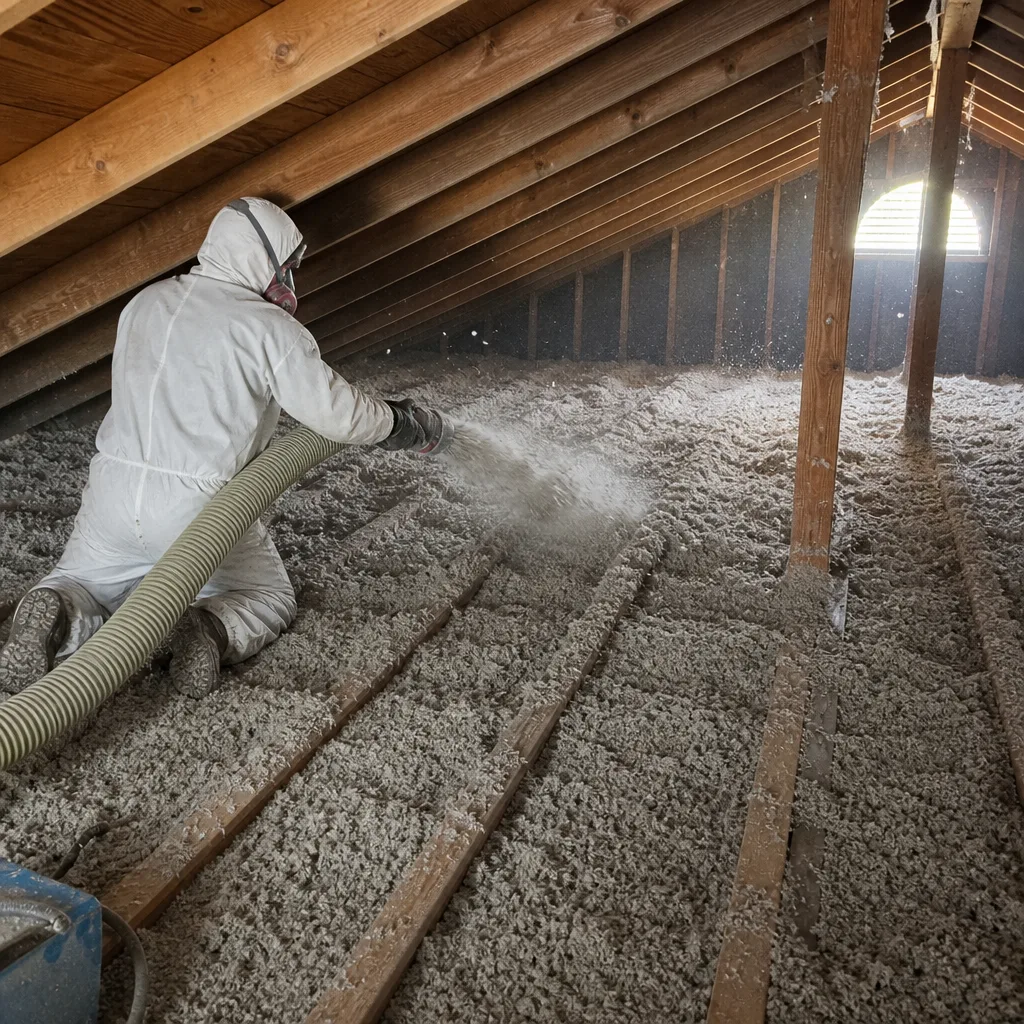
The single most impactful way to reduce cost is to know your starting R-value before requesting quotes. If your attic already has R-19 batts in serviceable condition, you may only need a top-up to R-38 or R-49, which costs significantly less than a full install from a bare deck. A technician with a depth gauge can measure this in under five minutes during a free estimate visit.
A few other practical approaches:
- Bundle air sealing with insulation in the same visit. Scheduling air sealing as a standalone job later costs more in total than completing both in a single mobilization. The labor efficiency of doing both same-day – particularly for hose setup and crew time – typically reduces the combined cost by $200 to $400 compared to two separate visits.
- Check for PG&E rebates and the California Energy Commission programs. As of 2026, PG&E’s Energy Upgrade California program offers rebates for qualifying insulation upgrades in existing homes – rebate amounts vary based on the efficiency improvement documented post-installation. Homes that can show before-and-after blower-door data (which Envelope provides on every applicable job) are in a stronger position to claim performance-based rebates because the CFM50 delta is the documented evidence the program requires.
- Get a second opinion on any written estimate. Envelope offers a free second opinion on any competing written quote – bring in the document, and Wes Okafor or a senior technician will review it line by line with you, identify what is and is not included, and explain what the numbers mean in the context of your home’s specific envelope condition. This is not a sales tactic; it is how we make sure homeowners understand what they are buying before they sign anything.
- Avoid scheduling removal and reinstall unless it is actually necessary. Removal adds significant cost. If existing insulation is structurally intact, dry, and free of contamination, a top-up is the better value. An honest technician will tell you this after inspection rather than defaulting to full removal because it generates more revenue.
- Ask for the written scope before committing. Under Haven Standard Clause 1, every job at Envelope begins with a flat written price and a written scope – no work starts without it. This protects you from scope creep and from contractors who quote low and adjust later. Compare written scopes, not verbal estimates, when evaluating bids.
For a free written estimate on your Milpitas home, call (650) 770-8707. A live person answers – no voicemail loop, no callback window measured in business days.
What You Get at Envelope Insulation Co. That Most Contractors Do Not Offer
Most insulation contractors in the Milpitas area will quote you a material and labor number, provide Blown-In Insulation services, and leave. That is the baseline. What is different at Envelope Insulation Co. is structural – it is written into the operating standard the company has run under since 2016.
Before any insulation is added, the attic floor is air-sealed. Can lights, top plates, plumbing penetrations, and HVAC chases are sealed with the appropriate material – typically two-part foam or fire-rated caulk depending on the assembly. This step is not presented as an upsell; it is a prerequisite. Wes Okafor has been direct about this since the company’s early work in Milpitas and the broader South Bay: installing insulation over an unsealed attic floor improves comfort less than half as much as the R-value increase alone would suggest, because the air bypasses the insulation layer entirely through unsealed gaps.
On every applicable job, a blower-door test is conducted before and after sealing. The blower-door pressurizes the home to 50 Pascals – think of it as simulating a 20 mph wind on every surface simultaneously – and measures how much air is moving through the building envelope in cubic feet per minute (CFM50). A typical unimproved Milpitas ranch home from the 1980s reads somewhere between 3,800 and 5,500 CFM50. After attic air sealing, that number typically drops to 2,200 to 3,400 CFM50. Both numbers are documented in writing and given to the homeowner. Not because it is good marketing, but because it is the only way the homeowner can verify that the air sealing they paid for actually happened.
Every job closes with a documented photo record – images of the pre-work condition, the air sealing in progress, and the finished insulation depth at multiple measurement points. These photos are part of the job file and are provided to the homeowner, not stored internally. If a question ever comes up about what was done and how, the documentation exists.
The 365-Day Done Right Promise means exactly what it says: if anything about the finished work does not match the written scope, Envelope makes it right within the warranty period. The scope and warranty are in writing before anyone starts. This is Haven Standard operating procedure, not a marketing promise.
Blown-In Insulation vs. Other Insulation Types: Cost Comparison for Milpitas Homes
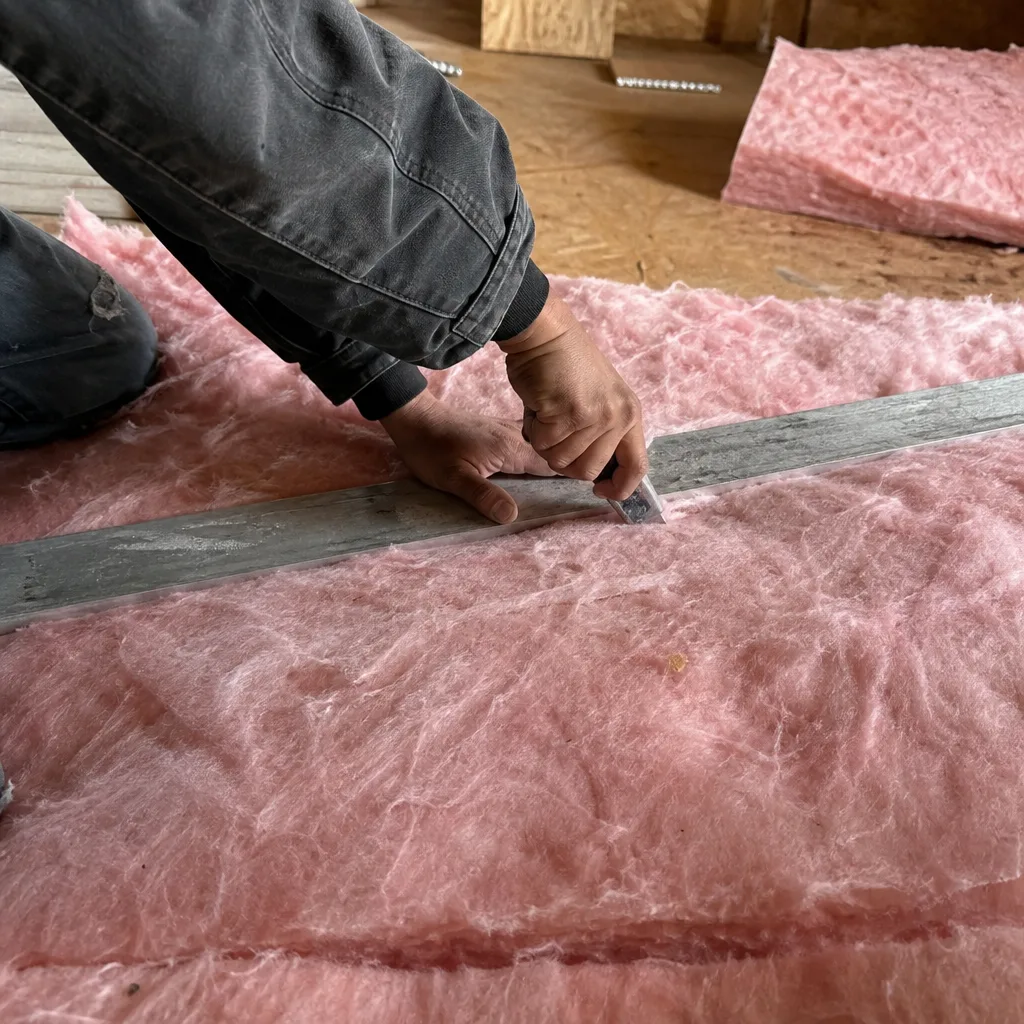
Homeowners in Milpitas sometimes ask whether blown-in is the right choice compared to batt insulation or spray foam. The answer depends on the application, and the price difference is significant enough to be worth understanding.
- Blown-in cellulose or fiberglass is the standard recommendation for existing attics in Milpitas. It installs over existing material without disturbing the floor structure, achieves uniform coverage in irregular cavities, and reaches R-38 or R-49 efficiently. Cost: $1,800 to $4,500 for most single-family attics, as detailed above.
- Fiberglass batt insulation is sometimes used in new construction or when the attic floor is being fully reframed. In existing attics, batts are harder to fit correctly around obstacles and tend to leave gaps – particularly around top plates and irregular framing. A full batt replacement typically costs $1,500 to $3,800 but rarely outperforms blown-in in real-world conditions in an existing attic.
- Open-cell spray foam at the roofline (Icynene product, for example) converts the attic to a conditioned unvented assembly, which keeps the HVAC equipment in a conditioned space and can reduce duct losses significantly. This is the right call in some Milpitas homes where HVAC is located in the attic and duct leakage is severe. Cost: $6,000 to $14,000 depending on roof deck area. Requires a building permit in most cases.
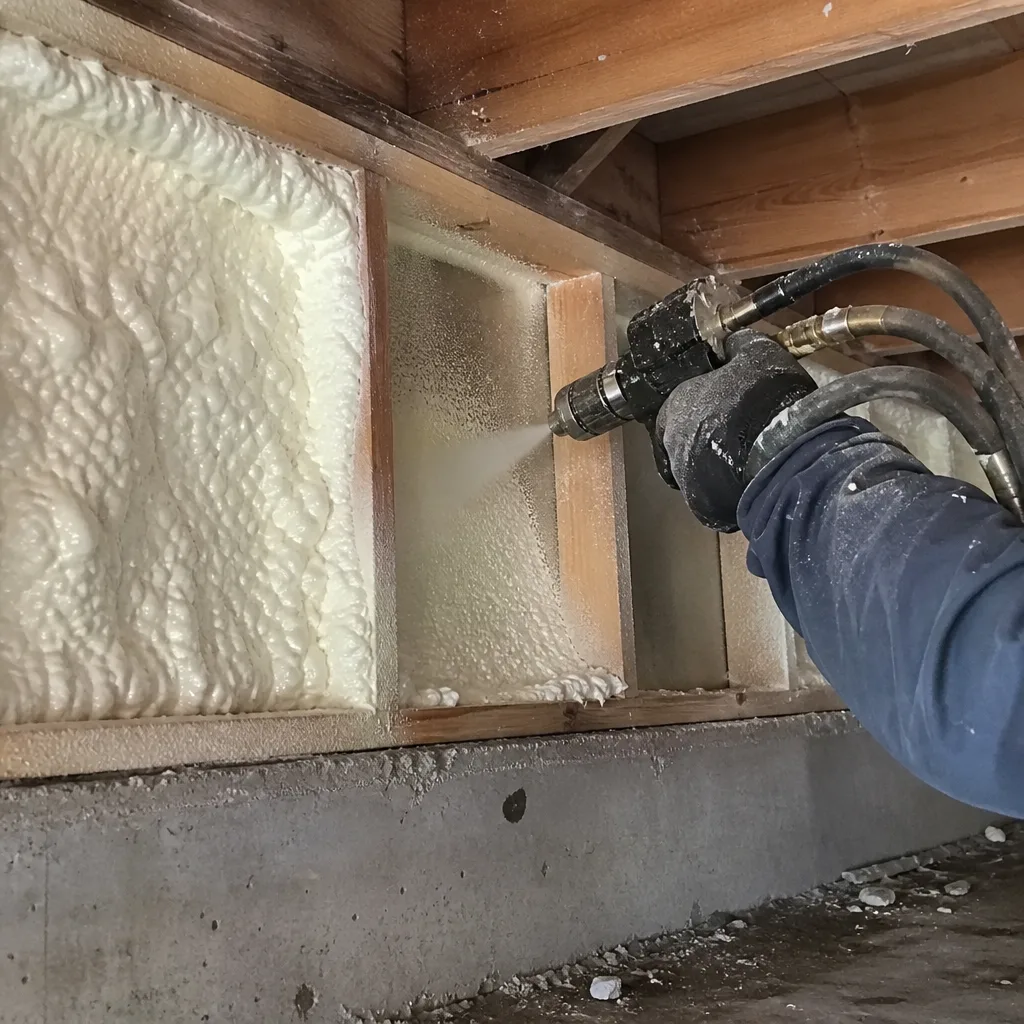
- Closed-cell spray foam (Demilec or similar) is occasionally used for specific air sealing applications – rim joists, crawl space walls, or targeted problem areas. It is not typically the first choice for a full attic floor application due to cost, though it has the highest R-value per inch (approximately R-6.5) of any common material.
For the majority of Milpitas homeowners – particularly those in the post-1970 single-family neighborhoods around Sunnyhills, Rancho Milpitas, and the Montague Expressway corridor – blown-in cellulose over a sealed attic floor is the most cost-effective path to a meaningfully improved building envelope.
Neighborhoods in Milpitas Where We Regularly Work
Envelope Insulation Co. has completed jobs throughout Milpitas, including in Sunnyhills (where 1960s and 1970s ranch homes are the most common stock and frequently have original fiberglass batts sitting at R-11 or less), the areas around Calaveras Boulevard near I-680 (where newer construction sometimes has adequate R-value but poor air sealing at the top plate), Dixon Landing Road near the Alviso Slough (where moisture-related insulation degradation is more common than anywhere else in the city), and the newer infill developments near Great Mall Drive and Montague Expressway.
In the Sinnott neighborhood, we see a lot of 1,400 to 1,700 sq ft footprints with hip roofs – the hip roof geometry creates tight triangular corners that blow-in handles better than batts, and getting full coverage in those corners is something a good technician will verify with a depth stick before leaving. The documented photo record we provide on every job includes photos of corner coverage specifically because it is the area most likely to be underinsulated in a hip-roof home.
If you are in Milpitas and unsure whether your attic insulation is performing adequately, the quickest diagnostic is to feel the ceiling surface in a main living room on a warm afternoon – if it is noticeably warm to the touch, the attic is driving heat downward and the insulation layer is not stopping it. A free estimate visit includes a visual attic inspection and a depth measurement at no cost.
FAQs – Blown-In Insulation Cost in Milpitas
How much does blown-in insulation cost for a typical Milpitas home?
Most single-family attic insulation jobs in Milpitas run between $2,400 and $3,600 when air sealing is included, which it should be. A smaller home under 1,000 square feet of attic footprint might come in at $1,800 to $2,400. A larger home with an attic above 1,800 square feet, difficult access, or existing material removal can reach $4,500 or more. The written scope you receive before any work starts at Envelope Insulation Co. will show each line item separately so you know exactly what you are paying for. Call (650) 770-8707 for a free written estimate.
Is blown-in insulation worth the cost in Milpitas’s climate?
Yes, and the blower-door numbers support that. Milpitas attics regularly reach 130 degrees on summer afternoons even in what residents consider a mild Bay Area climate. Before-and-after blower-door readings on attic air sealing jobs in Milpitas show CFM50 reductions of 30 to 50% on average – meaning the home was losing roughly half as much conditioned air after sealing as before. Combined with an insulation top-up to R-38 or R-49, most homeowners see noticeable HVAC runtime reductions in the first full summer after the job. Whether that translates to a payback period of three years or eight depends on your current energy use, but the performance change is documented and real.
Does Milpitas require a permit for blown-in insulation?
For a standard like-for-like blown-in addition to an existing attic, no permit is typically required in Milpitas. Work that changes the thermal boundary – such as converting to an unvented attic with spray foam at the roof deck – generally does require a permit from the City of Milpitas Building Division. Envelope reviews permit applicability during the written scope phase, and the scope document notes whether a permit is required before any work starts.
How long does blown-in insulation last in a Milpitas attic?
Cellulose blown-in, properly installed over a sealed attic floor in a Milpitas home, typically maintains its effective R-value for 20 to 30 years. It will settle approximately 15 to 20% over the first few years – which is why installation depth targets account for settling from the start. Fiberglass blown-in settles less (roughly 5 to 10%) but starts at a lower R-value per inch. Neither material degrades meaningfully under normal attic conditions in this climate unless moisture infiltrates the space, which is the primary reason air sealing is done first.
What is the difference between blown-in cellulose and blown-in fiberglass, and which costs more in Milpitas?
Fiberglass blown-in typically costs 10 to 20% more per square foot than cellulose blown-in in the current Milpitas market, primarily because of material cost differences. Cellulose from GreenFiber and similar manufacturers runs roughly $0.35 to $0.55 per square foot for material; fiberglass from Owens Corning or Johns Manville runs $0.45 to $0.65. In terms of performance, cellulose has a higher R-value per inch (R-3.7 versus approximately R-2.7 to R-3.0 for fiberglass loose fill) and performs slightly better in this climate’s mixed-humid conditions. Fiberglass is sometimes chosen for attics with active moisture concern because it does not absorb water the way cellulose can under extreme conditions. Wes Okafor reviews both options with homeowners during the estimate visit so the choice is informed before the written price is issued.
Can I get a second opinion if I already have a quote from another contractor?
Yes. Envelope Insulation Co. offers a free second opinion on any written estimate – bring the document, and we will review it line by line with you. This applies to any homeowner in Milpitas who wants to understand what a competing quote actually includes before committing. No purchase is required and there is no pressure to switch. Call (650) 770-8707 to set that up.
Key Takeaways
- Blown-in insulation in Milpitas costs $1,800 to $4,500 for most single-family attics, with the majority of jobs landing between $2,400 and $3,600 when air sealing is included.
- Air sealing – sealing top plates, can lights, and penetrations before insulation is blown – is not optional at Envelope Insulation Co. It accounts for the majority of measurable performance gain and is included in every job scope.
- California Title 24 requires R-38 minimum in Climate Zone 4 (Milpitas). Most pre-1990 homes in the city are well below that threshold.
- Before-and-after blower-door readings (CFM50) are documented on every applicable job so the homeowner can verify the air-sealing result in writing – not just take the contractor’s word for it.
- A written price is issued before any work starts. No exceptions. This is Haven Standard Clause 1.
- Homes near Dixon Landing Road and the Alviso Slough area see more moisture-related insulation degradation than the rest of Milpitas – inspection before quoting matters more in those locations.
- PG&E rebates may apply to qualifying upgrades; before-and-after blower-door data strengthens rebate applications.
Get a Written Estimate for Your Milpitas Home
If your home is in Milpitas and you want a documented, line-item price for blown-in insulation – with or without air sealing, removal, or blower-door testing – call (650) 770-8707. A live person answers. No voicemail, no callback window.
The estimate visit includes a visual attic inspection, insulation depth measurement, and a written price before any commitment is made. If you already have a written quote from another contractor, bring it – we will review it with you at no charge under our free second opinion offer.
Envelope Insulation Co. has completed blown-in insulation in Milpitas for homeowners throughout Sunnyhills, Rancho Milpitas, Dixon Landing, Sinnott, and the neighborhoods near Great Mall and Montague Expressway. Every job since 2016 has started with a written price and ended with a documented record. That is the standard. Call (650) 770-8707 to get started.
You can also learn more about our full building-envelope services on our home page.
Written by Wes Okafor, Owner at Envelope Insulation Co. (operating as Topside Attic Insulation Milpitas), independently owned and operated under The Haven Standard since 2016, serving Milpitas, CA and the South Bay.
Pricing reflects the Milpitas market as of 2026. Topside Attic Insulation Milpitas offers free estimates – call (650) 770-8707.
What Our Customers Say
"Turned up on time, protected the hallway, and the written scope matched what was actually done."
- Bruno S."They air-sealed the attic floor before insulating and showed me the blower-door number before and after. The upstairs is finally the same temperature as downstairs."
- Marisol D."Two other companies quoted to blow more insulation on top of what was there. These were the only ones who said the existing material had to come out first, and explained why."
- Clifford E.