
Knauf Vapor Barrier Installation: The Milpitas Owner’s Guide
Knauf vapor barrier installation in Milpitas typically runs $1,800-$3,400 for a full crawl space or attic application, depending on square footage and whether the existing barrier needs complete removal. We stock Knauf Insulation’s Faced Batts with vapor retarder and EcoSeal systems on every truck, and most Milpitas jobs can start same-day or next-day. Homeowners usually discover the problem when they notice musty odors in the Rancho Higuera neighborhood’s older slab homes, or when a home inspection flags condensation staining the subfloor framing during a sale in the Milpitas Ranch area.
Which Knauf Models This Applies To
Knauf manufactures vapor-retarding products across several lines, and matching the right one to your existing insulation matters for warranty continuity and building code compliance in Santa Clara County.
The Knauf Insulation Faced Batts with kraft paper vapor retarder are the most common replacement we handle in Milpitas, particularly in 1960s-1980s tract homes near Dixon Landing and the Great Mall corridor. These come in R-13 through R-38 with standard 15-inch and 23-inch widths. The facing must be installed toward the conditioned side, which in Milpitas’s mild climate means toward the living space in winter; getting this wrong traps moisture and voids the product warranty.
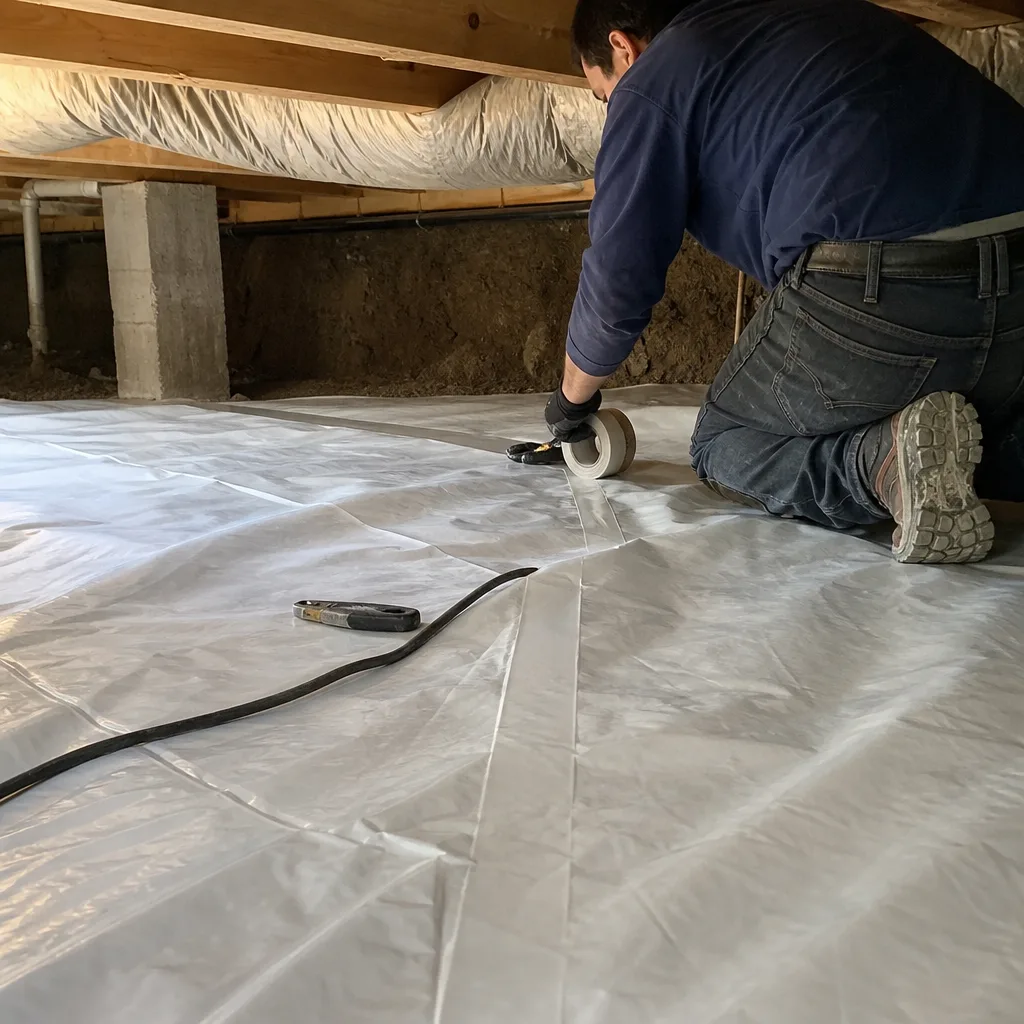
For crawl spaces, Knauf’s EcoSeal water-based elastomeric sealant pairs with unfaced fiberglass to create an air-sealed, vapor-managed assembly. This is distinct from a simple polyethylene sheet barrier, which Knauf does not manufacture but which we install as a standalone solution when the existing system has failed completely.
To identify your current Knauf product: check the paper facing for the printed Knauf logo and R-value, or look for a yellow-tinted fiberglass (Knauf’s EcoBatt with ECOSE Technology uses a amber binder, not the pink of Owens Corning or white of Johns Manville). The width measurement is critical, 15-inch batts are for 16-inch on-center framing; 23-inch for 24-inch spacing. Using the wrong width leaves compression gaps or requires cutting that disrupts the vapor retarder’s continuity.
We source Knauf materials through standard regional distribution, same as any independent contractor. We are not affiliated with Knauf Insulation, and we also stock Reflectix and other brands when they’re the better match for the assembly.
Signs Your Knauf Vapor Barrier Installation Is Failing
- Musty odors rising from crawl space or attic hatch. In Milpitas, where winter groundwater tables run high near the Guadalupe River watershed, a compromised kraft facing allows soil moisture to evaporate upward and condense against cooler subfloor surfaces. The facing tears first at staple penetrations and along the centerline where crews typically walk during installation.
- Subfloor wood darkening or fungal staining. This indicates the vapor retarder’s permeance has been exceeded, usually because the facing was installed upside-down or because gaps in the batts let warm, moist interior air reach cold framing in winter. Milpitas’s January lows in the low 40s create the temperature differential that drives this condensation.
- Insulation sagging below joists or falling from top plates. Knauf’s ECOSE binder resists moisture better than older formaldehyde-based products, but prolonged saturation still degrades the adhesive bond. We see this most in homes near the Milpitas foothills where afternoon sun bakes the roof and evening fog rolls in, creating daily dew cycles in poorly vented attics.
- Visible tears, rodent damage, or displaced batts. The kraft facing is a food source for rodents and a convenient nesting material. In the Berryessa district’s older homes, we’ve pulled out batts shredded to half their original thickness, with the vapor retarder completely gone. The R-value on the bag means nothing if the air is still moving through the wall, seal first, then insulate.
- Peeling interior paint or efflorescence on foundation walls. When a crawl space vapor barrier fails, ground moisture wicks through the foundation and evaporates into the living space. This shows up first in bathrooms and kitchens where humidity is already highest, and it’s often misdiagnosed as a plumbing leak.
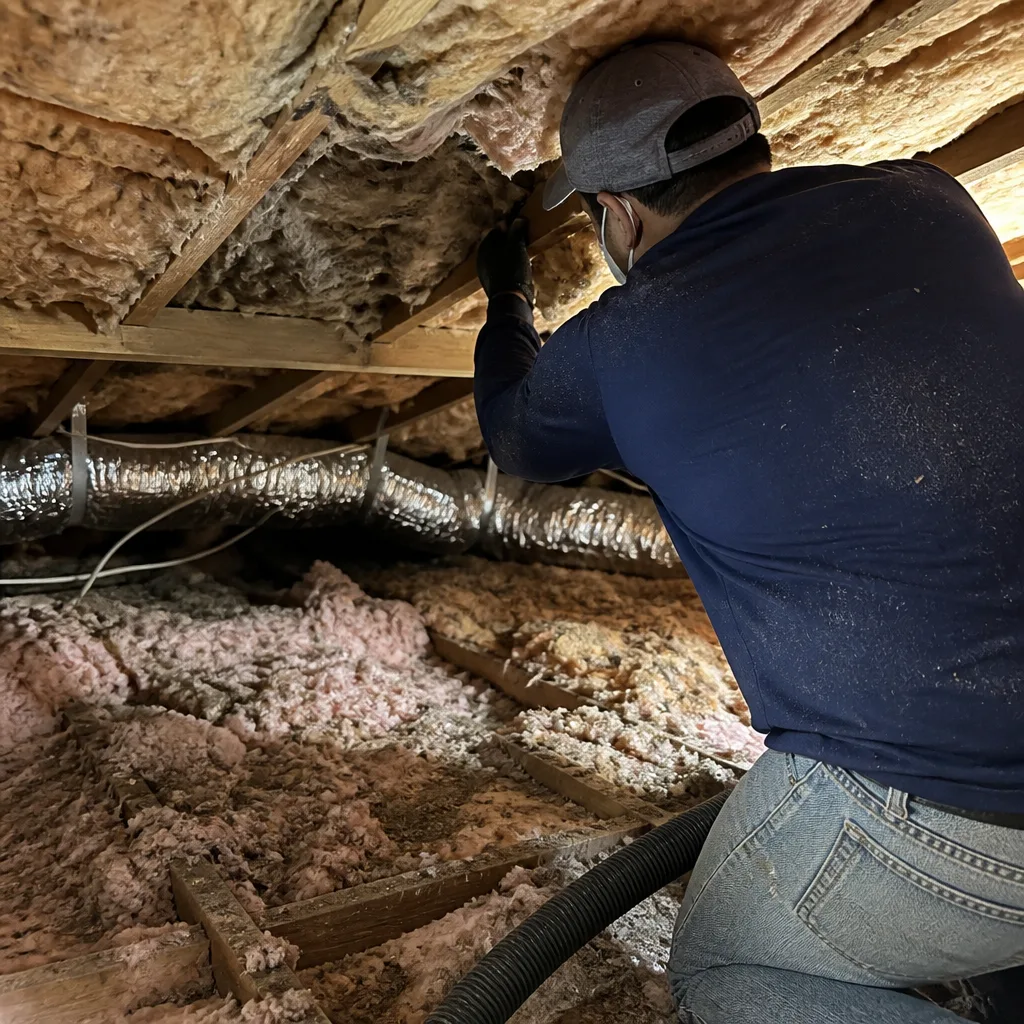 Before
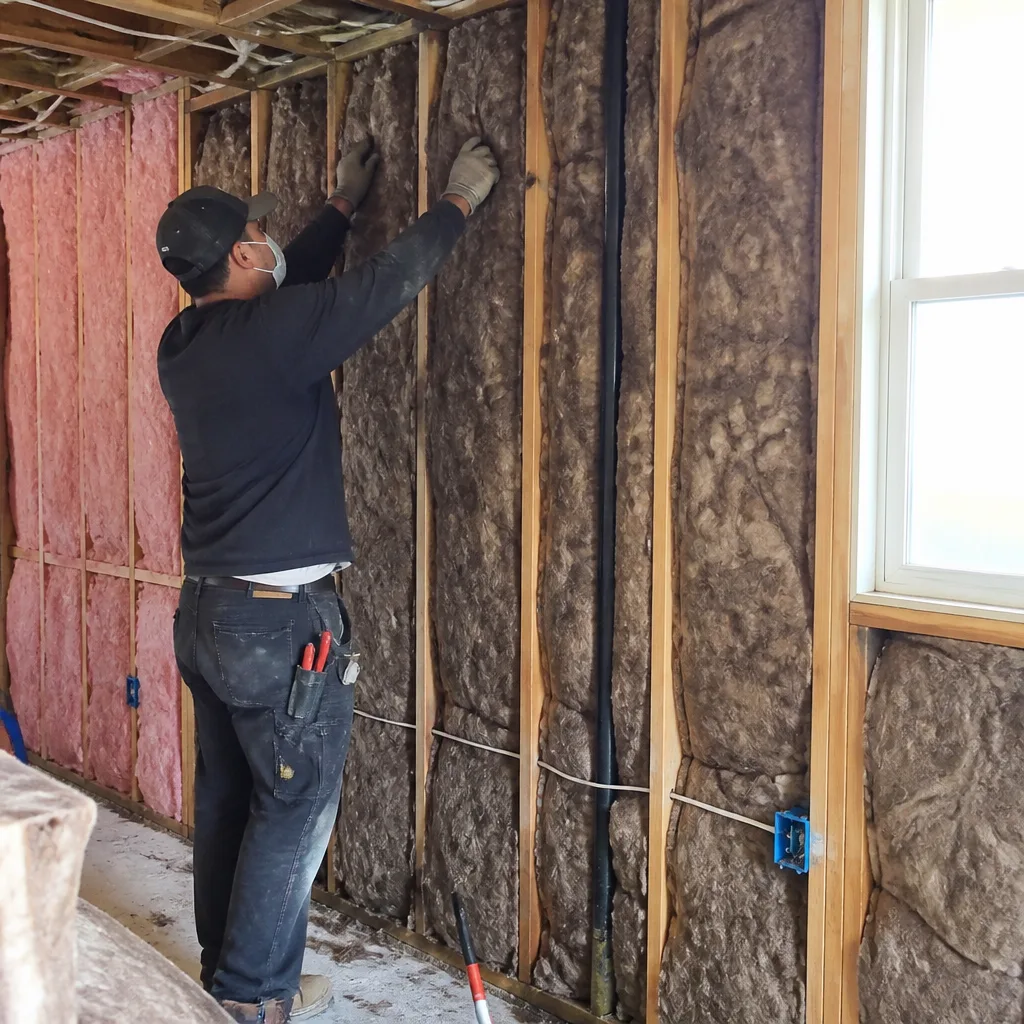 After
AfterReplacement Cost & What’s Included
| Scope | Price Range in Milpitas | Typical Home Profile |
|---|---|---|
| Crawl space vapor barrier only (polyethylene sheet, 6-mil, seams taped) | $1,800-$2,600 | 1,200-1,800 sq ft single-story, Rancho Higuera area |
| Crawl space vapor barrier + Knauf faced batt replacement | $2,400-$3,400 | Same size, with degraded existing insulation requiring removal |
| Attic vapor retarder replacement (faced batt swap, air sealing included) | $2,200-$3,200 | 1,500-2,200 sq ft, Milpitas Ranch or newer builds with bypass repairs |
| Full encapsulation (barrier, insulation, seal, dehumidifier prep) | $3,800-$5,500 | High water table, finished basement below, or sale-prep jobs |
What drives the range: square footage is the baseline, but access difficulty is the multiplier. A crawl space with 14-inch clearance requires different labor than one with 24 inches. Existing rodent contamination adds removal and sanitation time, we document this with photos before quoting. Every job gets a Written Price Before Any Work Starts under Haven Standard Clause 1, flat price, written scope, written warranty before anyone lifts a tool.
What’s included: removal and disposal of existing failed barrier, installation of new Knauf or specified product per manufacturer instructions, seam sealing with appropriate tape or mastic, and a Documented Photo Record delivered when the crew leaves. On applicable jobs, we run a blower-door test before and after, a pressurization measurement that shows, in one number, how much air your building envelope was losing, so you can verify the air-sealing result. The 365-Day Done Right Promise covers all completed work.
DIY or Call Us?
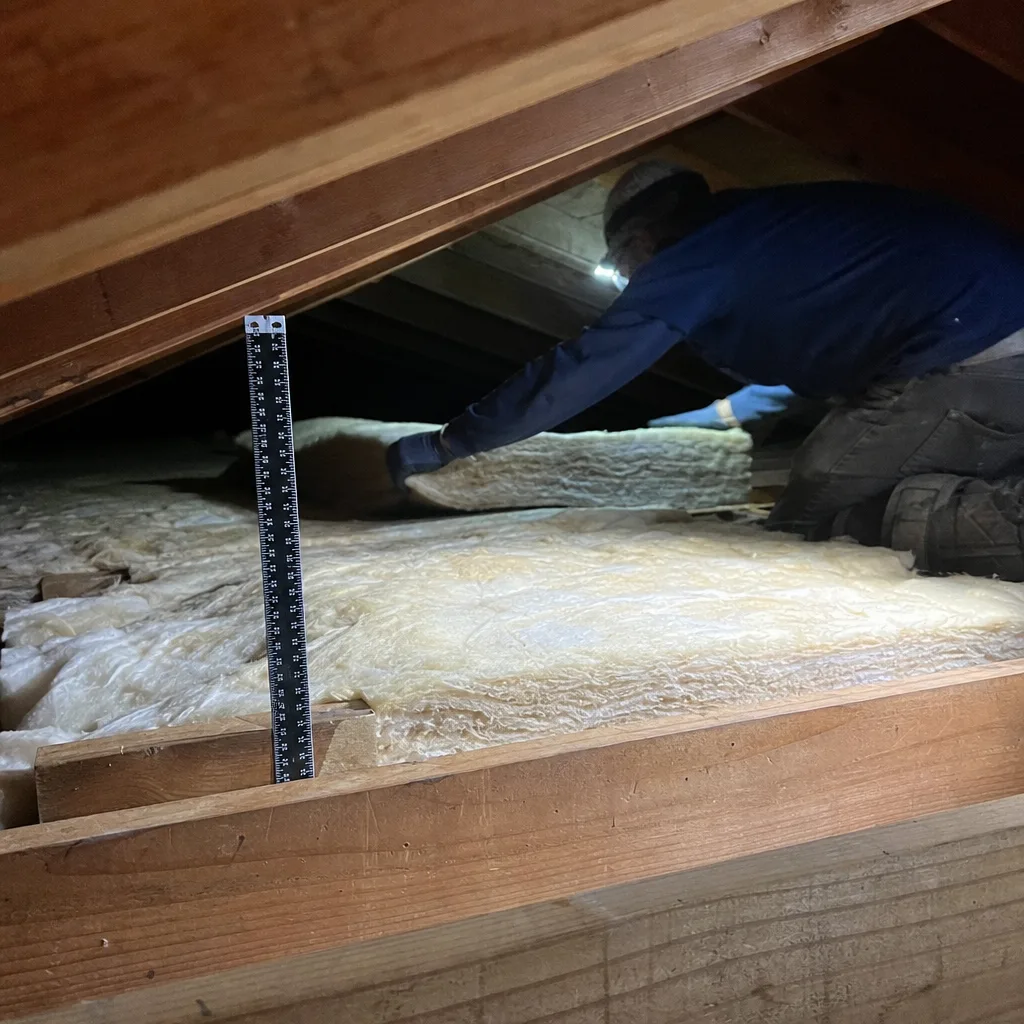
What you can safely check yourself: verify the facing direction from the attic hatch or crawl space entrance with a flashlight, kraft paper should face the heated space in winter. Look for obvious tears, sagging, or rodent activity. Measure the batt width if you can see exposed edges. These observations help us quote accurately when you call.
Where DIY goes wrong: working in attics during Milpitas summer heat creates genuine heat-stress risk, and crawl spaces with active moisture problems may harbor electrical hazards from corroded junction boxes. More fundamentally, installing a vapor barrier without first sealing air leaks is building a moisture trap. The conditioned air you paid to heat or cool will find every gap, and when it hits the new barrier at the wrong temperature, you get condensation you cannot see until the damage is extensive.
We have been running insulation crews in the South Bay for over a decade, and the jobs that cost homeowners most are the ones where someone skipped the blower-door test and guessed at the air-sealing scope. Call (650) 770-8707 for a free estimate, we will read your situation with you and give you a written price before any work starts.
FAQs
In Milpitas’s climate, a properly installed Knauf kraft-faced vapor retarder lasts 20-30 years, but the facing degrades faster if the attic or crawl space ventilation is inadequate. The Berryessa district’s afternoon heat and evening fog cycles accelerate binder fatigue in poorly vented spaces. Call (650) 770-8707 for an exact quote, estimates are free.
Small tears in polyethylene sheeting can be patched with vapor-barrier tape if the surrounding material is still flexible and the tear is accessible. Kraft paper facing on batts cannot be reliably repaired, once torn, the permeance is compromised and replacement is the sound approach. We will show you what we found and give you a Written Price Before Any Work Starts. Call (650) 770-8707.
Most Milpitas crawl space vapor barrier replacements take one day; attic jobs with air sealing and batt swap typically run one to two days depending on square footage and access. We arrive with Knauf materials on the truck, so we do not lose time to supply runs. Call (650) 770-8707 to check same-week availability.
Yes, we carry Knauf Faced Batts in common R-values and widths, plus 6-mil polyethylene sheeting, vapor-barrier tape, and EcoSeal for air-sealing prep. For less common specs, we pull from regional distribution with next-day availability. We also stock Reflectix and other brands when they are the better match. Call (650) 770-8707 to confirm compatibility with your specific installation.
Topside Attic Insulation Milpitas has independently owned and operated under The Haven Standard since 2016. Every job begins with a written price and ends with a documented record, no exceptions. We have sealed and insulated 9,000+ homes since then, every one with a written price before work started and a documented record when the crew left. Background-checked, uniformed technicians. Calls answered by a live person, 24/7.
Written by Wes Okafor, Owner, Topside Attic Insulation Milpitas at Topside Attic Insulation Milpitas, serving Milpitas and nearby areas.