
Rockwool Attic Air Sealing: The Milpitas Owner’s Guide
Rockwool-compatible attic air sealing in Milpitas typically runs $1,800-$3,400 for a complete top-plate and penetration seal on a single-story home, and we stock the acrylic-latex sealants, fire-rated foam, and gasketed covers that interface with Rockwool batts and Comfortboard installations. Most Milpitas jobs are completed same-day once the blower-door baseline is established. Homeowners usually discover the problem when their newly installed Rockwool isn’t delivering the temperature stability they expected, or when a home energy audit reveals the attic floor is still pulling conditioned air through gaps the insulation was laid over.
Which Rockwool Models This Applies To
This applies to any Rockwool installation where the thermal barrier went in before the pressure boundary was sealed. We see this most often with Rockwool Comfortbatt R-30 and R-38 in Milpitas attics, and with Comfortboard 80 or 110 used as rigid blocking at the eaves. The critical identifier isn’t the batt itself; it’s whether the assembly beneath it was sealed to ASTM E2178 standards before installation.
To check what you have: peel back a corner of insulation at a top plate or penetration. If you see raw drywall edges, unsealed electrical boxes, or can lights without gasketed covers, the air sealing was skipped or incomplete. Rockwool’s density - roughly 2.5-4.0 lbs per cubic foot depending on product line - can mask small leaks better than fiberglass, which actually makes the problem harder to spot without a blower-door test. For OEM-spec sealing, we use Rockwool-compatible acrylic sealants with ≤1.0 perm rating; for aftermarket equivalents on non-fire-rated penetrations, we stock OSI Quad and Titebond ProSkin that test within the same permeance range. The gotcha in Milpitas: many 1970s-1990s tract homes near the Great Mall corridor have double top plates with gaps between the 2×4 layers that batt insulation alone will never close. Rockwool’s rigidity helps, but it doesn’t seal.
Signs Your Rockwool Attic Air Sealing Is Failing
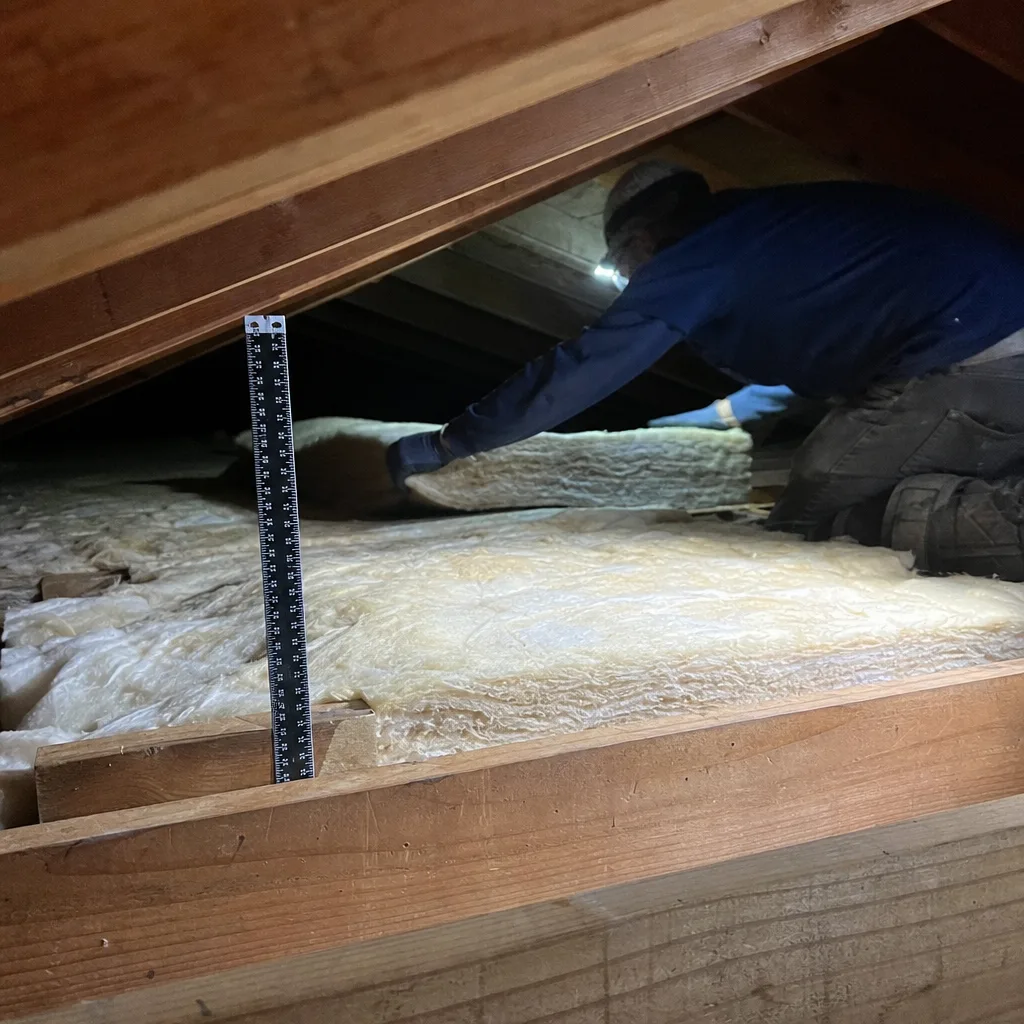
- Dust streaking on the Rockwool surface. Fibrous gray or black trails running across the top of your batts indicate conditioned air is moving through the material, carrying household dust that filters out on the fibers. This means your pressure boundary is downstream of the insulation, not at the drywall plane where it belongs.
- Cold spots in rooms directly below attic penetrations. When bathroom vents, recessed can lights, or wire holes aren’t sealed with fire-rated foam or gasketed covers, stack effect pulls heated air out in winter. The Rockwool above performs thermally, but the air moving around it bypasses the R-value entirely.
- Ice damming or uneven snow melt on the roof in winter. Milpitas doesn’t see heavy snow, but the pattern translates: hot attic floor spots caused by air leaks melt any overnight frost unevenly, then refreeze at the eaves. If your north-facing eaves stay frosty while the center ridge clears by 10 a.m., you’ve got thermal bypasses under the Rockwool.
- Excessive cycling of your HVAC system. A blower-door reading above 3,000 CFM50 on a 1,600-square-foot Milpitas home usually means the envelope is loose enough that your thermostat is chasing leaks, not load. Rockwool’s acoustic density can make the attic feel “tight” by touch while the numbers tell a different story.
- Rodent disturbance concentrated around penetrations. Mice follow air currents. If you’re seeing tunneling or nesting specifically at can lights, chimney chases, or plumbing stacks, those are the same gaps your conditioned air is escaping through. The Rockwool becomes their nesting material because the air movement tells them it’s a viable path.
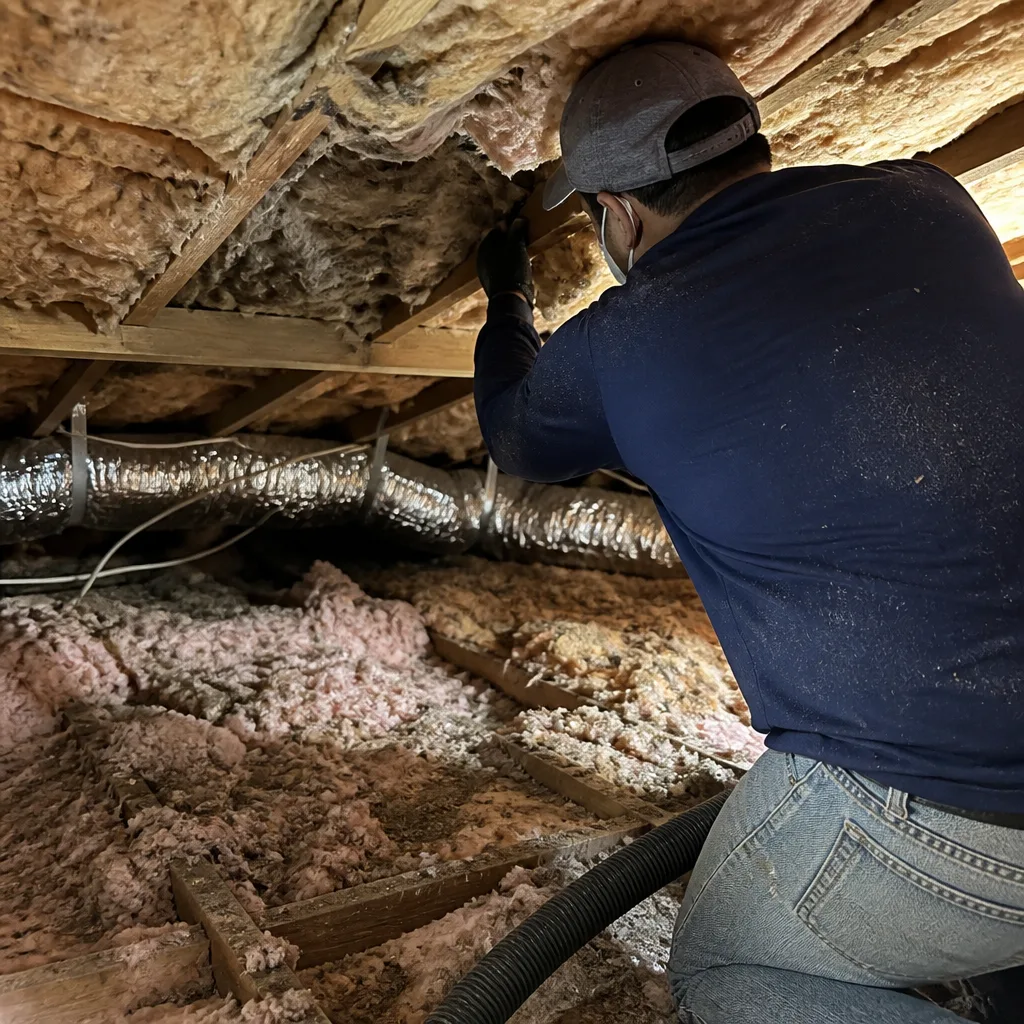 Before
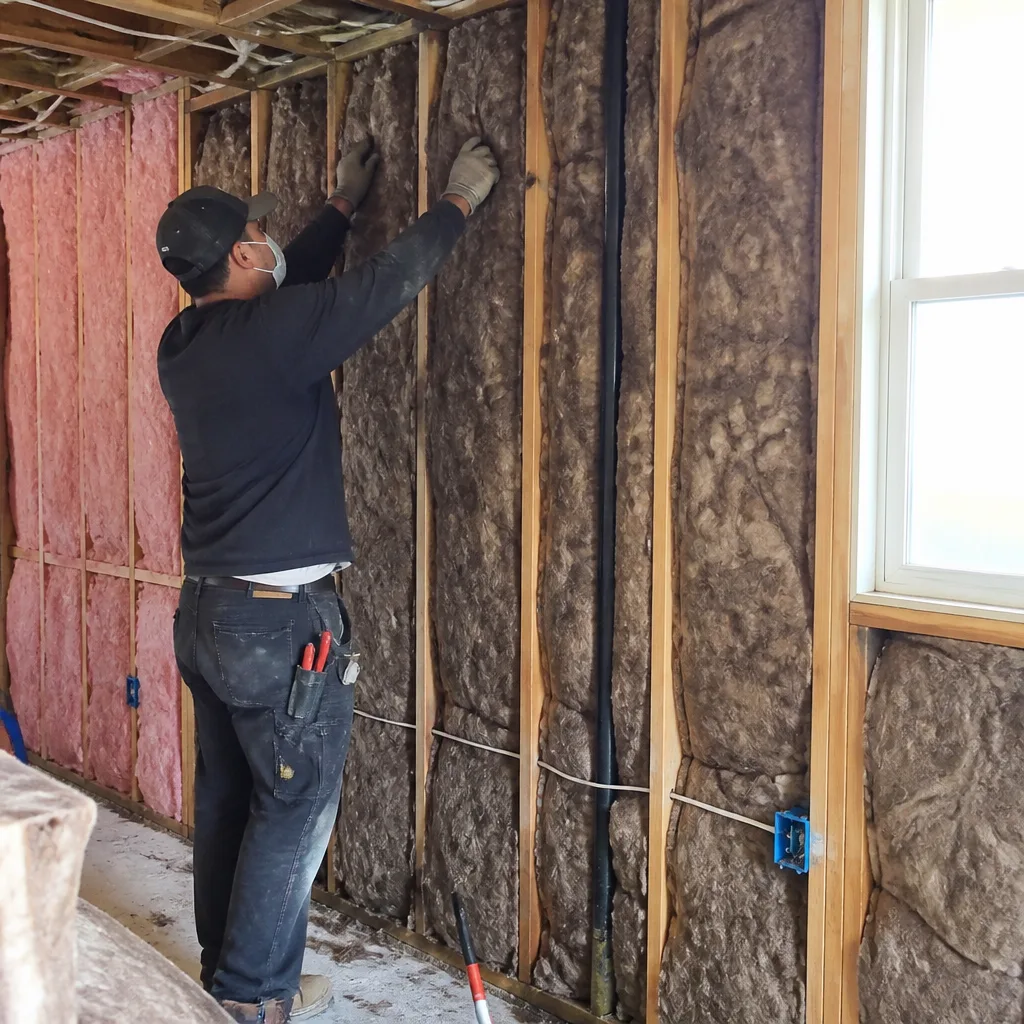 After
AfterReplacement Cost & What’s Included
| Scope | Typical Range in Milpitas |
|---|---|
| Top-plate seal only (single-story, ~1,200 sq ft) | $1,800-$2,400 |
| Top plates + can light covers + penetrations | $2,400-$3,000 |
| Full seal with blower-door verification, including chimney chase and duct boot sealing | $2,800-$3,400 |
What drives the range: attic accessibility (truss height, existing decking), quantity of penetrations, and whether we need to remove and reinstall Rockwool that’s already in place. Every quote is a flat, written price before any work starts - Haven Standard Clause 1. The scope includes: blower-door baseline test, air sealing with fire-rated acrylic or two-part foam as appropriate, gasketed covers for all non-IC-rated fixtures, and a post-seal blower-door test with printed results. Our 365-Day Done Right Promise covers labor and materials. We source sealants from Owens Corning, Johns Manville, Knauf, Rockwool, CertainTeed, Icynene, Demilec, and GreenFiber - no proprietary lock-in, and we match the sealant chemistry to your existing Rockwool spec.
DIY or Call Us?
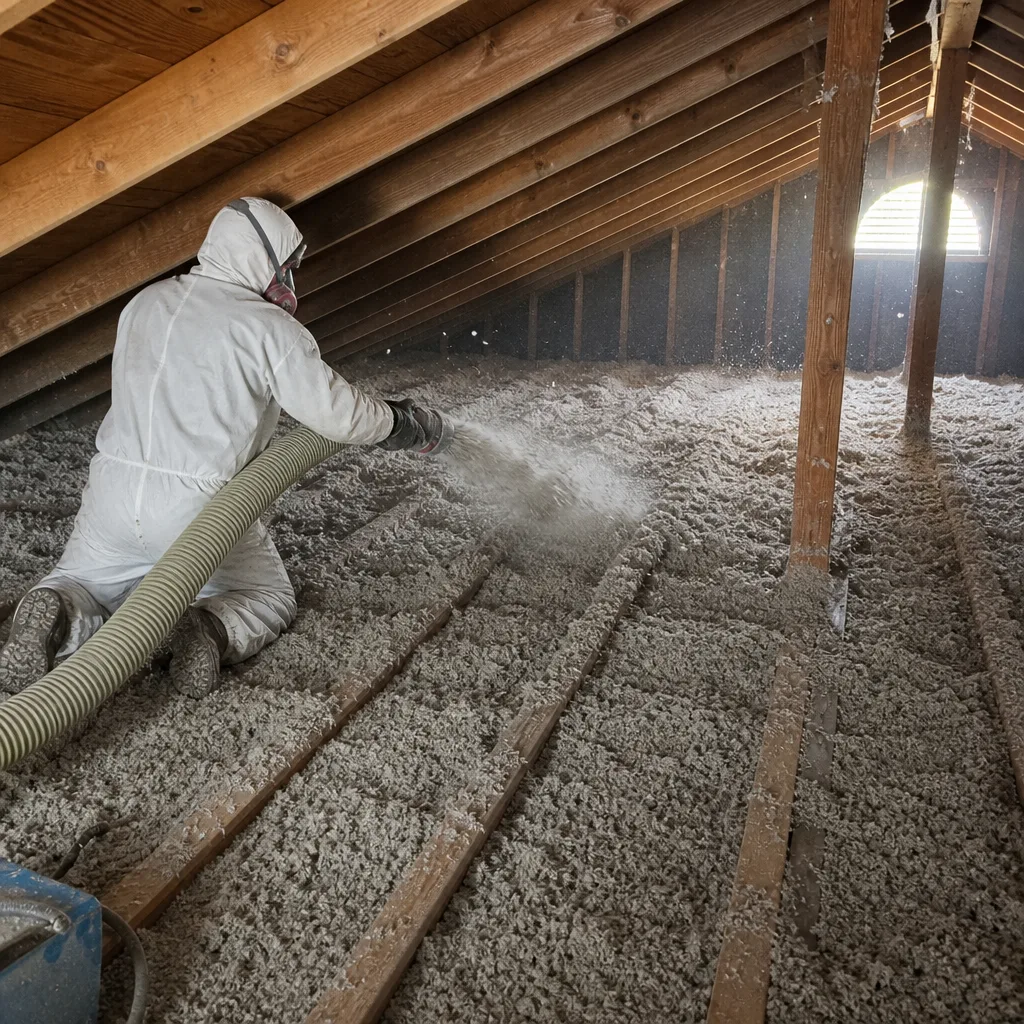
There’s a safe middle ground, and then there’s where most Milpitas attics end up.
What you can check safely: With the HVAC off and a bathroom fan running, hold a smoke pencil or thin incense stick near attic penetrations from below. Drift toward the ceiling indicates a pressure leak. Mark the spot with painter’s tape. You can also verify your Rockwool product line from the printing on the batt - Comfortbatt, Comfortboard, or AFB - which tells us what sealant chemistry is compatible.
Where DIY goes wrong: Can lights in contact with insulation require IC-rated covers or fire-rated foam enclosures; standard Great Stuff will melt housings and voids your Rockwool fire-resistance rating. Two-part foam around chimney chases must maintain a 2-inch clearance to combustibles per California Title 24. And without a blower-door test, you’re guessing at leakage magnitude - we’ve seen homeowners seal the visible gaps and leave 40% of total leakage in the double top plates they never knew to check. The R-value on the bag means nothing if the air is still moving through the wall - seal first, then insulate.
For a written price and a free second opinion on any existing estimate, call (650) 770-8707. We answer live, 24/7.
FAQs
Properly installed acrylic-latex and fire-rated foam seals last 20-30 years in Milpitas’s dry climate, though thermal cycling in unconditioned attics can degrade foam at chimney chases in 10-15 years. We inspect seal integrity as part of any subsequent insulation service and reseal under the 365-Day Done Right Promise if settlement or shrinkage appears. Call (650) 770-8707 for a condition check - estimates are free.
Partial repairs work only when the original seal was installed to a traceable standard and the failure is isolated - one pulled-away can light cover, one shrunken foam bead. In most Milpitas attics we assess, the sealing was never comprehensive enough to “repair”; it needs to be done fully, with blower-door verification, to achieve the pressure boundary Rockwool was designed to work with. Call (650) 770-8707 and we’ll read your existing scope with you.
Most single-story Milpitas homes are sealed and verified in one working day, typically 6-8 hours including setup, blower-door baseline, sealing work, and post-test documentation. Two-story homes or those with complex HVAC ducting in the attic may run into a second day. We provide a written schedule with the flat price - no callback windows measured in business days.
Yes - acrylic-latex sealant, fire-rated two-part foam, gasketed can light covers, and blocking foam for Comfortboard installations are on our trucks daily. We’re an independent service provider, not affiliated with Rockwool, and we also stock parts for Reflectix and other major brands. Same-day installation is standard for calls before noon in the Milpitas area.
Written by Wes Okafor, Owner, Topside Attic Insulation Milpitas at Topside Attic Insulation Milpitas, serving Milpitas and nearby areas.