
Crawl Space Vapor Barrier in Milpitas, CA
Our Crawl Space Encapsulation & Vapor Barrier services use heavy-duty polyethylene sheeting – typically 12 to 20 mils thick – installed across the ground and up the foundation walls of your crawl space to block ground moisture from migrating into your home’s framing, insulation, and living areas. In Milpitas, where the ground stays relatively damp through winter and spring rains and the water table in lower-lying areas near the Berryessa and Alviso neighborhoods can rise significantly between November and March, an unprotected crawl space floor can push enough moisture vapor upward to rot floor joists in a few years without any visible leak. Most vapor barrier installations in this area run between $1,200 and $3,800, depending on crawl space size, condition, and whether any remediation work is needed first – and we publish that range here because a written price before any work starts is how we operate, every time.
We’re Topside Attic Insulation Milpitas, independently owned and operated under The Haven Standard since 2016. We’ve installed vapor barriers in crawl spaces across Milpitas – from slab-edge homes near Townsend Park to older pier-and-beam construction off Calaveras Boulevard – and our approach hasn’t changed: assess the actual moisture conditions, give you a flat written price, do the work to spec, and leave you with a documented photo record so you can see exactly what was installed and where. If you want to talk through your specific crawl space first, call us at (650) 770-8707 – a live person picks up, no voicemail.
This page covers vapor barrier installation as a standalone service. If your crawl space also needs insulation, drainage, or full perimeter sealing, our Crawl Space Encapsulation & Vapor Barrier in Milpitas page covers the complete scope.
When You Need a Crawl Space Vapor Barrier
Some signs are obvious. Others take a trained eye. These are the conditions that reliably indicate a vapor barrier is either missing, failing, or undersized for Milpitas ground moisture levels.
- Musty odor coming through the floor. In Milpitas homes with vented crawl spaces – common in neighborhoods built before 1990 along North Milpitas Boulevard – ground moisture evaporates upward and gets pulled into living areas by stack effect. The smell is distinctive: earthy and persistent, often worse in winter when the ground is saturated.
- Wood subfloor or joists showing staining, soft spots, or visible mold. Sustained relative humidity above 70 percent in a crawl space is enough to initiate mold growth on wood framing. We see this regularly in homes near Penitencia Creek, where seasonal ground saturation keeps crawl space humidity elevated from December through April.
- Existing vapor barrier is torn, bunched, or missing sections. Original builder-grade 6-mil poly degrades over 10 to 15 years. It tears easily when pest control technicians, plumbers, or HVAC crews work in the crawl space, and gaps – even small ones – allow moisture to bypass the barrier entirely.
- Higher-than-normal utility bills with no obvious cause. When ground moisture saturates the crawl space air, your HVAC system works harder to condition the rooms above. Installing a properly lapped and sealed vapor barrier consistently reduces the moisture load on the system.
- Condensation on pipes or HVAC ducts in the crawl space. This is a direct indicator that dewpoint conditions are being reached. It means humidity is high enough that any cooler surface – a supply duct, a copper pipe – is collecting liquid water. Left alone, that dripping water accelerates wood decay and insulation compression.
- You’re preparing to install new crawl space insulation. We will not install insulation over an uncovered, high-humidity crawl space floor. The moisture will wick into the insulation, compress it, and eliminate its thermal value within two to three seasons. The vapor barrier goes in first – that is not negotiable under our process.
Our Crawl Space Vapor Barrier Process
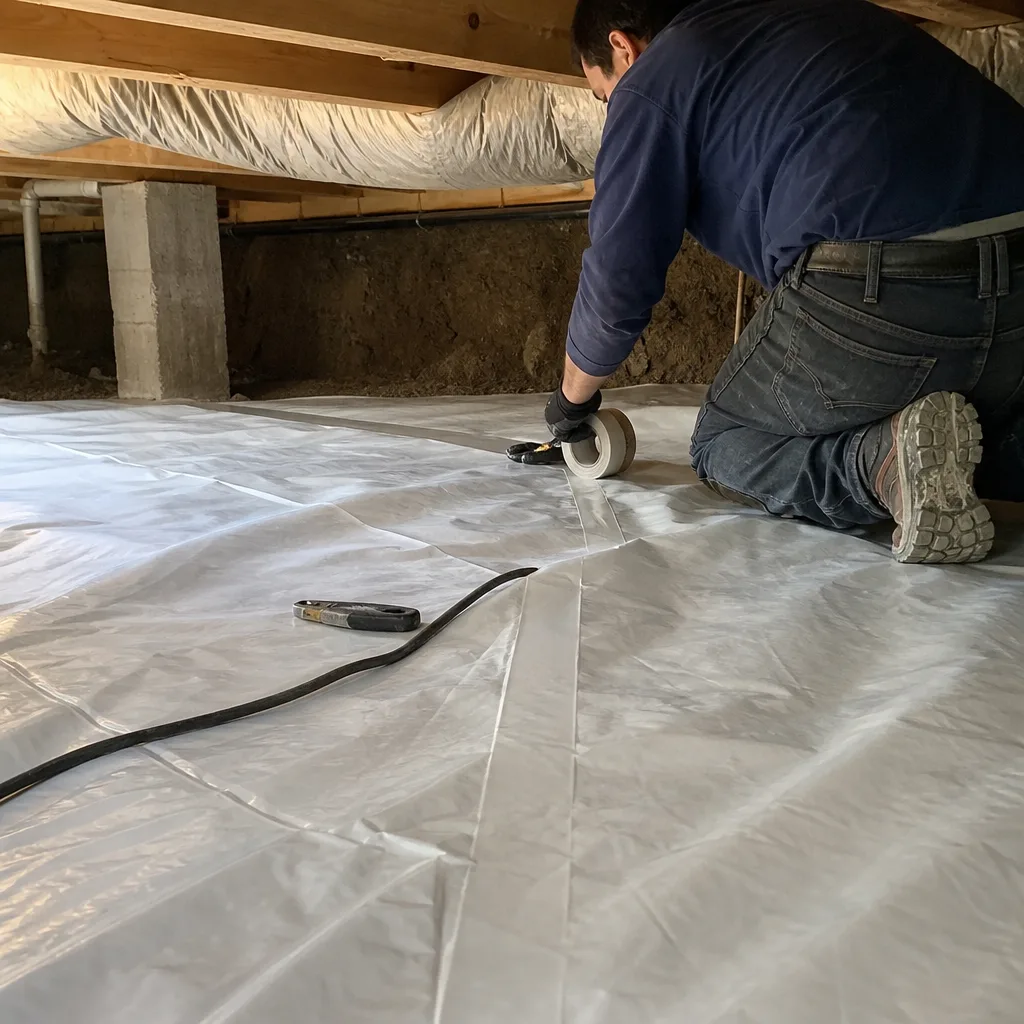
This is the actual sequence we follow on every vapor barrier job in Milpitas. Nothing is skipped to save time. The written scope you receive before we start lists each of these steps explicitly.
-
Pre-Installation Moisture and Condition Assessment
Before we order materials or quote a final price, a technician enters the crawl space with a calibrated hygrometer and a moisture meter. We measure ambient relative humidity, surface moisture content of the subfloor and joists at multiple points, and look for existing standing water, active pest activity, or prior barrier material that needs removal. We photograph everything we find. If we see active water intrusion rather than vapor diffusion, we tell you plainly – a vapor barrier addresses moisture vapor, not liquid water, and we won’t install one over a drainage problem we haven’t flagged in writing.
-
Debris Clearing and Surface Prep
Any torn remnants of old poly, organic debris, or loose soil that would create voids under the new barrier come out first. For crawl spaces in Milpitas homes with older construction – particularly around the South Milpitas and Dixon Landing neighborhoods where some homes date to the early 1960s – we occasionally find multiple layers of deteriorated material stacked on the ground. All of it is removed and documented before new material goes down.
-
Ground Cover Installation with Full Overlap
We install a minimum 12-mil reinforced polyethylene barrier across the entire crawl space floor. Seams are overlapped by at least 12 inches and sealed with purpose-made moisture-barrier tape rated for crawl space conditions – not standard duct tape or general-purpose tape, which fails within a few years in the temperature swings a Milpitas crawl space sees between summer heat and winter cold. On larger crawl spaces, we use 20-mil material in high-traffic paths where HVAC or plumbing access is routine.
-
Foundation Wall Tie-In
The barrier runs up each foundation wall and is secured at a minimum of 6 inches above grade – higher where the ground slopes toward the foundation, which is common in hillside-adjacent properties near the Milpitas foothills. It’s fastened with mechanical anchors and sealed at the top edge so moisture can’t travel behind the sheeting from the wall face. This step is the one most often skipped by lower-cost installers, and it’s the step that determines whether the barrier actually works as a system rather than just as a ground cover.
-
Penetration Sealing
Every pipe, post, and pier that passes through the barrier gets sealed with pre-formed boots or cut-and-taped sections. An unsealed pipe penetration – even a 2-inch one – allows enough moisture migration to measurably raise crawl space humidity. We seal each one and photograph it as part of the documented record.
-
Final Documentation and Written Warranty Delivery
When the crew leaves, you receive a documented photo record covering pre-installation conditions, each stage of installation, and the finished product. The 365-Day Done Right Promise applies in writing. If the barrier lifts, tears at a seam, or separates from the wall within the first year, we come back and make it right – at no additional charge – because that is what the written warranty says. Under Haven Standard Clause 1, the written price and written scope were in your hands before anyone touched a tool; the documentation at closeout closes the loop on that commitment.
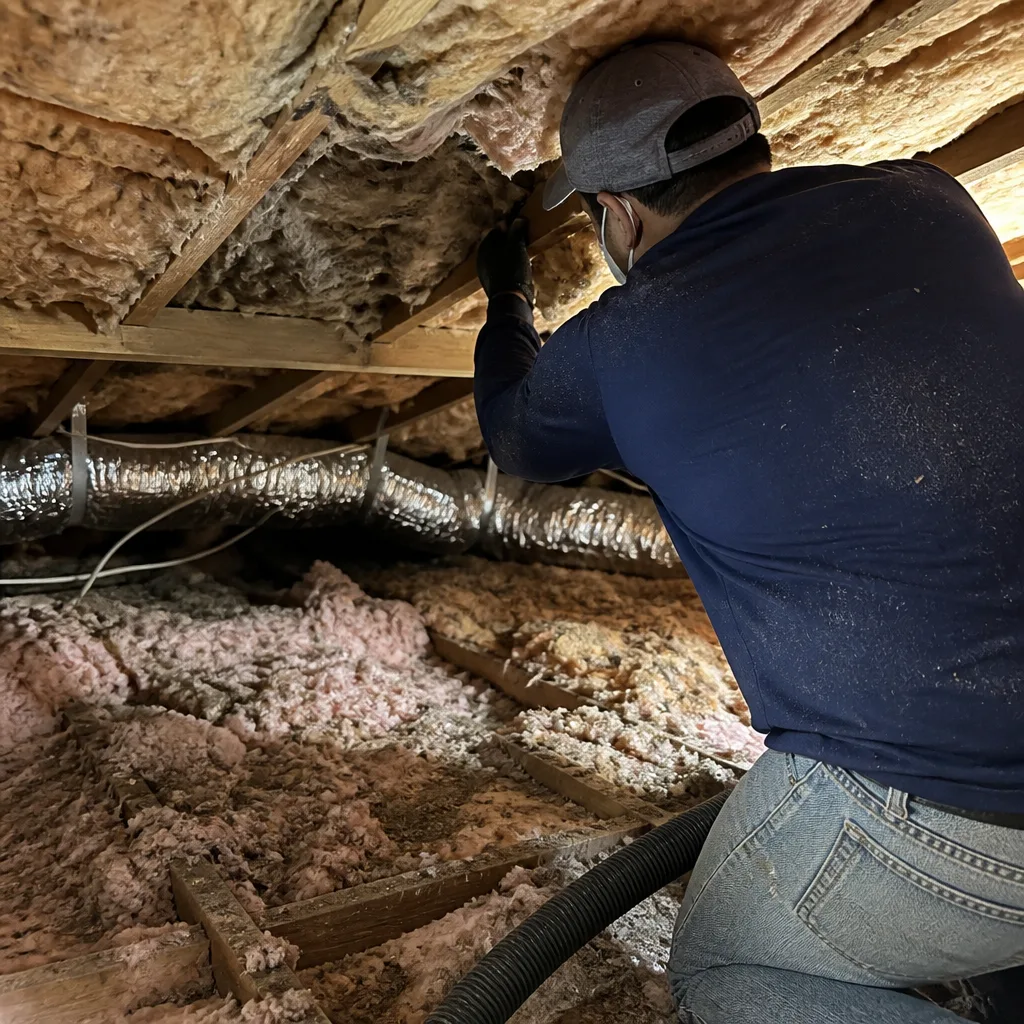 Before
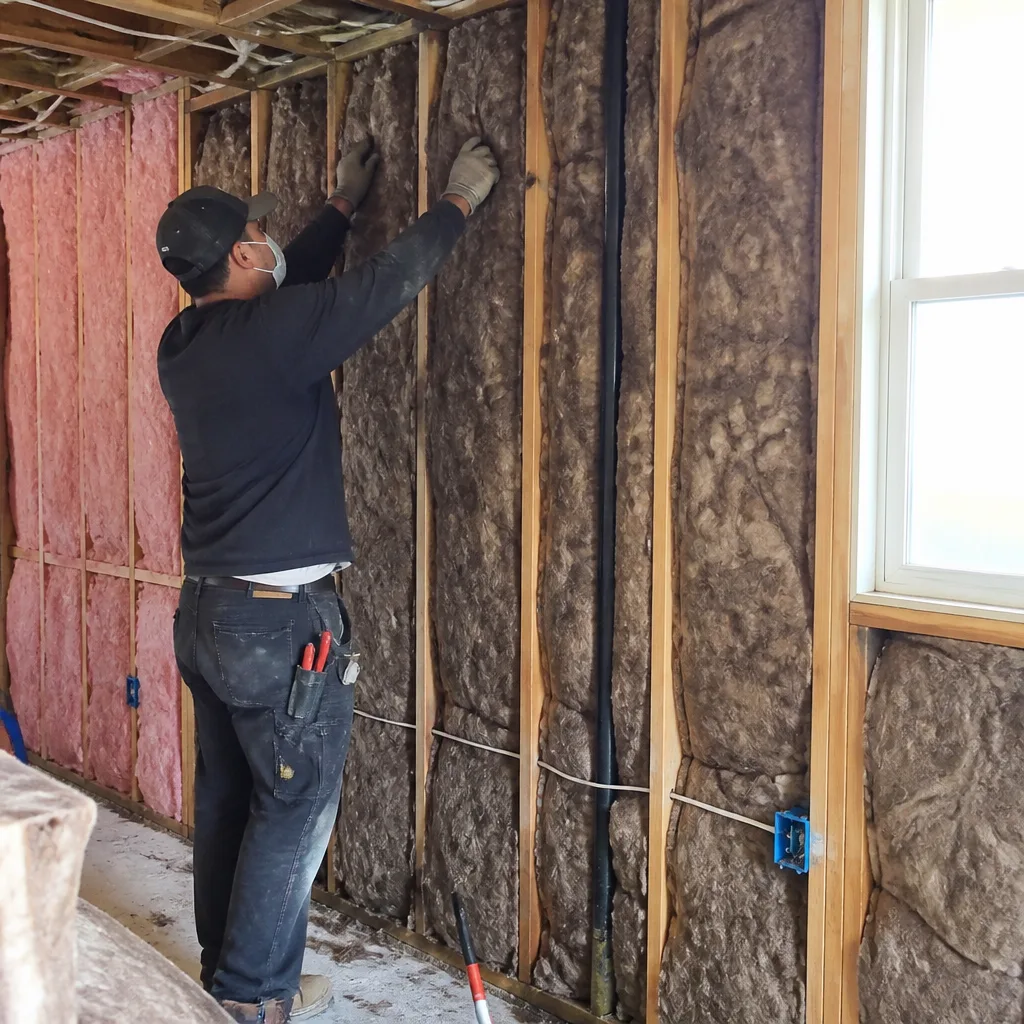 After
AfterCrawl Space Vapor Barrier Pricing in Milpitas
How Much Does Crawl Space Encapsulation & Vapor Barrier Cost? (2026 Price Guide) - Milpitas, CA: typically $1,200 to $3,800 for a residential crawl space. The range is wide because crawl space conditions vary significantly even within a single neighborhood. Here is how costs break down by the factors that actually move the number:
| Factor | Typical Impact on Price |
|---|---|
| Crawl space footprint (sq ft) | Base cost scales with area – most Milpitas homes run 800 to 1,600 sq ft of crawl space |
| Barrier thickness (12-mil vs. 20-mil) | 20-mil adds $0.15 to $0.30 per sq ft over 12-mil; recommended for high-traffic crawl spaces |
| Crawl space height and access difficulty | Clearance under 18 inches adds labor time; some Milpitas pier-and-beam crawl spaces run 14 to 16 inches |
| Old barrier removal | Typically $200 to $500 depending on volume and condition of prior material |
| Number of penetrations and piers | Each sealed penetration adds minor material cost; homes with many plumbing or post penetrations take longer to seal correctly |
| Ground moisture or standing water remediation | If active drainage issues are found, those are scoped and priced separately before vapor barrier work begins |
A straightforward vapor barrier installation – clean crawl space, no prior material to remove, reasonable clearance, 1,000 square feet of coverage – runs closer to $1,400 to $1,900 in Milpitas. A more complex job with low clearance, multiple piers to seal around, and old barrier removal typically lands between $2,800 and $3,800.
We don’t ask you to call for a quote and wait for a callback. Under Haven Standard Clause 1, you get a written price before any work starts – flat, not an estimate range that expands once we’re already on site. Schedule an assessment and we’ll give you the exact number in writing. Call (650) 770-8707 – a live person answers, including evenings and weekends.
We also offer a Free Second Opinion on any written estimate. If you have a quote from another contractor, bring it to us and we’ll read through it with you line by line – what’s included, what’s missing, and whether the material spec matches your crawl space conditions.
FAQs – Crawl Space Vapor Barrier
What thickness vapor barrier do I need for a Milpitas crawl space?
For most Milpitas homes, Crawl Space Insulation starts with a 12-mil reinforced polyethylene barrier as the practical minimum for a lived-in crawl space with periodic access. If your crawl space has HVAC equipment, is accessed regularly by maintenance trades, or sits in an area with higher seasonal ground moisture – such as properties near the Alviso Slough or in the lower sections of the Berryessa area where the water table is shallower – we recommend 20-mil material. Thicker sheeting resists puncture from foot traffic and lasts significantly longer before needing replacement. The specific recommendation for your crawl space will be in writing on your scope before work begins. Call (650) 770-8707 for a no-obligation assessment.
Does a vapor barrier replace the need for crawl space ventilation?
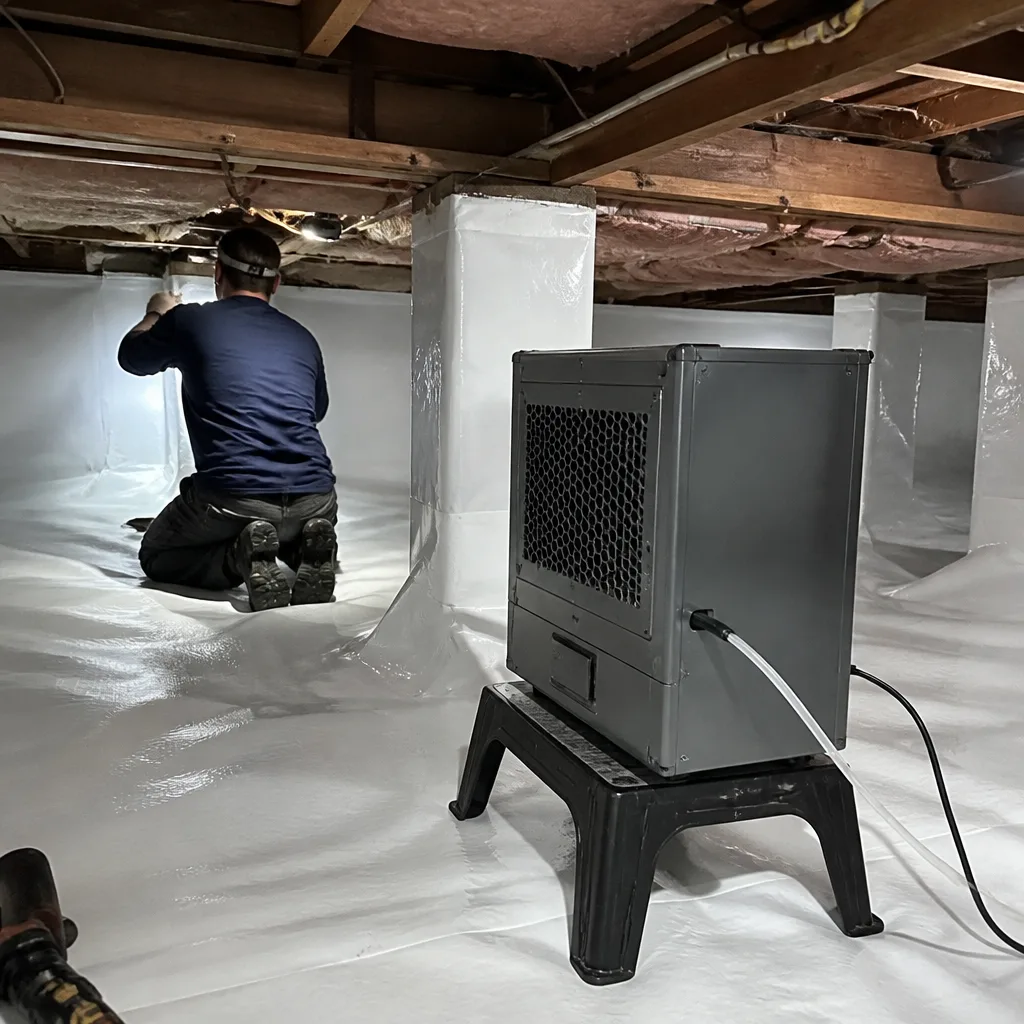
No – a vapor barrier and crawl space ventilation serve different functions and the right answer depends on your foundation type. In a vented crawl space (the most common type in Milpitas homes built before 2000), the vapor barrier controls ground moisture while vents allow the crawl space air to exchange with outside air. In a conditioned or encapsulated crawl space, vents are sealed and the barrier is part of a closed-moisture-control system that includes a dehumidifier. Combining these systems incorrectly – for example, sealing vents without adding mechanical dehumidification – can increase moisture problems rather than reduce them. We assess your specific configuration and scope the right solution for it. Our full-scope approach is detailed on the Crawl Space Encapsulation & Vapor Barrier in Milpitas page.
How long does crawl space vapor barrier installation take in Milpitas?
Most standard vapor barrier installations in Milpitas take one day – typically 4 to 7 hours depending on crawl space size, access conditions, and the number of penetrations to seal. Larger or more complex jobs with significant old material removal may run into a second day. The written scope we give you before work starts will specify the expected crew size and time, so there are no surprises about how long your property will be accessed. We send a named technician and a text notification when the crew is on the way, in line with Haven Standard scheduling commitments.
Will a vapor barrier reduce the musty smell coming up through my floors?
In most cases, yes – significantly. The musty odor in Milpitas homes with unprotected or failing crawl space vapor barriers typically comes from mold or organic decomposition on damp soil and wood surfaces. A properly installed, sealed barrier cuts off the primary moisture source feeding that microbial activity. Odor improvement is often noticeable within a few weeks of installation as the crawl space dries down. If the odor is being driven by active mold growth on wood framing rather than just soil moisture, we note that during assessment and it gets addressed as a separate line item on the written scope – not quietly absorbed into the vapor barrier price. Call (650) 770-8707 and we can talk through what we’d look for during the initial assessment.
Written by Wes Okafor, Owner at Topside Attic Insulation Milpitas, serving Milpitas since 2016.