
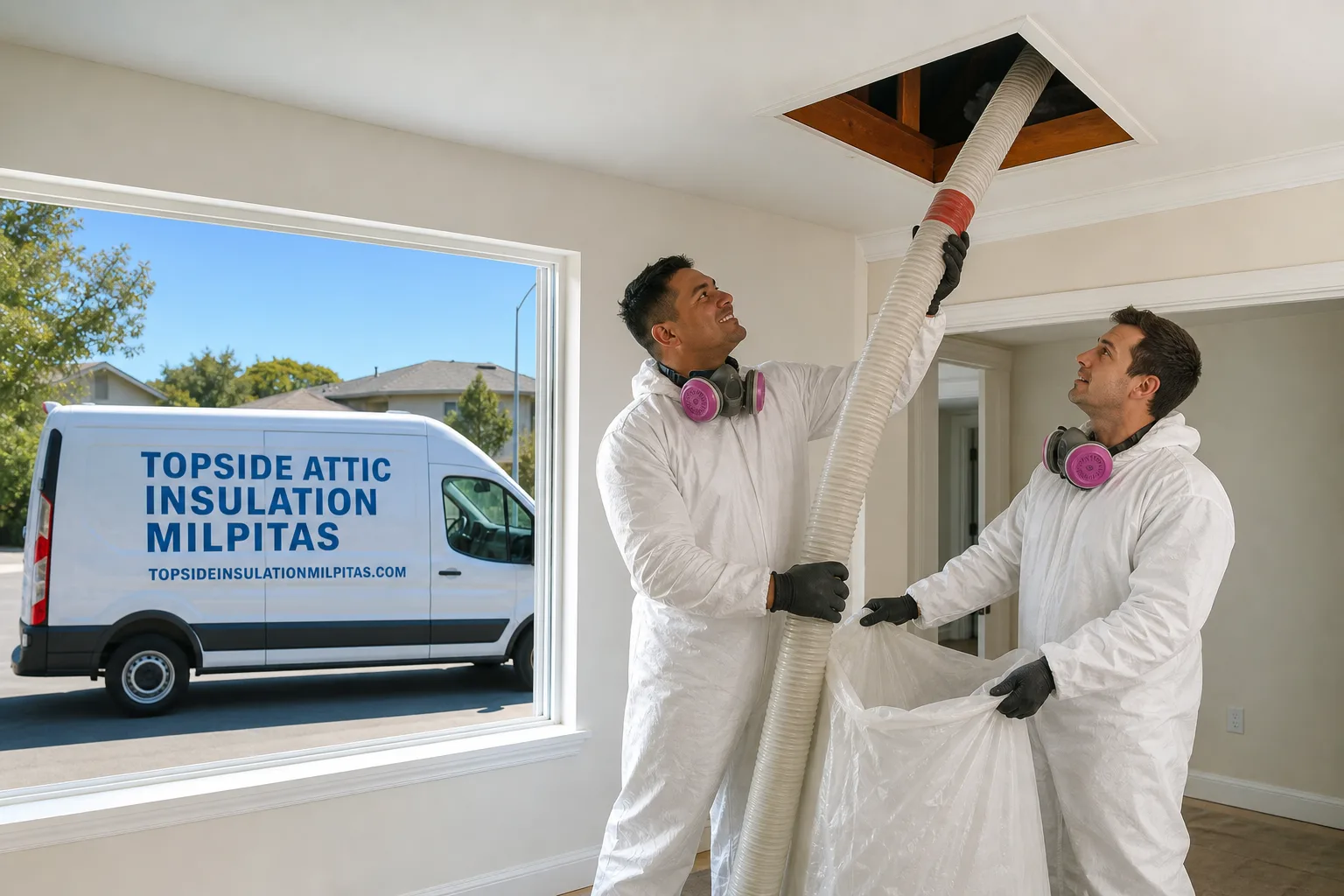
How Much Does Spray Foam Insulation Cost in Milpitas?
Our Spray Foam Insulation services in Milpitas, CA typically cost between $1,800 and $6,500 for a whole-home project, with most jobs landing closer to $2,400-$4,200 depending on the area being insulated and the foam type used. Open-cell foam runs roughly $0.44-$0.65 per board foot, while closed-cell foam runs $1.00-$1.50 per board foot installed. Most Milpitas homeowners insulating a standard attic or crawl space see a final invoice in the $2,200-$3,800 range when air sealing is done correctly before the foam goes in.
Spray Foam Insulation Cost Breakdown (2026)
The numbers below reflect actual project pricing in the Milpitas market as of early 2026. These are installed costs – material, labor, and cleanup – not material-only figures you might see quoted online.
| Application Area | Foam Type | Typical Cost Range | Notes |
|---|---|---|---|
| Attic (1,200-1,600 sq ft floor) | Open-cell | $1,800 – $2,800 | Requires air sealing of top plates and penetrations first |
| Attic (1,200-1,600 sq ft floor) | Closed-cell | $3,200 – $4,800 | Higher R-value per inch; better for vented-to-conditioned conversions |
| Crawl Space Walls/Rim Joists | Closed-cell | $900 – $2,000 | Common in older Milpitas homes with raised foundations |
| Rim Joists Only | Closed-cell | $400 – $900 | Often paired with crawl space vapor barrier work |
| Wall Cavities (new construction or gut renovation) | Open-cell | $1,200 – $3,500 | Depends on linear wall footage; requires open wall access |
| Garage Ceiling (below living space) | Closed-cell | $700 – $1,600 | Fire-rated coating required by California code before drywall |
| Full Building Envelope (attic + crawl + rim joists) | Mixed | $4,500 – $6,500 | Blower-door test before and after included at Envelope Insulation Co. |
What Pushes the Price Up or Down
The biggest single variable isn’t the foam itself – it’s what has to happen before the foam goes in. In Milpitas, we see a lot of homes built between the late 1960s and early 1990s in neighborhoods like Sunnyhills, Rancho Milpitas, and the older sections near Calaveras Boulevard that have attic floors packed with old fiberglass batts sitting directly over unsealed top plates. Pulling that existing insulation, sealing every can-light penetration, utility chase, and top plate gap, then spraying foam is a multi-step job. Skipping the air sealing step means the foam works harder for a fraction of its potential benefit.
At Envelope Insulation Co., we don’t spray foam over an unsealed attic floor. Air sealing of top plates, recessed lights, and all penetrations is completed first, every time – that’s not an upsell, it’s a prerequisite under how we do the work. We then run a blower-door test – a pressurization reading that shows, in a single number, exactly how much conditioned air the building envelope was losing – before any insulation goes in, so the before-and-after comparison is documented and yours to keep.
Access difficulty also moves the number. An attic with a 22-inch hatch and low ridge height costs more to work in than a full-height attic with a pull-down stair. Milpitas homes in the Alviso corridor near the wetlands tend to have pier-and-beam foundations where crawl space clearance varies dramatically from one section to the next – that affects both labor time and the type of spray rig that can reach the rim joists cleanly.
What Affects Spray Foam Insulation Pricing in Milpitas
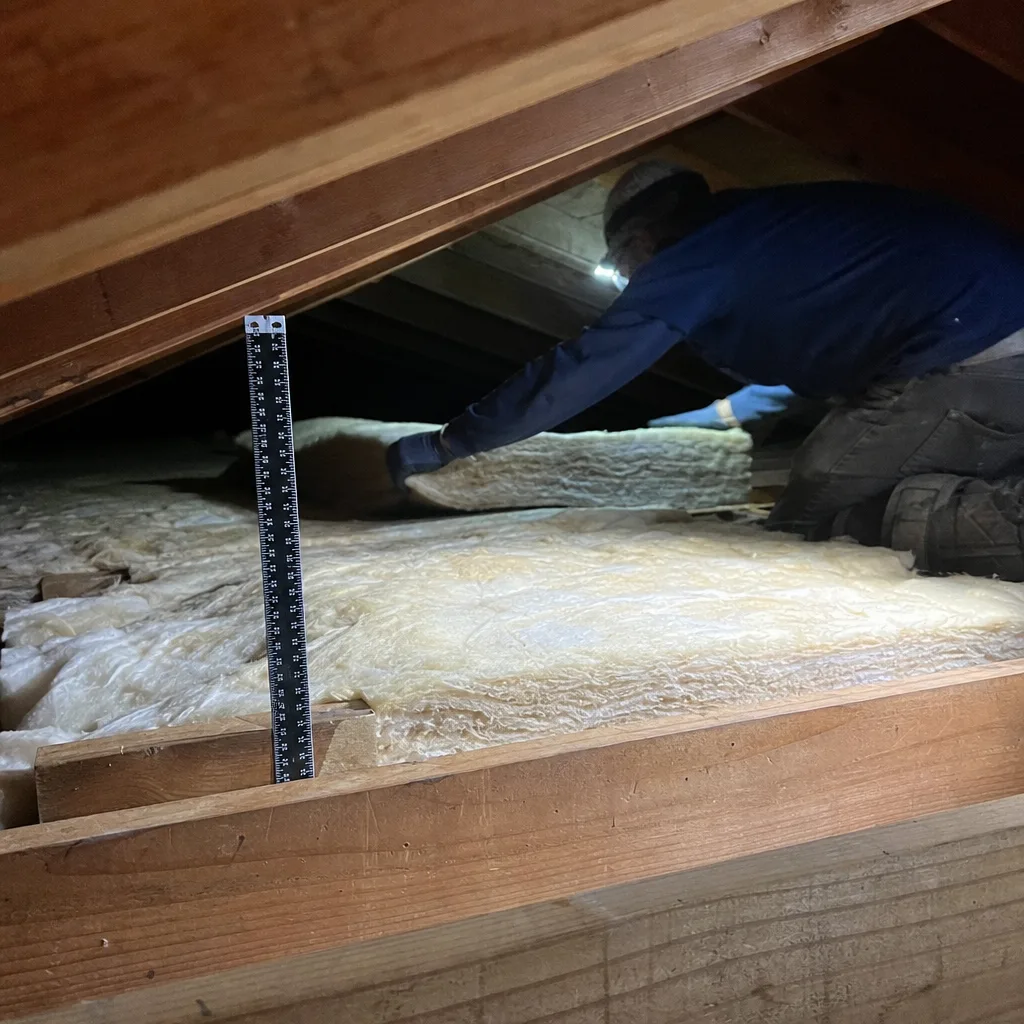
- Foam type: open-cell vs. closed-cell. Open-cell foam (roughly R-3.5 per inch) is softer, expands aggressively, and costs less per board foot. Closed-cell foam (R-6 to R-7 per inch) is rigid, doubles as a vapor retarder, and costs roughly twice as much per board foot but requires far less thickness to hit a given R-value. In Milpitas, closed-cell is almost always the right call for crawl spaces and rim joists because of the moisture that moves up from the South Bay floor; open-cell works well in attic cavities where you’re after air-sealing performance and sound control.
- Square footage and thickness. Spray foam pricing is quoted per board foot – one square foot of foam applied one inch thick. A 1,400-square-foot attic floor sprayed to 3.5 inches of closed-cell is 4,900 board feet. A 1,400-square-foot attic floor sprayed to 5.5 inches of open-cell is 7,700 board feet. The target R-value (California’s Title 24 code currently requires R-38 in attics for Milpitas’s climate zone 4) drives how many inches are needed, which drives the board-foot count, which drives the final price.
- Existing insulation removal. If your Milpitas home has fiberglass batts or old blown-in cellulose that’s been contaminated by rodents – common in the Berryessa-adjacent neighborhoods near the creek corridors – it has to come out before any new material goes in. Insulation removal typically adds $500-$1,200 to a project, and the attic cleaning that follows adds another $300-$700 depending on the level of debris.
- Air sealing scope. The amount of air sealing work required before foam is applied depends on how leaky the building envelope is. A blower-door test – which we run before the job begins – gives a CFM50 reading (cubic feet per minute of air loss at 50 pascals of pressure). Milpitas homes from the 1970s and 1980s regularly test in the 3,500-6,000 CFM50 range, which means significant sealing work. Post-1998 homes tend to test tighter, in the 1,800-2,800 CFM50 range, and cost less to seal.
- Access and job-site conditions. Low attic clearance, complex rooflines with multiple valleys, or crawl spaces under 24 inches of clearance all slow the crew down. Homes in the Midtown Milpitas area near Main Street often have split-level layouts that mean multiple separate insulation zones rather than one continuous attic floor – that complexity shows up in the quote.
- Permit requirements. Santa Clara County requires a permit for spray foam insulation applied to the underside of roof sheathing (converting a vented attic to conditioned space). The permit fee in Milpitas runs approximately $180-$350 for most residential jobs. If the project also involves converting a vented attic to an unvented assembly, a CalGreen-compliant inspection is required. We pull the permit; we don’t ask the homeowner to manage that process.
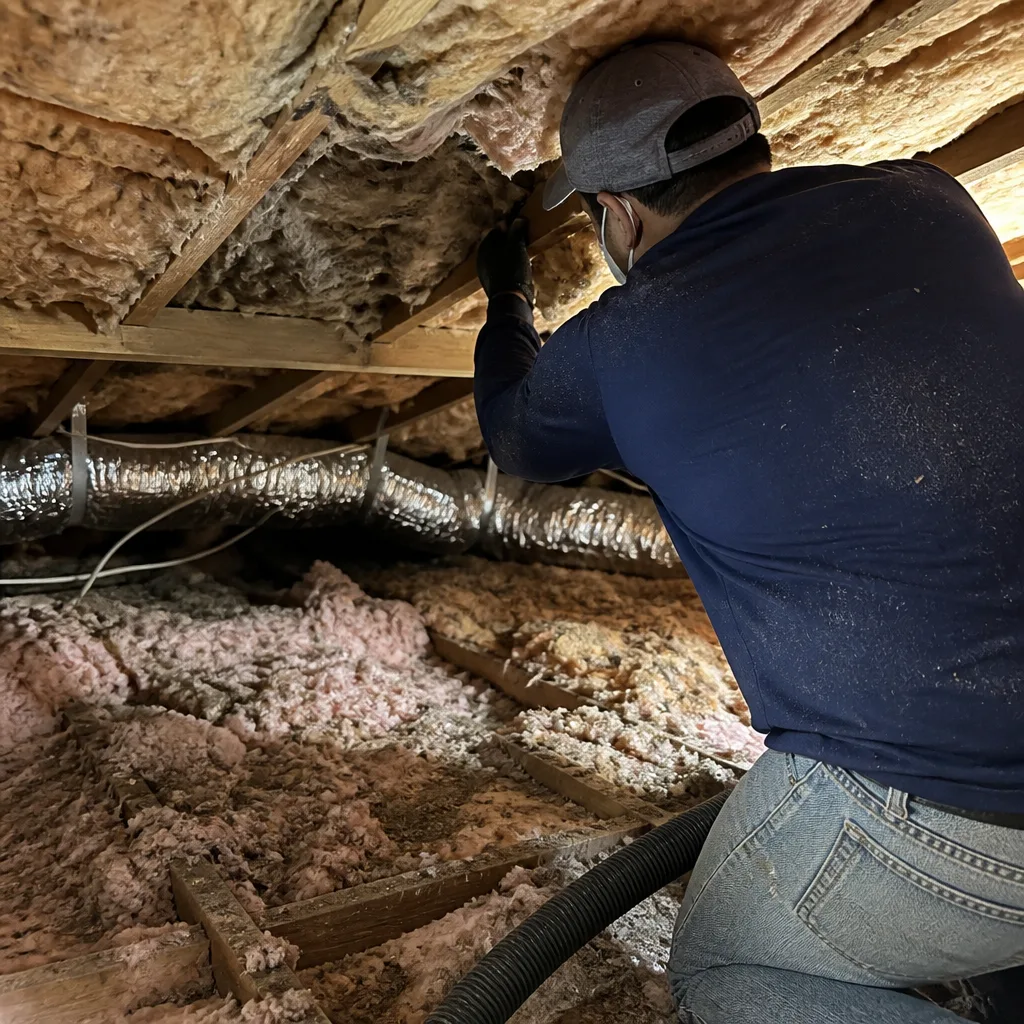 Before
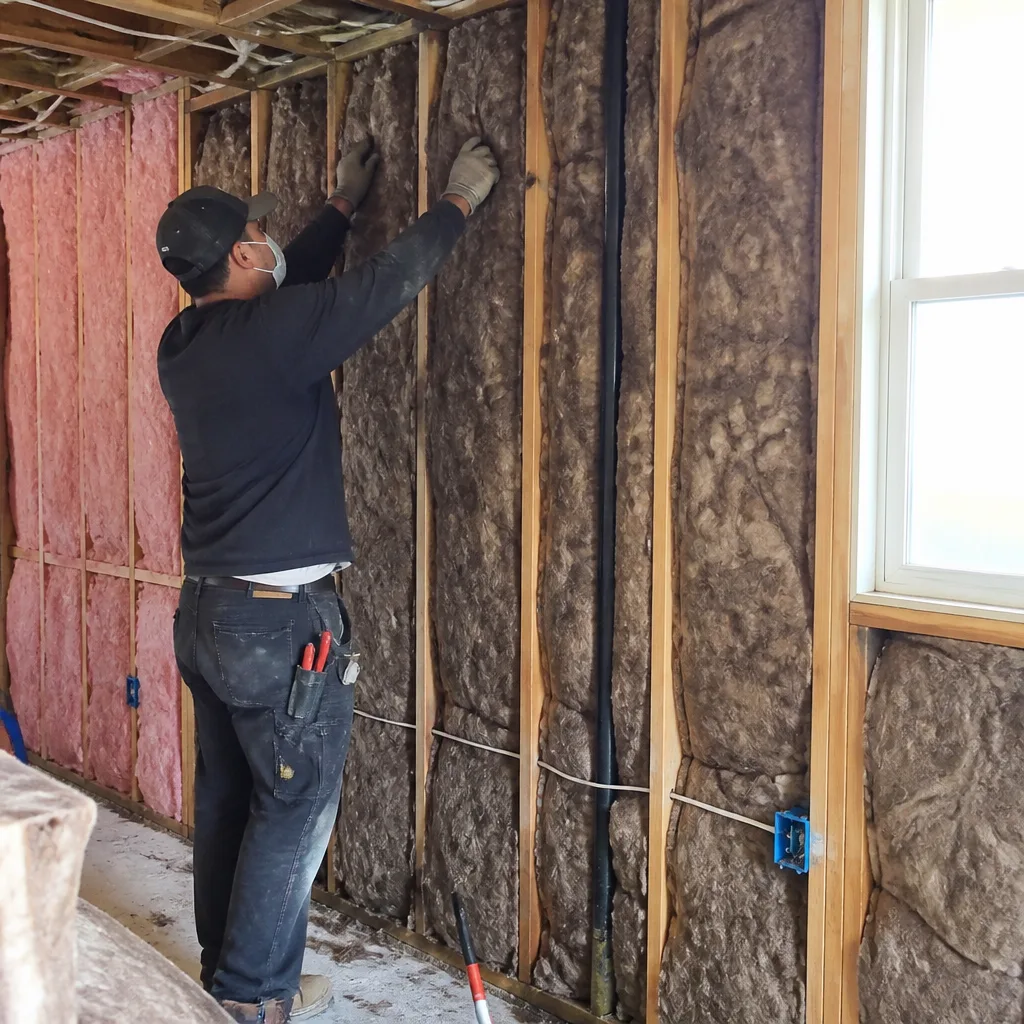 After
AfterOpen-Cell vs. Closed-Cell: Which One Makes Sense in Milpitas?
This question comes up on nearly every estimate in Milpitas, so it’s worth answering directly rather than with a chart that tells you nothing.
Open-cell foam works well in attic rafters and wall cavities where you want air sealing performance and some sound attenuation, and where you don’t need the foam to serve as a vapor barrier. It’s softer, it breathes slightly, and at $0.44-$0.65 per board foot it covers more square footage per dollar. The trade-off is that you need more inches to hit a given R-value, and it absorbs moisture – which is why we never spec it in crawl spaces or on rim joists in Milpitas.
Closed-cell foam is structurally rigid, achieves R-6 to R-7 per inch, and acts as a Class II vapor retarder – meaning it slows moisture migration through the assembly. At $1.00-$1.50 per board foot installed it costs more, but you need fewer inches, and in applications where moisture control matters (crawl spaces, rim joists, garage ceilings, unvented attic assemblies), there’s no real substitute. Homes near the Alviso slough and the lower-elevation sections of Milpitas near Highway 237 see notably higher ground moisture than the hillside neighborhoods near Ed Levin County Park – that difference should show up in the material spec, and it does on every estimate we write.
A mixed-foam approach – open-cell in the attic rafter bays, closed-cell at the rim joists and crawl space walls – is common on full building-envelope projects and often represents the best dollar-per-R-value outcome for a Milpitas home in the $750,000-$1.4 million range where the owner wants documented performance, not just a number on a spec sheet.
California Title 24 and Milpitas Permit Requirements
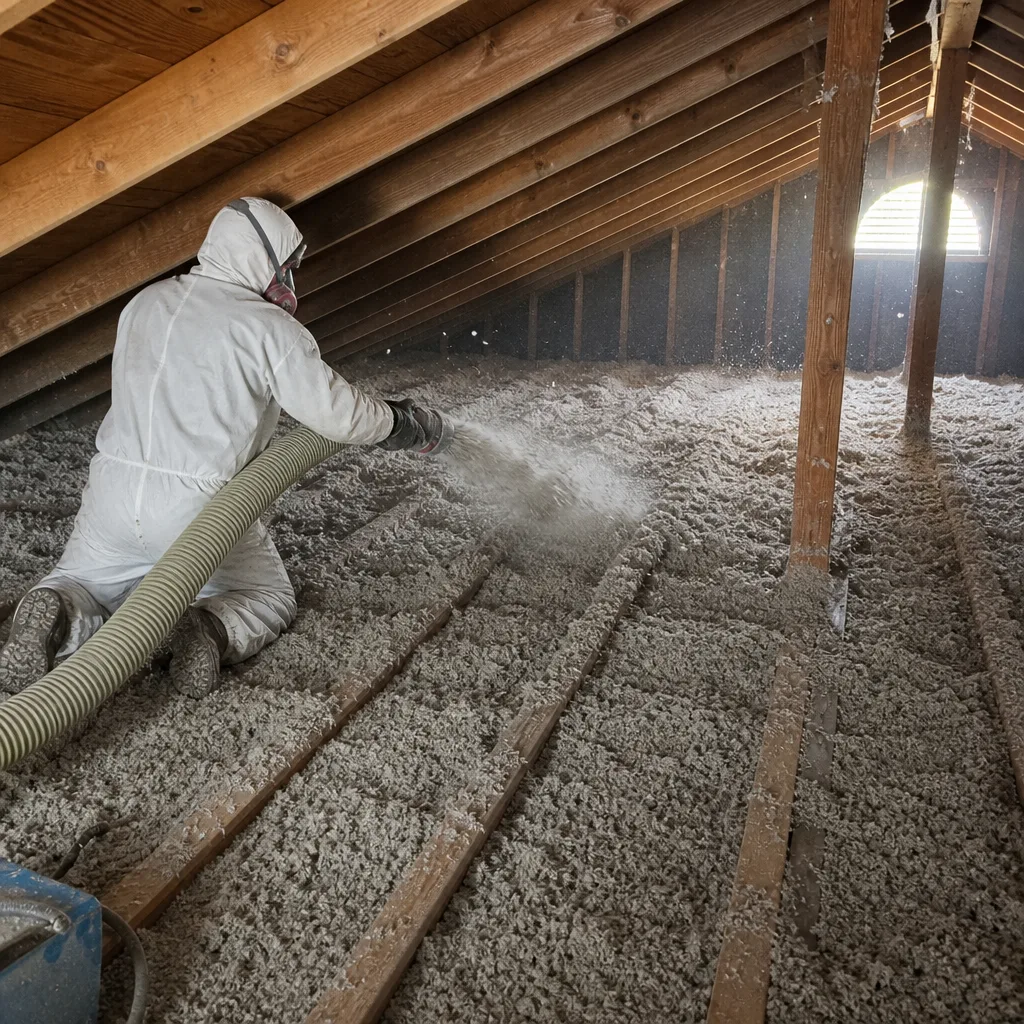
Milpitas sits in California Climate Zone 4 under Title 24, Part 6 – the state’s energy code. The minimum code requirements for residential insulation in this zone call for R-38 in attics and R-13 in walls. Spray foam often exceeds these minimums in fewer inches than traditional insulation, which is part of why it’s increasingly specified on renovation projects in South Bay cities.
A permit is required in Milpitas when spray foam is applied to the underside of roof sheathing, changing a vented attic assembly to an unvented one. This conversion also requires the mechanical system to be evaluated – if the furnace and ducts are in the attic and now inside conditioned space, the system sizing may need to be reviewed. We flag this in the written scope before the job starts, not as a surprise after the foam cures. The city building department inspection for spray foam insulation in Milpitas typically adds 7-14 days to project completion for permit processing, so factoring that into your timeline is useful.
For projects where the foam is applied only to the attic floor (not the roof deck) or to crawl space walls, a permit is generally not required – but we pull one when there’s any question, because a Documented Photo Record and a permitted job both belong in your home’s file.
Real Project Examples from the Milpitas Area
These are representative projects – not cherry-picked outliers – drawn from the kind of work we do regularly in Milpitas and the surrounding South Bay communities.
1970s Ranch Home, Sunnyhills Neighborhood
1,350 sq ft attic floor. Blower-door test before work: 4,800 CFM50. Old fiberglass batts removed, top plates and can-light penetrations sealed with fire-rated foam, then open-cell spray foam applied to 5.5 inches across the attic floor. Blower-door after: 2,100 CFM50 – a 56% reduction in measured air loss. Total project cost: $3,450. The homeowner received the written scope, before-and-after blower-door readings, and a Documented Photo Record at project close.
Townhome Crawl Space, Rancho Milpitas
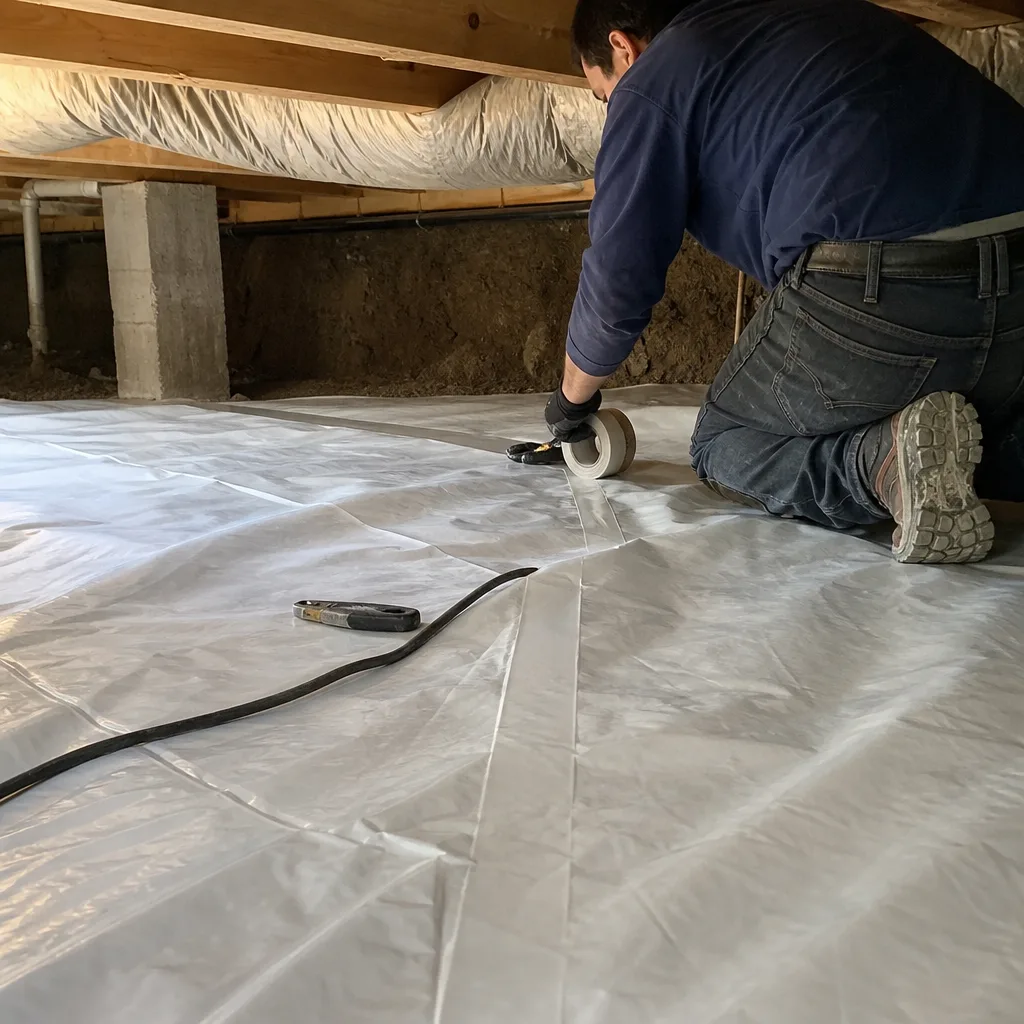
Raised-foundation townhome with a pier-and-beam crawl space averaging 28 inches of clearance. Existing fiberglass batts between floor joists were saggy and partially fallen. Rim joists and crawl space walls sprayed with 2 inches of closed-cell foam; new vapor barrier installed across the ground. Total project cost: $1,980. Air sealing before foam confirmed with a quick-reading before-and-after protocol.
1990s Two-Story, Near Great Mall
Garage ceiling below a bedroom and bathroom – an extremely common thermal and noise complaint in this style of Milpitas construction. Two inches of closed-cell foam applied to the garage ceiling, followed by a fire-rated thermal barrier coating as required by California code. Total project cost: $1,240.
How to Save on Spray Foam Insulation in Milpitas
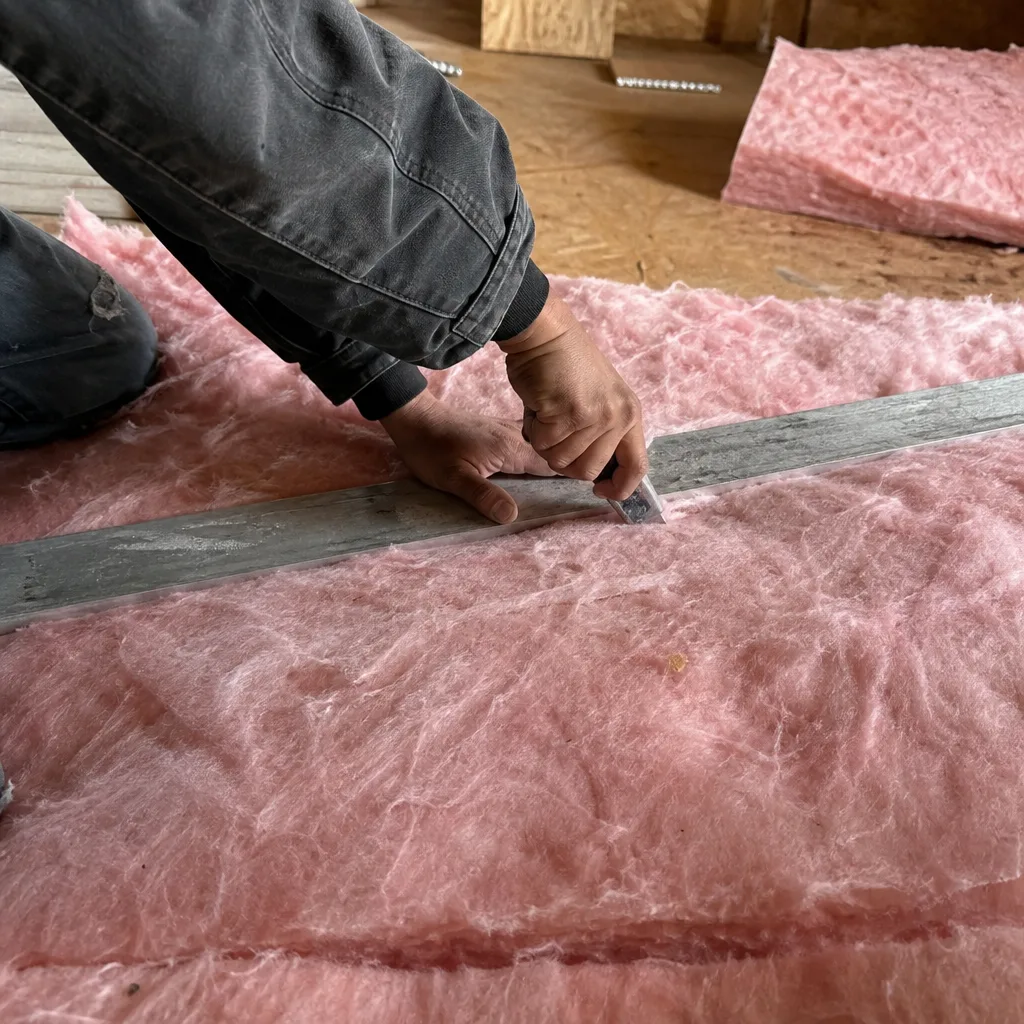
The most useful thing to know upfront: the cheapest bid is rarely the cheapest job. Spray foam that goes in over an unsealed attic or without a blower-door baseline leaves your home performing at a fraction of what you paid for. The savings show up on paper; the air leaks stay in the walls.
That said, there are legitimate ways to control costs on a spray foam project in Milpitas:
- Bundle zones into one mobilization. The equipment and crew setup costs for spray foam are roughly the same whether you’re doing one zone or three. If your attic, rim joists, and crawl space all need attention, quoting them together almost always produces a lower per-zone cost than scheduling separate jobs. On a full building-envelope project, the all-in cost is typically 12-18% lower than the sum of three individual mobilizations.
- Get a second opinion on a written estimate before you sign. We offer a free second opinion on any written estimate – we’ll read the competitor’s scope with you line by line and point out exactly where the specs differ. This is documented in the Haven Standard and it’s something we do in person, not over the phone. If the other quote is lower because the scope is thinner, you’ll know that before you commit.
- Check for PG&E and TECH Clean California rebates. As of 2026, qualifying energy efficiency upgrades in Milpitas may be eligible for utility rebates through PG&E’s Home Upgrade program or the state’s TECH Clean California initiative. Rebate availability and amounts change, but insulation combined with air sealing has historically qualified. We document the before-and-after blower-door readings in a format that supports rebate applications.
- Time the project strategically. Spray foam demand in the South Bay tends to peak in late spring and early fall when homeowners are reacting to utility bills from the cooling season. Late winter and midsummer scheduling can sometimes produce better availability without wait times, which occasionally affects pricing on larger projects.
- Don’t skip the blower-door test. This sounds counterintuitive, but skipping the baseline test means you have no documented proof the job improved anything – which matters for resale, for rebates, and for the 365-Day Done Right Promise. A home that can be measured is a home whose performance can be defended.
For a written price on your specific home, call (650) 770-8707. There’s no estimate-by-phone at Envelope Insulation Co. – we write prices after we’ve seen the attic, because a number written blind isn’t a real price. The visit is free, the quote is written, and no work starts without your signature on that scope.
How Spray Foam Compares to Other Insulation Options in Milpitas
Spray foam is not always the right answer. It’s the right answer when you need air sealing and insulation in a single application, when you’re converting a vented attic to conditioned space, or when moisture intrusion is a factor (crawl spaces, rim joists). For a straight attic-floor application on a home with a reasonably tight existing envelope, blown-in fiberglass or cellulose will hit R-38 for less money per square foot – typically $1.10-$1.60 per square foot installed vs. $1.80-$3.20 per square foot for open-cell spray foam to the same R-value.
The performance gap narrows considerably when you account for air sealing. Blown-in insulation slows conductive heat transfer but does not stop air movement. Spray foam does both. On a home with a blower-door reading above 3,000 CFM50, the efficiency gains from spray foam over well-installed blown-in plus thorough air sealing are measurable but not dramatic. Below 3,000 CFM50, the incremental benefit of spray foam over blown-in plus sealing is smaller still.
We explain this on every estimate. We do not spec spray foam on a job where blown-in insulation with proper air sealing will deliver equal documented performance for less cost. That’s what the before-and-after blower-door numbers exist to prove.
For more detail on the full range of what we do in Milpitas, the home page covers every service line with the same level of specificity.
FAQs – Spray Foam Insulation Cost in Milpitas
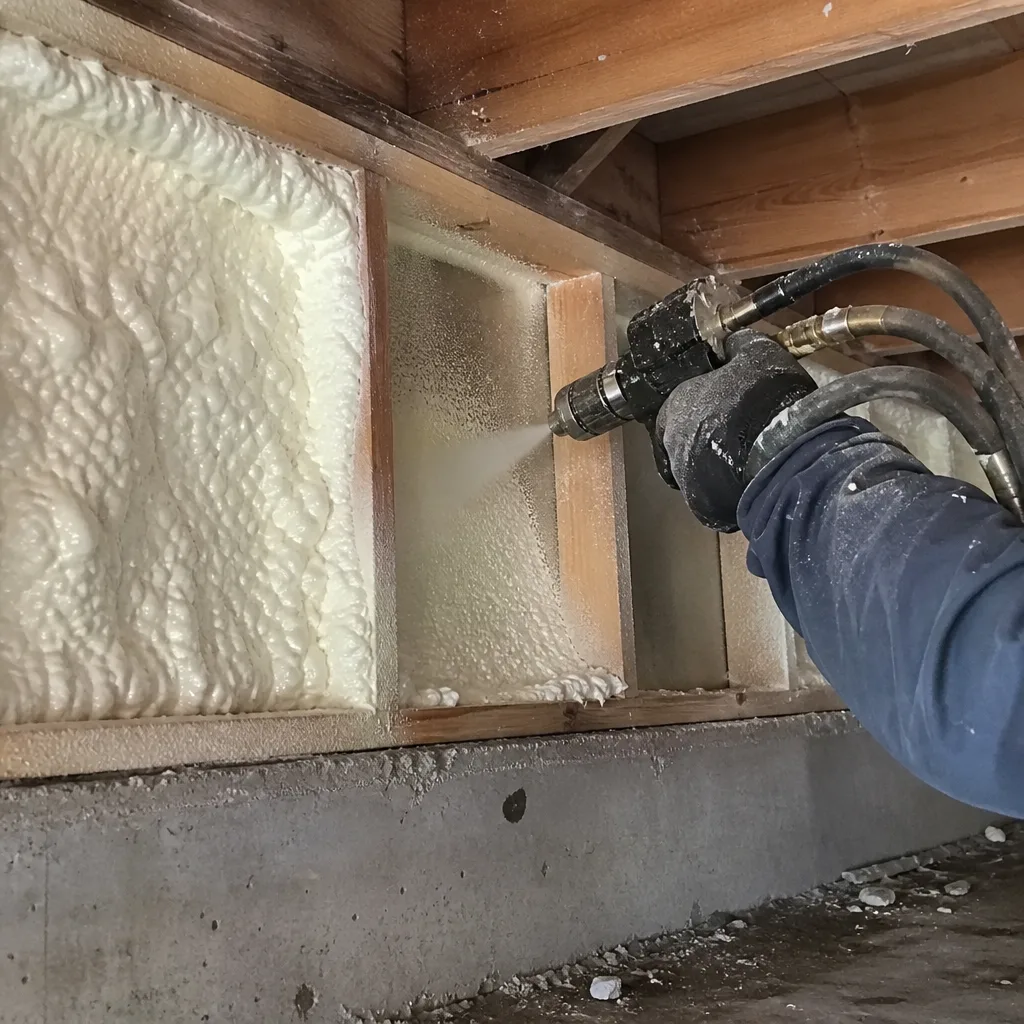
How much does spray foam insulation cost per square foot in Milpitas, CA?
Installed spray foam insulation in Milpitas costs approximately $1.00-$1.80 per square foot for open-cell foam (at typical attic depths) and $1.80-$3.50 per square foot for closed-cell foam. These are installed prices – equipment, labor, material, and cleanup. The per-square-foot number moves based on thickness: a 2-inch closed-cell application costs less per square foot than a 4-inch application because you’re buying fewer board feet. When comparing quotes, always confirm the quoted thickness and R-value, not just the square footage price. Call (650) 770-8707 for a written price based on your home’s actual measurements.
Is spray foam insulation worth the cost for a Milpitas home?
For most Milpitas homes built before 2000, yes – particularly when the project includes documented air sealing. The South Bay’s mild winters mean that the payback calculation is driven more by cooling-season savings (May through October) and HVAC runtime reduction than by heating. A home that tests at 4,500 CFM50 before work and 2,000 CFM50 after will typically see a 20-35% reduction in HVAC energy use, which at current PG&E rates translates to $600-$1,400 per year in savings depending on home size and thermostat habits. At those numbers, a $3,200 spray foam project breaks even in 3-5 years. The before-and-after blower-door readings we provide give you the documented baseline to verify that math yourself, rather than taking our word for it.
How long does spray foam insulation last in Milpitas?
Properly installed spray foam – both open-cell and closed-cell – is rated to last 80+ years under normal conditions. It does not sag, settle, or compress the way fiberglass batts do over time. In Milpitas, the main risk to spray foam longevity is moisture infiltration in crawl spaces that weren’t properly waterproofed before the foam was applied, and pest intrusion in attics where the foam was sprayed without rodent-proofing the entry points first. Both of these are addressed in the written scope we provide before any work starts, with the Documented Photo Record confirming the condition at close of job.
Can you spray foam insulation over existing insulation in a Milpitas attic?
In most cases, no – and we won’t do it. Spraying foam over existing fiberglass batts or cellulose on an attic floor traps any moisture in the existing material, covers the top plates and penetrations that need to be sealed, and produces a result that can’t be tested with a blower-door because the air sealing work was never done. The right sequence is: remove the old insulation if it’s contaminated or badly settled, seal all the penetrations and top plates, then insulate. Any scope we write describes this sequence explicitly. Existing blown-in insulation in reasonable condition can sometimes stay if the air sealing can be done around it – but that determination is made on-site, not over the phone.
How much does spray foam insulation cost to do a whole house in Milpitas?
A whole-house spray foam project in Milpitas – covering the attic floor or rafter bays, crawl space walls and rim joists, and any unconditioned garage ceiling below living space – typically runs $4,500-$6,500 for a home in the 1,400-2,000 sq ft range. Larger homes or those with complex rooflines, low-clearance crawl spaces, or extensive existing insulation removal can reach $7,000-$9,000. The written price you receive before work starts will itemize each zone separately so you can compare what each component costs. For a free estimate, call (650) 770-8707 – a technician will visit the home, measure every zone, run a blower-door baseline, and return a written scope within 24 hours.
Does spray foam insulation require a permit in Milpitas?
It depends on where the foam is being applied. Spray foam on an attic floor, rim joists, or crawl space walls generally does not require a permit in Milpitas. Spray foam applied to the underside of the roof sheathing – converting a vented attic to an unvented, conditioned assembly – does require a building permit through the City of Milpitas Building Division, typically running $180-$350 in permit fees. California also requires a fire-rated thermal barrier wherever spray foam is left exposed in an occupied space (garage ceilings below living areas are the most common case in Milpitas). We identify the permit requirement in the written scope before work starts and pull the permit ourselves.
Why the Air Sealing Step Matters More Than the Foam Itself
Wes Okafor, who leads Envelope Insulation Co., has a position on this that shapes how every Milpitas project is estimated: spray foam is not a substitute for a properly sealed building envelope – it’s a way to seal and insulate at the same time. The foam’s R-value number on the spec sheet is measured under laboratory conditions with no air movement. In a real attic with open top plates, unsealed can lights, and utility chases that run floor-to-floor, air movement reduces the effective R-value of any insulation material – foam included – by 30-60% depending on leakage severity.
This is why every Spray Foam Insulation in Milpitas project we take on begins with a blower-door baseline and a systematic air sealing pass before the spray rig arrives. The before-and-after numbers go into the Documented Photo Record. You see what the building envelope was doing before we touched it, and you see what it does when we leave. That’s the only honest way to sell insulation work, and it’s what Haven Standard Clause 1 – a written price before any work starts – is built around.
The 9,000+ homes Envelope Insulation Co. has sealed and insulated since 2016 all have this in common: a written scope, a written price signed before work started, and a documented record when the crew left. The 365-Day Done Right Promise backs every one of those jobs. If something isn’t right, we come back and make it right – that commitment is in writing before we start, not offered after a complaint.
Key Takeaways
- Spray foam insulation in Milpitas costs $1,800-$6,500 for most residential projects, with whole-home work in the $4,500-$6,500 range.
- Open-cell foam runs $0.44-$0.65 per board foot; closed-cell runs $1.00-$1.50 per board foot installed.
- Air sealing of top plates, penetrations, and can lights must happen before foam is applied – this is a prerequisite at Envelope Insulation Co., not an optional add-on.
- A blower-door test before and after documents the actual performance change – we publish those numbers on every applicable job.
- Milpitas homes in Climate Zone 4 must meet R-38 in attics under California Title 24; spray foam typically achieves this in fewer inches than traditional materials.
- Permits are required for unvented attic conversions in Milpitas; we pull the permit, not the homeowner.
- Every project starts with a written price, ends with a Documented Photo Record, and is backed by the 365-Day Done Right Promise.
Get a Written Price for Your Milpitas Home
If you want a number that means something – a flat price tied to a written scope for your specific attic dimensions, foam type, and air sealing scope – call (650) 770-8707. A technician visits the home, runs a blower-door baseline, measures every zone, and returns a written estimate within 24 hours. No work starts without your signature on that scope. If you have a competing written estimate, bring it – we’ll read it with you line by line under the free second opinion offer and explain exactly what differs.
That’s what a written price before any work starts actually looks like.
Written by Wes Okafor, Owner at Envelope Insulation Co. (operating as Topside Attic Insulation Milpitas), serving Milpitas since 2016.
Pricing reflects the Milpitas market as of 2026. Topside Attic Insulation Milpitas offers free estimates – call (650) 770-8707.
What Our Customers Say
"Crawl space encapsulation done properly. Photographs of the vapour barrier at every seam, and the damp smell in the hallway is gone."
- Ainsley P."Turned up on time, protected the hallway, and the written scope matched what was actually done."
- Bruno S."They air-sealed the attic floor before insulating and showed me the blower-door number before and after. The upstairs is finally the same temperature as downstairs."
- Marisol D.