
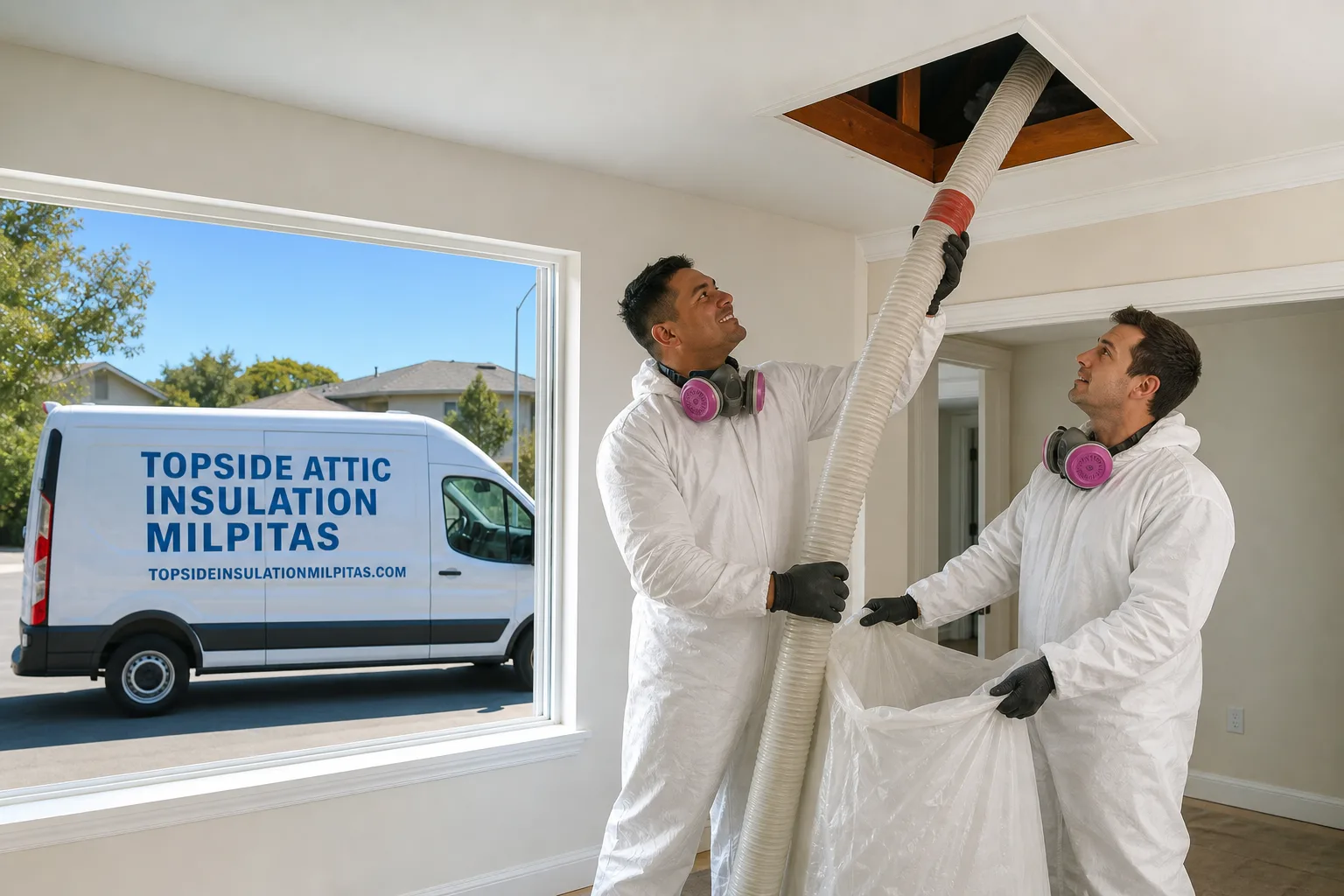
Fast, Reliable Spray Foam Insulation Across San Jose
Most San Jose homeowners who call us about spray foam insulation want one question answered first: what’s it going to cost, and how soon can the crew start? In San Jose, closed-cell spray foam runs $1.80-$2.40 per board foot installed, open-cell runs $0.80-$1.20, and most attic or garage ceiling jobs we do in San Jose are scheduled within 3-5 business days of the written price being accepted. Call (650) 770-8707 and a live person will pick up, 24/7.
We’re familiar with the access constraints that come with San Jose’s housing stock. Narrow Blossom Hill driveways built for 1960s station wagons, not modern spray rigs. Alley-loaded townhomes in East San Jose where the garage door opens directly onto a shared path. Willow Glen bungalows with side gates too tight for a two-hose reel. Our crews have walked foam drums through side yards, staged equipment on Cambrian cul-de-sacs, and worked around permit-parked streets near downtown. Dispatch and scheduling are coordinated from our San Francisco Bay Area office, but the crews serving San Jose live here and know the routes.
Why Topside Attic Insulation Milpitas Is San Jose’s Preferred Spray Foam Insulation Company
We’ve sealed and insulated 9,000+ homes since 2016, and a significant share of those have been in Santa Clara County. San Jose customers find us through referrals from remodeling contractors who’ve learned the hard way what happens when insulation gets treated as an afterthought. Our reviews from San Jose homeowners consistently mention the blower-door numbers we leave behind, not vague promises about “efficiency.”
Response time to San Jose neighborhoods typically runs same-day or next-day for estimates, depending on whether we’re already on a job in Berryessa or Cambrian. We don’t give callback windows measured in business days. A live person answers the phone. You get a text when your technician is on the way, with a name and photo.
What builds trust with San Jose homeowners specifically is our familiarity with the local trigger they don’t see coming. Permitted kitchen and bath remodels in east-side ranch tracts automatically fire a Title 24 Climate Zone 4 whole-house insulation compliance check. We’ve walked hundreds of San Jose homeowners through that exact scenario. We know the forms, the R-value targets, and the inspectors who’ll be reading the reports.
Our Spray Foam Insulation Services in San Jose
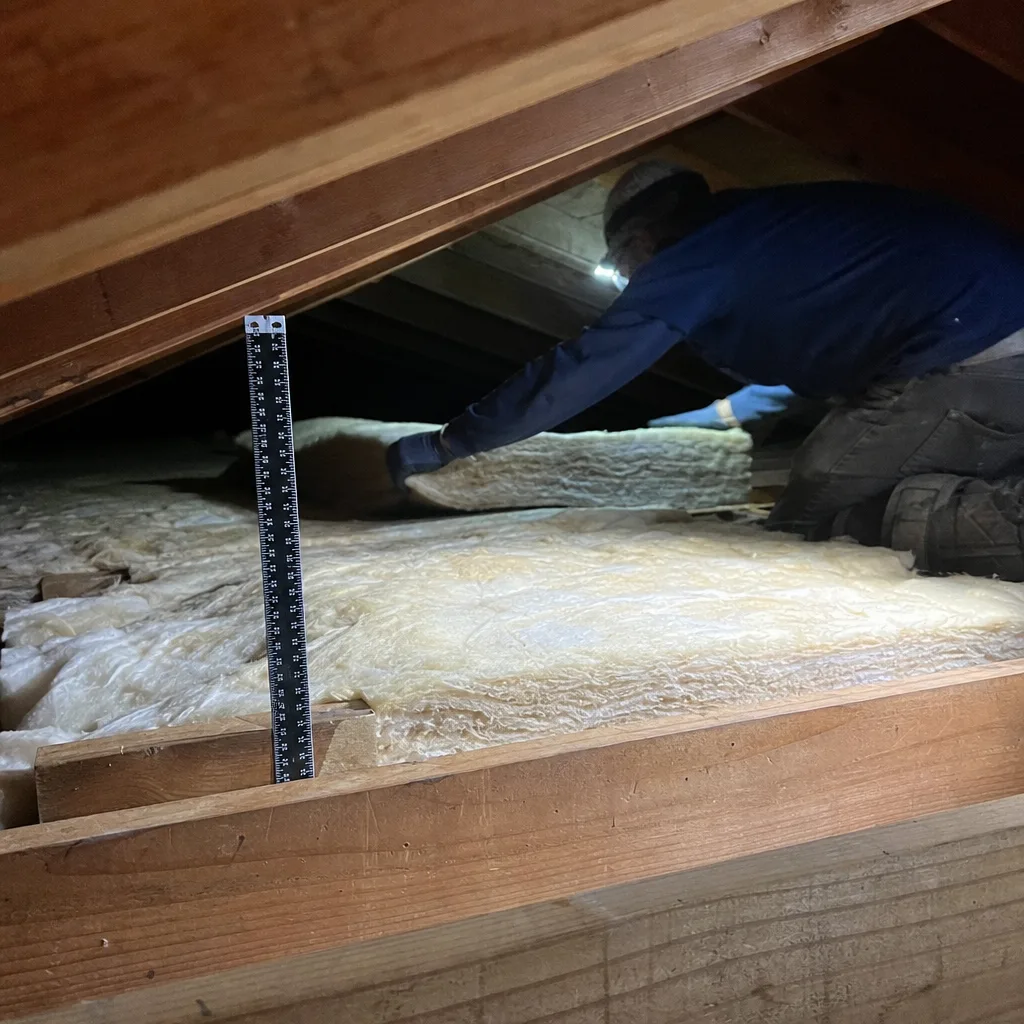
Closed-Cell Spray Foam
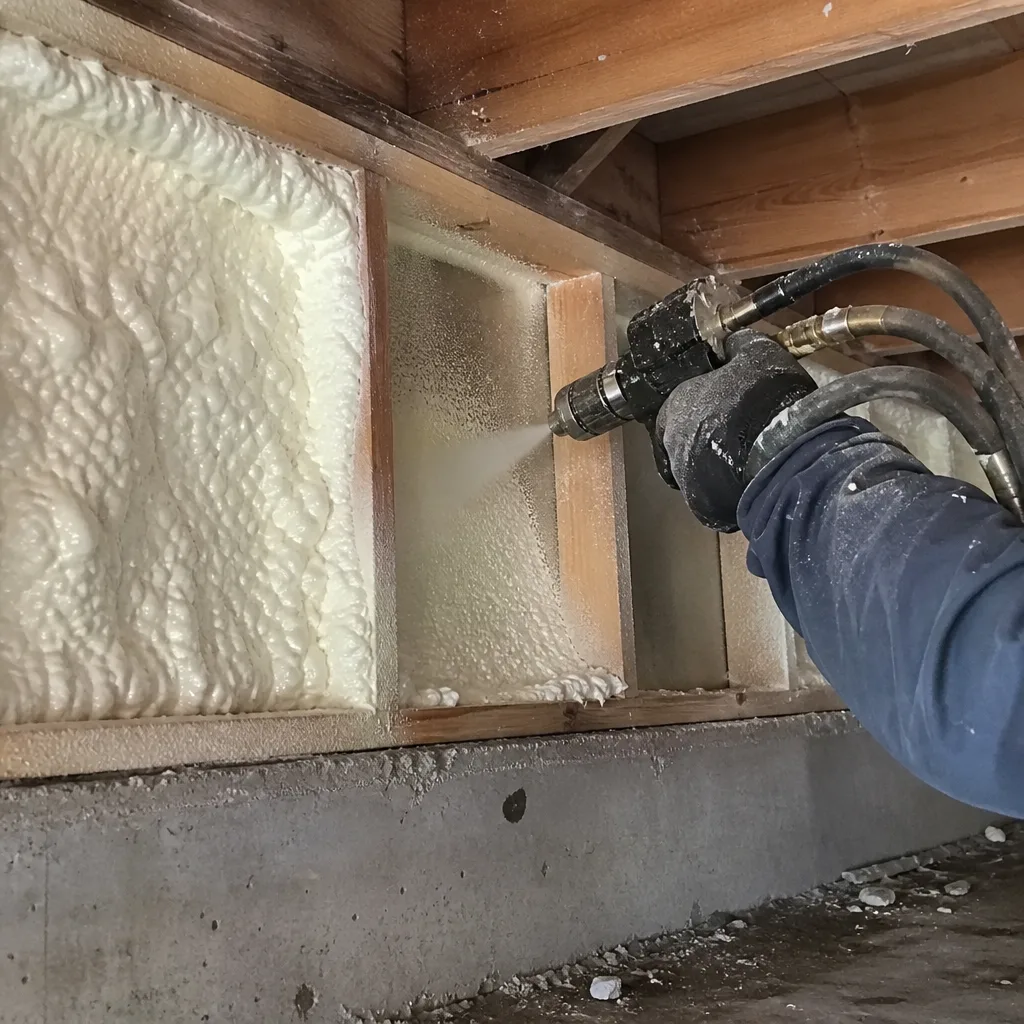
Closed-cell spray foam - a two-pound density foam that cures rigid and delivers R-6.5 per inch - is what we use most often in San Jose garage ceilings, roof decks, and rim joists where moisture resistance and structural rigidity matter. In San Jose’s 95-105°F summer stretches, a closed-cell roof deck application at 3-4 inches stops radiant heat from conducting through the roof sheathing and into conditioned space. We source our closed-cell material from Owens Corning and Demilec, and we never spray over unsealed top plates or compressed existing batts. The air sealing comes first. Always.
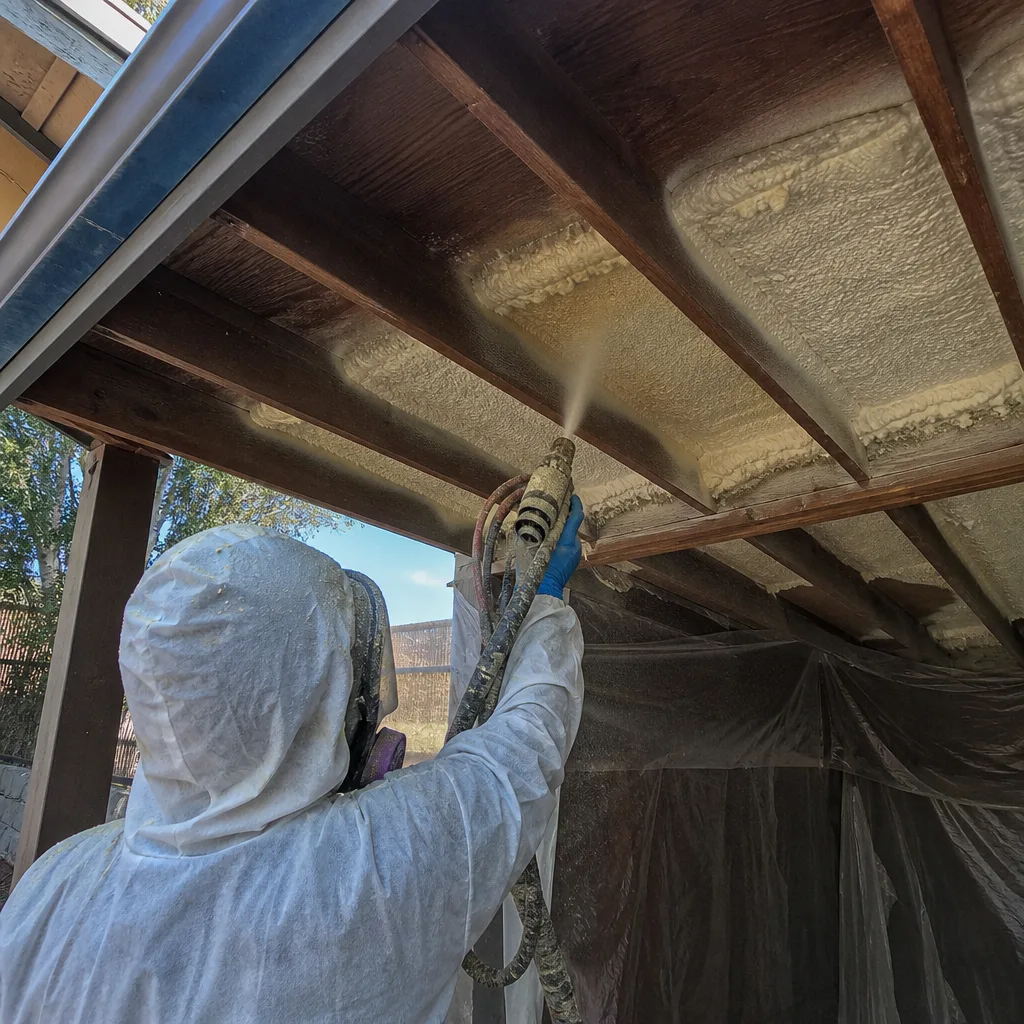
Open-Cell Spray Foam
Open-cell foam - half-pound density, R-3.6 per inch, vapor-permeable - works well for San Jose attic flat ceilings where the goal is airtightness at a lower per-inch cost and the assembly can dry to the interior. We use it in combination with closed-cell at detail areas: closed-cell at the top plate and any roof deck transition, open-cell across the broad ceiling plane. This hybrid approach is common in the 1968-1978 ranch homes that dominate Cambrian and Blossom Hill, where the original fiberglass batts have compressed to half their labeled thickness and the Title 24 compliance target can’t be met with replacement batts alone.
Rim Joist Spray Foam
Rim joist spray foam is where San Jose’s housing variety gets interesting. In Willow Glen’s 1920s-1940s bungalows with balloon framing, the rim joist isn’t a simple band joist at the foundation. It’s the bottom of an open wall cavity that runs two stories. Our Spray Foam Insulation team has to detail around knob-and-tube wiring, unlined chimney chases, and framing irregularities that don’t exist in the post-war ranch stock. We use closed-cell here, typically 2-3 inches, to create both an air barrier and a moisture barrier at the most vulnerable junction in the building envelope. In East San Jose slab-on-grade ranches, rim joist work is more straightforward but no less critical - those homes leak conditioned air at the foundation perimeter more than anywhere else.
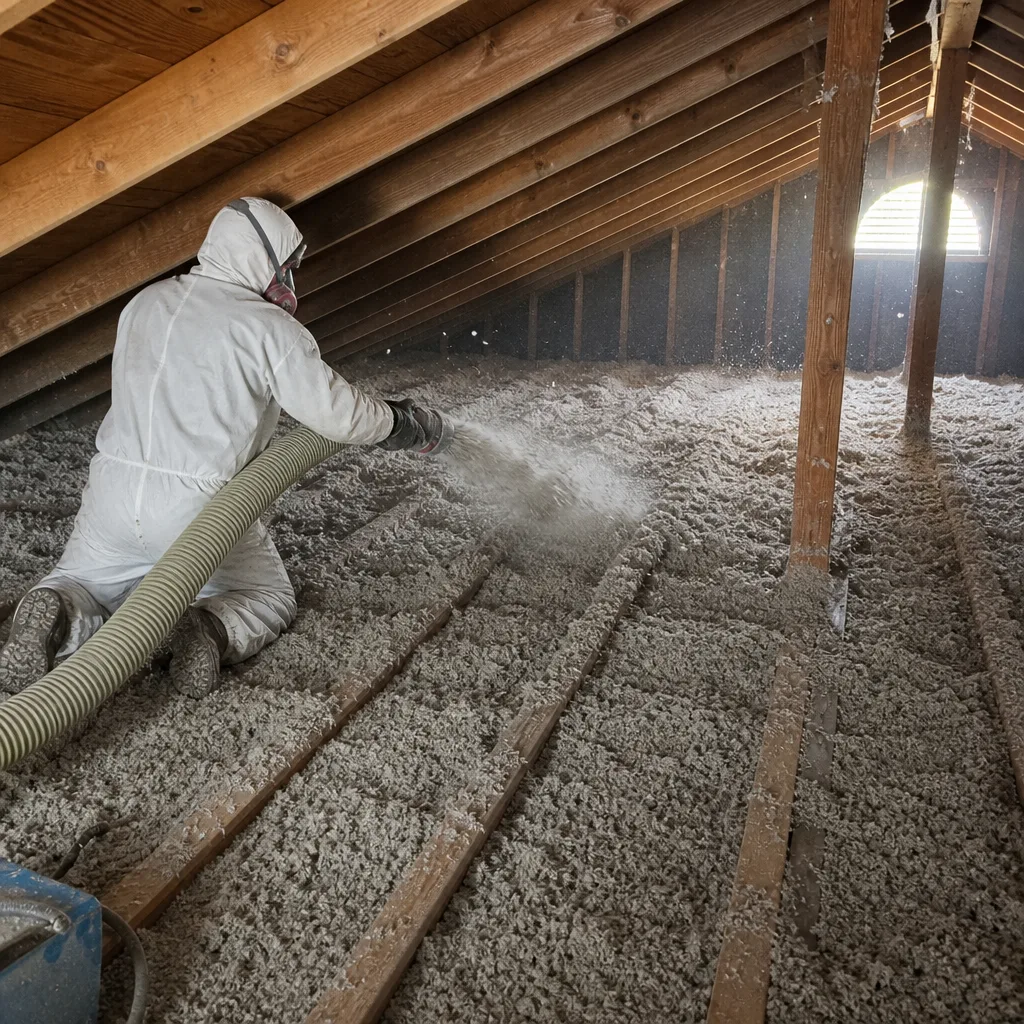
Garage Ceiling Spray Foam
Garage ceiling spray foam in San Jose is almost always tied to a permitted remodel. The garage sits under a bedroom or bonus room, and the Title 24 trigger requires the ceiling assembly to meet Climate Zone 4 standards. We see two failure modes regularly: crews that spray foam directly against the original 1960s drywall without confirming the garage is properly separated from living space, and crews that ignore attic ventilation above the garage, trapping summer heat against the roof deck. We check both before we quote. The written scope specifies foam type, thickness, and whether the existing drywall needs to be pulled for access.
Spray Foam Roof Deck
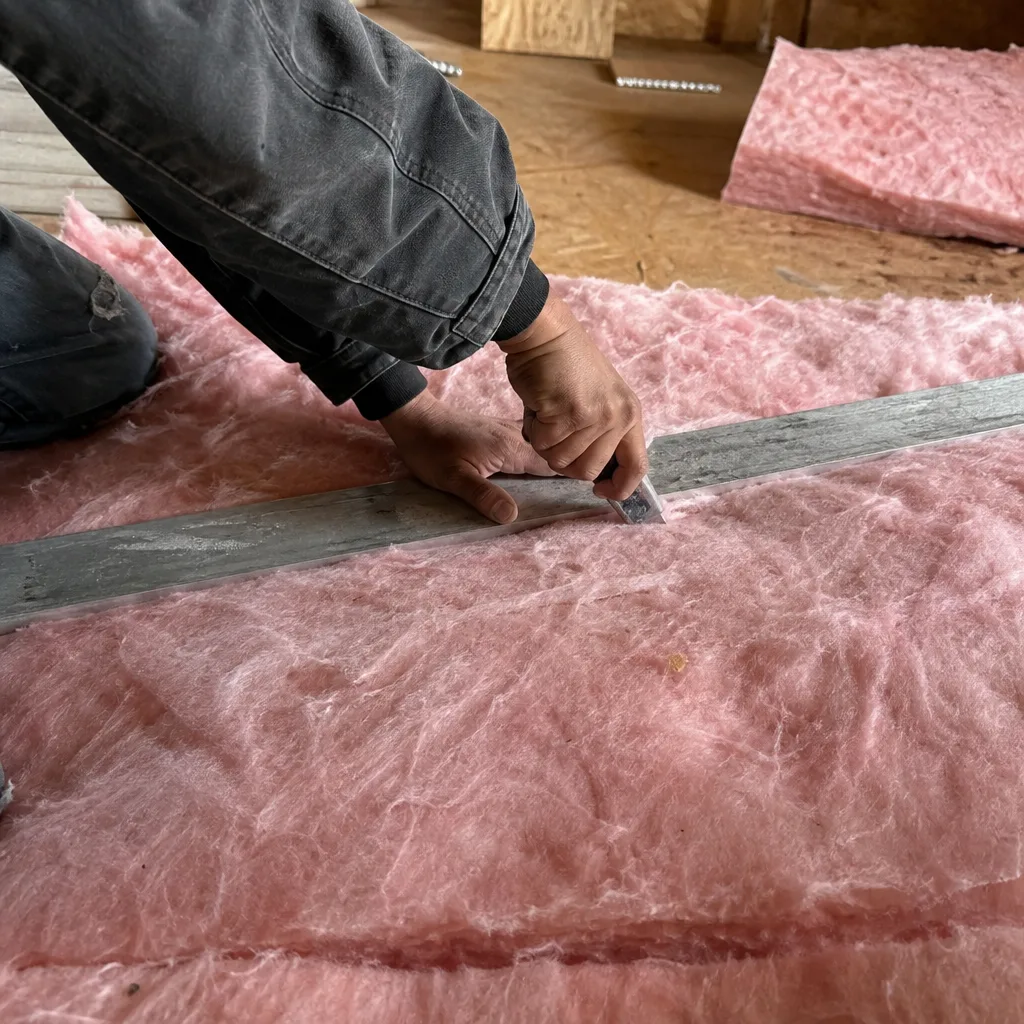
Spray foam roof deck application - foam applied directly to the underside of roof sheathing rather than the attic floor - turns the attic into conditioned space and is the right solution for San Jose homes with HVAC equipment or ductwork in the attic. With summer attic temperatures regularly exceeding 140°F in unconditioned San Jose attics, moving the thermal boundary to the roof deck protects equipment and reduces cooling load. We specify closed-cell for this application, minimum 3 inches, with a ventilation strategy that accounts for the original soffit and ridge flow. In alley-loaded townhomes with zero lot lines and minimal roof overhang, this detail matters more than in detached homes with generous eaves.
What happens when you call
- 1
A real person answersNo phone trees - you reach a local pro.
- 2
You get an upfront price rangeHonest numbers before anyone is dispatched.
- 3
A background-checked tech heads outLicensed & insured, dispatched right away.
- 4
You approve before work beginsNothing starts until you say go.
 Before
 After
AfterTrusted Brands We Service in San Jose
We source spray foam materials from Owens Corning, Johns Manville, Knauf, and Icynene, among others. No proprietary lock-in. For San Jose customers, this means we can match spec to budget without pushing a single manufacturer’s system. We stock common closed-cell and open-cell formulations locally, so material lead time doesn’t delay jobs that are tied to permit schedules or contractor coordination. The brand on the drum matters less than the density, the installed thickness, and whether the crew measured the substrate temperature and humidity before pulling the trigger. We document all three on every job.
Common Spray Foam Insulation Problems We See in San Jose Homes
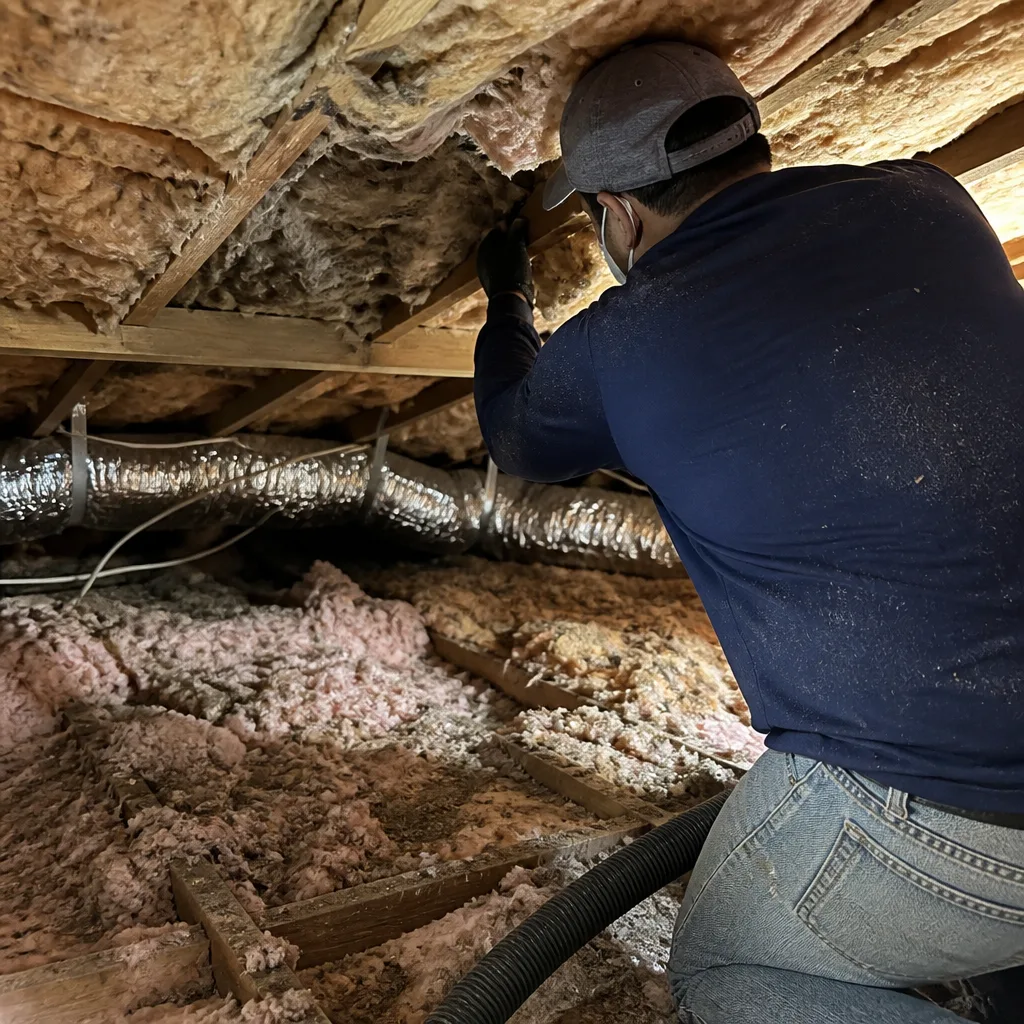
- Foam sprayed over compressed fiberglass batts without removal. In 1950s-1970s East San Jose and Berryessa ranches, decades of HVAC and electrical work have displaced and compressed original Owens Corning batts. Contractors who spray open-cell foam over this uneven substrate create a smooth top surface that hides valleys of near-zero R-value underneath. The Title 24 inspector sees the foam thickness and passes it, but the effective assembly performance misses the Climate Zone 4 target.
- Uncapped balloon-framed cavities in Willow Glen bungalows. Two-pound closed-cell foam expands with significant pressure. In open wall cavities without bottom plates, it can drop two stories and surround old knob-and-tube wiring before the crew realizes the volume. We scope these cavities with a borescope before quoting and install temporary caps at floor levels as part of prep.
- Garage ceiling foam without roof deck dew-point analysis. San Jose’s 95-105°F summer radiant load drives attic temperatures past what original venting assumed. Foam applied to the garage ceiling without confirming the roof deck can handle the reduced drying potential traps moisture and accelerates sheathing degradation. We calculate dew-point location for every roof deck application and specify ventilation modifications where needed.
- Title 24 compliance treated as an add-on after permit pull. Homeowners in Cambrian and Blossom Hill budget for cabinets and tile, then learn at the permit counter that their whole-house insulation must be upgraded. Contractors who don’t explain this upfront create change orders that double the insulation budget mid-project. We provide a free second opinion on any written estimate, and we’ll read a competing quote with you line by line.
Pricing for Spray Foam Insulation in San Jose, CA
Here’s what spray foam insulation costs in San Jose’s market as of 2025:
| Application | Typical Range | Notes |
|---|---|---|
| Open-cell attic flat ceiling | $1.20-$1.80 per board foot | Most 1,200 sq ft ranch attics: $2,800-$4,200 |
| Closed-cell garage ceiling | $2.00-$2.80 per board foot | Two-car garage: $3,500-$5,500 |
| Closed-cell roof deck | $2.20-$3.00 per board foot | Includes ventilation assessment |
| Rim joist (per linear foot) | $18-$28 | Balloon-frame prep adds 15-25% |
| Title 24 compliance package (typical ranch) | $4,500-$7,500 | Air sealing + spray foam + blower-door verification |
What moves the number: access difficulty (tight alley, steep roof pitch), existing material removal, knob-and-tube wiring present in Willow Glen or downtown-adjacent homes, and whether the job is tied to a permit schedule with a hard deadline. We don’t do “it depends” without giving you the range first. Every job begins with a written price - flat, with scope and warranty documented before anyone lifts a tool. Haven Standard Clause 1. Call (650) 770-8707 for an exact quote on your specific San Jose home. Estimates are free.
We Also Serve Cities Near San Jose
Our crews work throughout Santa Clara County, including San Jose and the surrounding cities of Milpitas, Santa Clara, Sunnyvale, and Campbell. Same written-price standard, same blower-door documentation, same live-answer phone line. If you’re in one of these neighboring communities and your project involves San Jose permit coordination or a home with similar 1960s-1970s ranch construction, we can scope it under the same process.
Serving San Jose, CA - Our Local Coverage Area
We’re based in the San Jose area and know this community well. Use the map below to see our service coverage - if you’re nearby, we can almost certainly help.
FAQs - Spray Foam Insulation in San Jose
Yes, pulling a permit for a kitchen or bathroom remodel in most San Jose homes built before 1978 triggers a Title 24 Climate Zone 4 whole-house insulation compliance check, which typically requires upgrading attic insulation to current R-value targets that spray foam is best suited to meet. The compliance check happens at permit issuance, not at final inspection, so homeowners learn the requirement before demo starts. We regularly coordinate with remodeling contractors in Berryessa, Blossom Hill, and Cambrian to scope the insulation upgrade alongside the cabinet order. Call (650) 770-8707 and we’ll review your permit documents to confirm exactly what the Title 24 report specifies.
Yes, San Jose’s inland position in the Santa Clara Valley, without the marine layer buffer that moderates San Francisco or Santa Cruz, produces summer heat events of 95-105°F that make high-performance attic insulation pay back faster than in any coastal climate zone. The Diablo Range to the east traps heat, and cooling-degree days in San Jose are roughly double those of Daly City. A closed-cell roof deck application or high-R attic assembly that wouldn’t pencil out in a coastal microclimate typically shows 20-35% summer cooling load reduction here. We document the before-and-after with blower-door numbers so you can verify the performance change.
Yes, but Willow Glen’s 1920s-1940s bungalows require pre-scope inspection that newer stock doesn’t. Balloon-framed open wall cavities, knob-and-tube wiring, and unlined chimney chases are common, and two-pound closed-cell foam expanding into an uncontrolled cavity can overfill and create clearance problems. We use a borescope to inspect wall cavities from the attic or basement before quoting, and we install temporary cavity caps to control foam placement. The written scope specifies exactly which walls are accessible, what obstructions we found, and how we addressed them. This is not a same-day-quote situation for Willow Glen stock - we inspect first.
Yes, our crews regularly handle alley-loaded townhomes in East San Jose and dense infill areas where standard spray rig access isn’t possible. We break down equipment, walk foam drums through side gates, and use portable electric proportioners when hose runs from a street-parked rig would exceed recommended length. The written scope notes any access constraints and the specific equipment configuration we’ll use. We’ve done jobs where the only staging area was a single parking space on a permit-restricted street. We coordinate with HOA or property management when needed.
For most San Jose homes with bedrooms above the garage, we recommend spray foam roof deck over garage ceiling foam, because the roof deck application moves the thermal boundary to the roof line and eliminates the 140°F+ attic that would still exist above a garage ceiling application. However, if the garage attic shares ventilation with the main house attic and the roof deck geometry doesn’t allow proper soffit-to-ridge airflow, garage ceiling foam with verified existing ventilation may be the safer assembly. We assess dew-point location, existing venting, and whether the garage is conditioned or unconditioned before recommending either approach. The written price includes whichever assembly we specify and why.
Written by Wes Okafor, Owner at Envelope Insulation Co., serving San Jose since 2016 under The Haven Standard.