
Last updated September 24, 2026
Insulation Permits, Codes & Inspections in CA: What You Need to Know
California’s 2022 Title 24 Part 6 raised minimum attic R-values in Climate Zone 4, which covers Milpitas, from R-38 to R-49. That change took effect January 1, 2023. Contractors were still pulling permits to the old standard well into mid-2023, and some still do. Homeowners who don’t know the difference end up with insulation that fails inspection, voids their PG&E rebate, or creates a disclosure problem at resale. This guide maps exactly which code version applies to which job type, what the inspector checks, and how to protect yourself from the start, with more warning signs Milpitas homeowners should watch for.
Quick Answer
In California, insulation work requires a permit when it alters the building envelope or exceeds 200 square feet in a single trade. For Milpitas homeowners, this means attic insulation to R-49, wall insulation to R-21, and floor insulation to R-30 under the 2022 Title 24 standards. A HERS rater verifies compliance, and rebate programs require code-matching documentation from your contractor.
Table of Contents
- Which Title 24 Version Applies to Your Job
- Milpitas Climate Zone 4: Exact R-Value Requirements
- When You Need a Permit in Milpitas
- What a HERS Rater Actually Checks
- Rebate Programs and Required Documentation
- Unpermitted Work: Liability and Resale Risk
- How to Verify Your Contractor’s Compliance
- Common Mistakes to Avoid
- When to Call a Professional
- Frequently Asked Questions
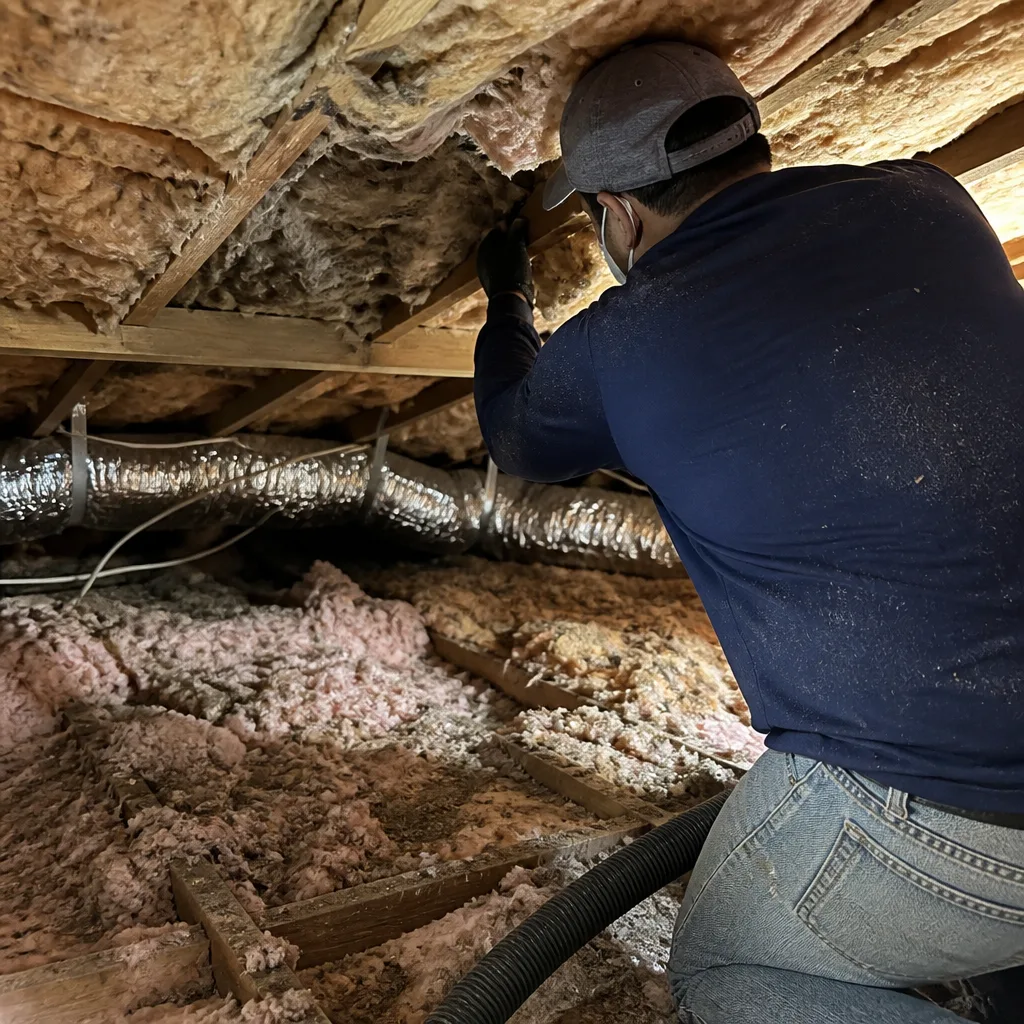 Before
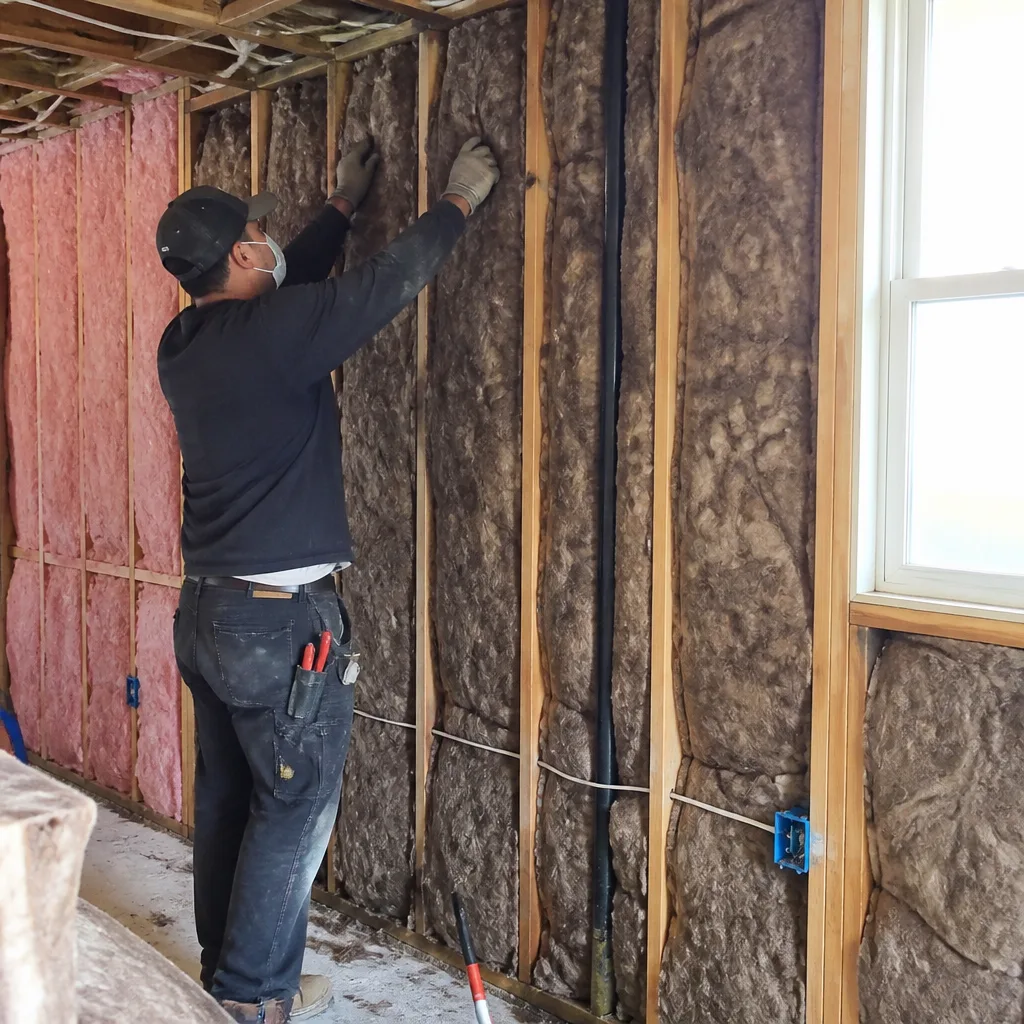 After
AfterWhich Title 24 Version Applies to Your Job
California updates Title 24, Part 6, the energy code, on a three-year cycle. The 2019 standards took effect January 1, 2020. The 2022 standards took effect January 1, 2023. A project follows the code version in force on the date the permit application is submitted, not the date work begins.
This matters because the 2022 update made substantial changes to insulation minimums, air-leakage thresholds, and HERS verification requirements. We’ve seen Milpitas homeowners in the Sinnott Ranch and Milford areas discover mid-project that their contractor priced to the 2019 standard and now faces a change order to meet 2022 requirements, a scenario covered in our seasonal insulation care guide for year-round maintenance.
Here’s how to determine which version controls your job:
- Check your permit application date. Anything submitted on or after January 1, 2023, falls under 2022 standards. Some jurisdictions allowed a grace period for applications already in review, but Milpitas Building Division enforced the January 1 date without exception.
- Identify your project type. New construction, additions, and alterations each trigger different compliance paths. A full attic replacement is an alteration. Adding insulation over existing is often treated as a repair, but if the total assembly R-value changes, it may trigger full compliance.
- Confirm Climate Zone. Milpitas sits in CEC Climate Zone 4. Do not assume your contractor knows this; we’ve reviewed quotes from out-of-area contractors who priced to Zone 3 or Zone 5 standards.
The California Energy Commission maintains an online Climate Zone lookup tool by address. We verify every Milpitas job through this tool before writing a scope, and we recommend homeowners do the same.
For attic insulation in Milpitas, the 2022 standard is now the only enforceable minimum. Contractors quoting R-38 attics are quoting obsolete code. That doesn’t mean they’re dishonest; some simply haven’t updated their spec sheets. But it does mean the homeowner bears the cost of bringing the job into compliance if the inspector flags it.
Milpitas Climate Zone 4: Exact R-Value Requirements
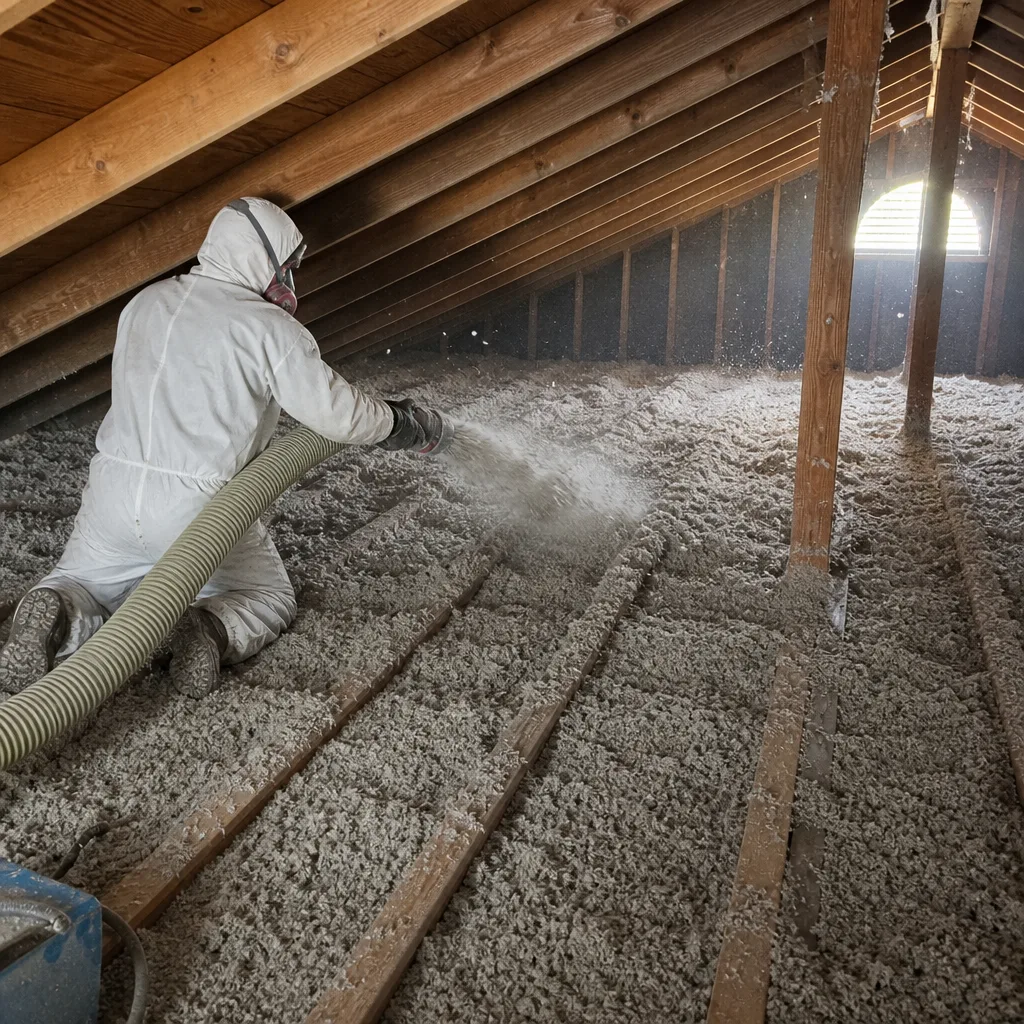
Climate Zone 4 covers the Bay Area interior valleys, including Milpitas, San Jose, Fremont, and the inland portions of the Peninsula. The 2022 Title 24 Part 6 prescriptive requirements for residential wood-framed construction in this zone are:
| Assembly | 2019 Standard | 2022 Standard |
|---|---|---|
| Ceiling / Attic | R-38 | R-49 |
| Wood-Frame Wall | R-21 | R-21 |
| Floor Over Unconditioned Space | R-25 | R-30 |
| Slab Edge (heated slab) | R-7.5 | R-10 |
| Raised Floor / Crawl Space | R-19 | R-25 |
Notice that walls held steady at R-21, but attics, floors, and slabs all increased. The attic jump from R-38 to R-49 is the change that catches most homeowners and contractors off guard.
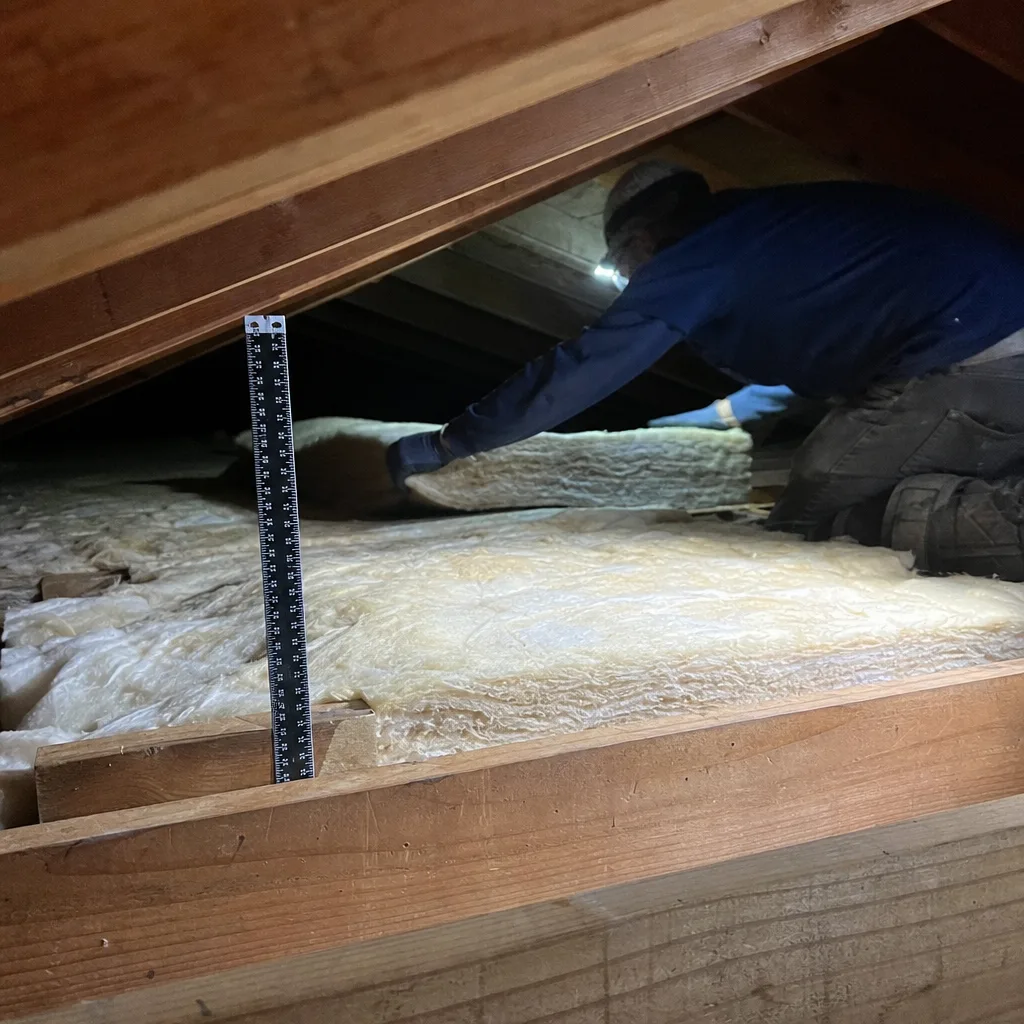
In practical terms, R-49 in a vented attic typically means 14 to 16 inches of blown fiberglass or cellulose, depending on product density. Owens Corning AttiCat blown-in fiberglass settles to approximately R-3.2 per inch. GreenFiber cellulose settles closer to R-3.5 per inch but compacts differently. A contractor who specifies “12 inches” without naming the product and settled R-value is leaving you exposed to a failed inspection.
We specify exact installed depth and settled R-value in every written scope. For a Milpitas attic reaching R-49 with Owens Corning blown fiberglass, our scope reads: “Install to minimum 15.5 inches settled depth, verified at minimum five locations, achieving R-49 per manufacturer ICC-ESR report.” This is the documentation a HERS rater needs to see.
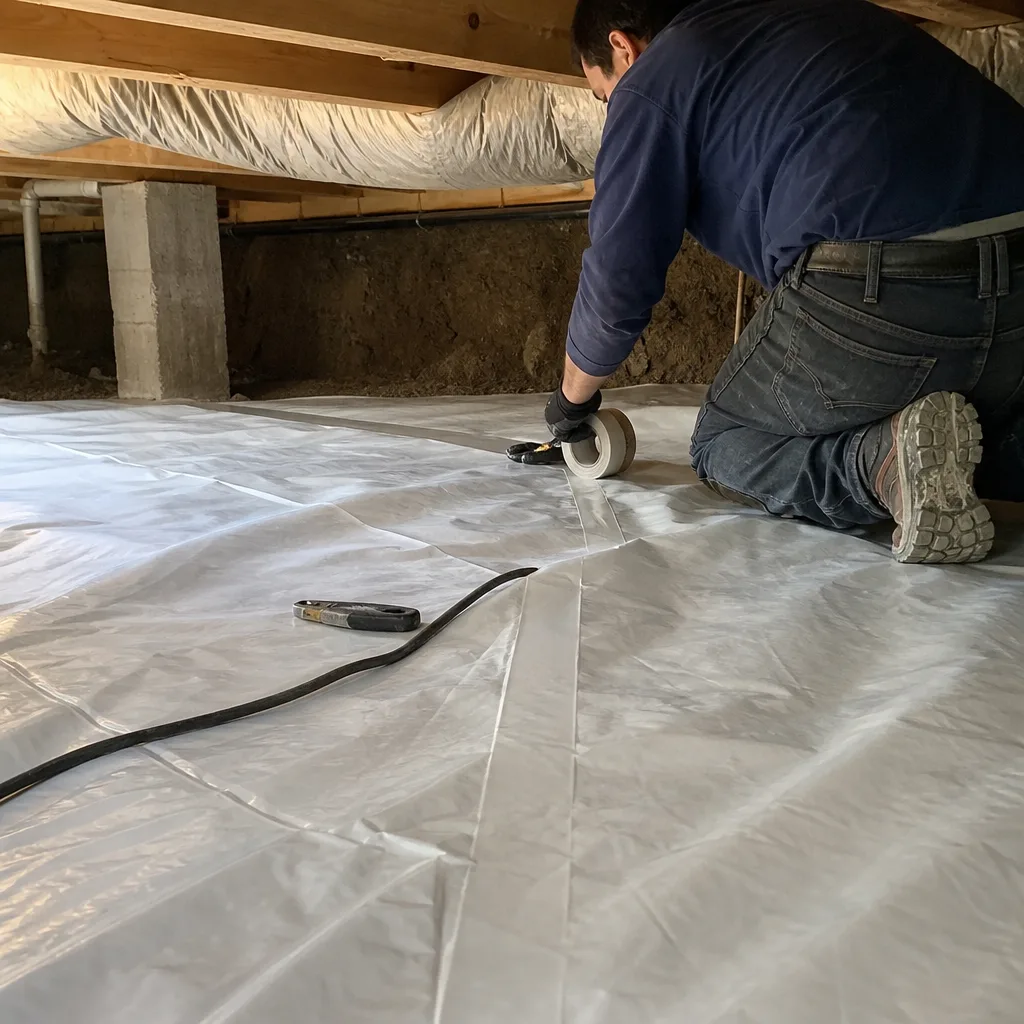
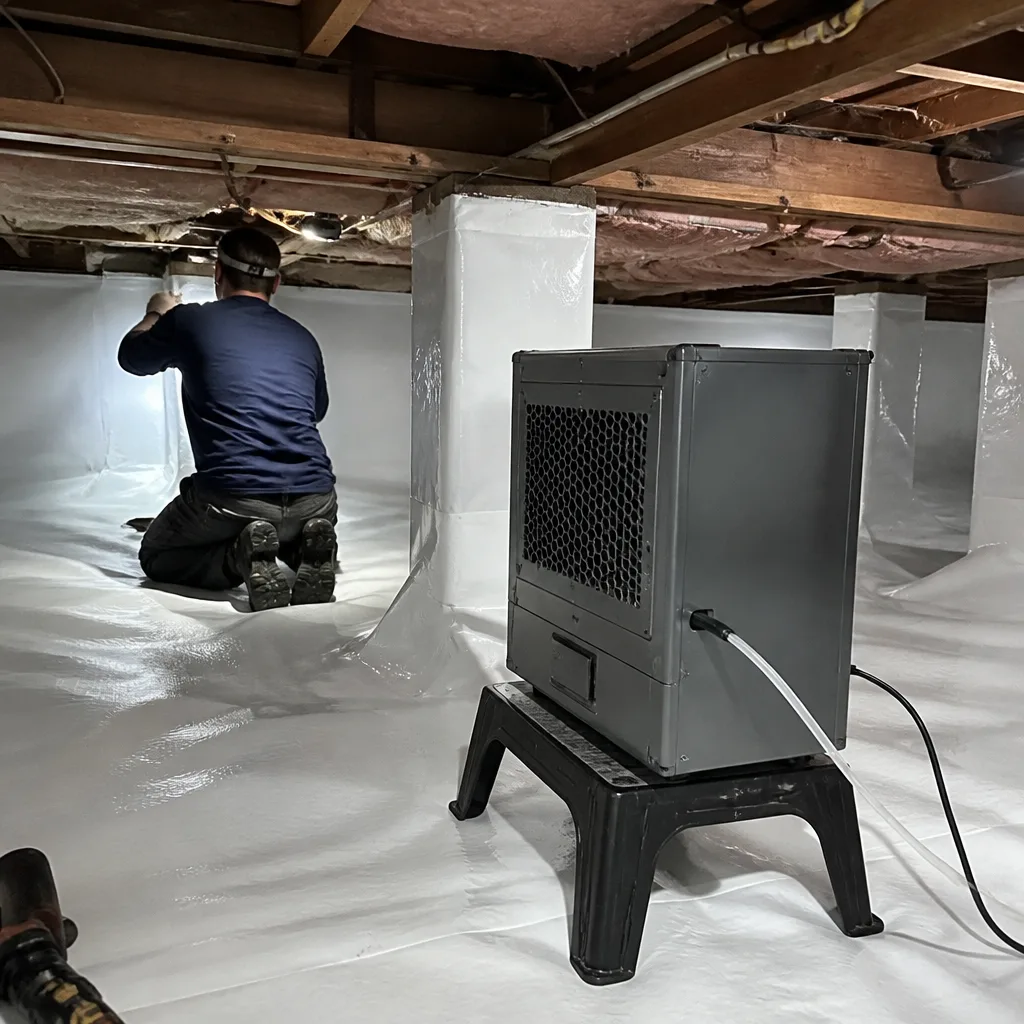
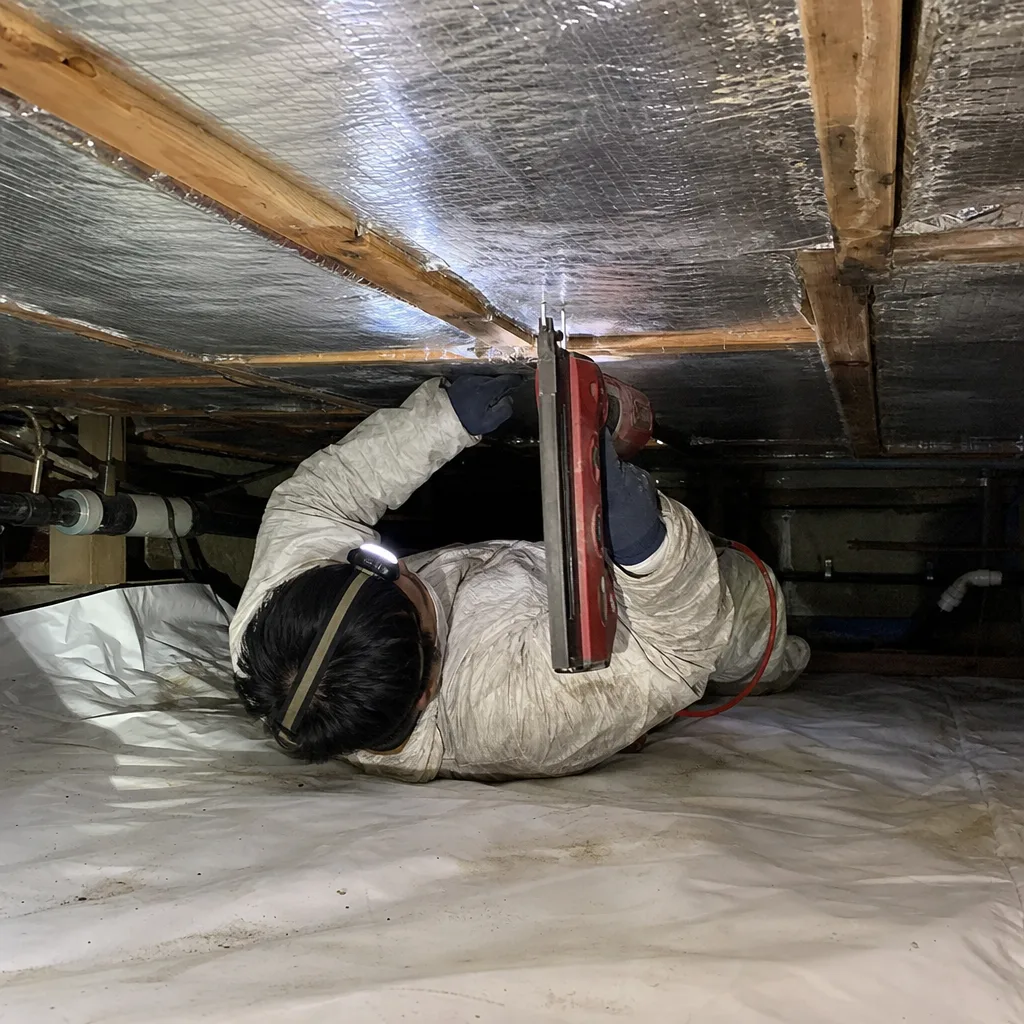
For crawl space encapsulation in Milpitas, the 2022 standard also tightened air-leakage requirements. A vented crawl space with a vapor barrier must now meet specific permeance ratings, and any conversion to unvented conditioned space triggers mechanical ventilation requirements that didn’t exist in 2019.
When You Need a Permit in Milpitas
Milpitas Building Division follows the 2022 California Building Code and 2022 California Residential Code, with local amendments. For insulation specifically, permit triggers fall into three categories:
No permit required: Minor repairs to existing insulation in an area under 200 square feet, where the work does not alter the building envelope or change the R-value. Replacing a water-damaged section of attic insulation with like-for-like material in the same R-value typically qualifies; see our attic insulation maintenance checklist for Milpitas homeowners for routine care that prevents such damage.
Permit required, standard inspection: Alterations exceeding 200 square feet, any work that increases R-value, or any work in a new addition. This covers most attic insulation upgrades, wall insulation retrofits, and crawl space encapsulation. The permit triggers a building inspection and, for many projects, HERS verification.
Permit required, enhanced compliance: New construction, additions exceeding certain square footage, or projects pursuing rebate programs with third-party verification requirements. These projects require HERS raters, diagnostic testing, and documentation beyond the standard inspection.
To verify before contracting, call Milpitas Building Division at (650) 770-8707 or check the online permit portal. You’ll need your address and a description of the work scope. Ask specifically: “Does this scope trigger HERS requirements under current Title 24?” The answer determines whether your contractor needs to coordinate with a third-party rater.
We’ve handled permits for insulation work across Milpitas, from the townhomes near Great Mall to the single-family homes in the Jacklin area. The permit process itself is straightforward, but the documentation requirements trip up contractors who don’t regularly work in California’s compliance environment. A permit pulled by a contractor who doesn’t understand HERS verification can leave you with approved insulation and a failed energy compliance certificate, which blocks rebate processing.
What a HERS Rater Actually Checks
HERS stands for Home Energy Rating System. A HERS rater is a certified third-party verifier, not your contractor’s employee, who performs specific diagnostic tests and visual inspections to confirm Title 24 compliance. The rater’s findings are submitted to the California Energy Commission’s database and become part of your home’s permanent record.
Here’s what the rater actually does on an insulation job in Milpitas:
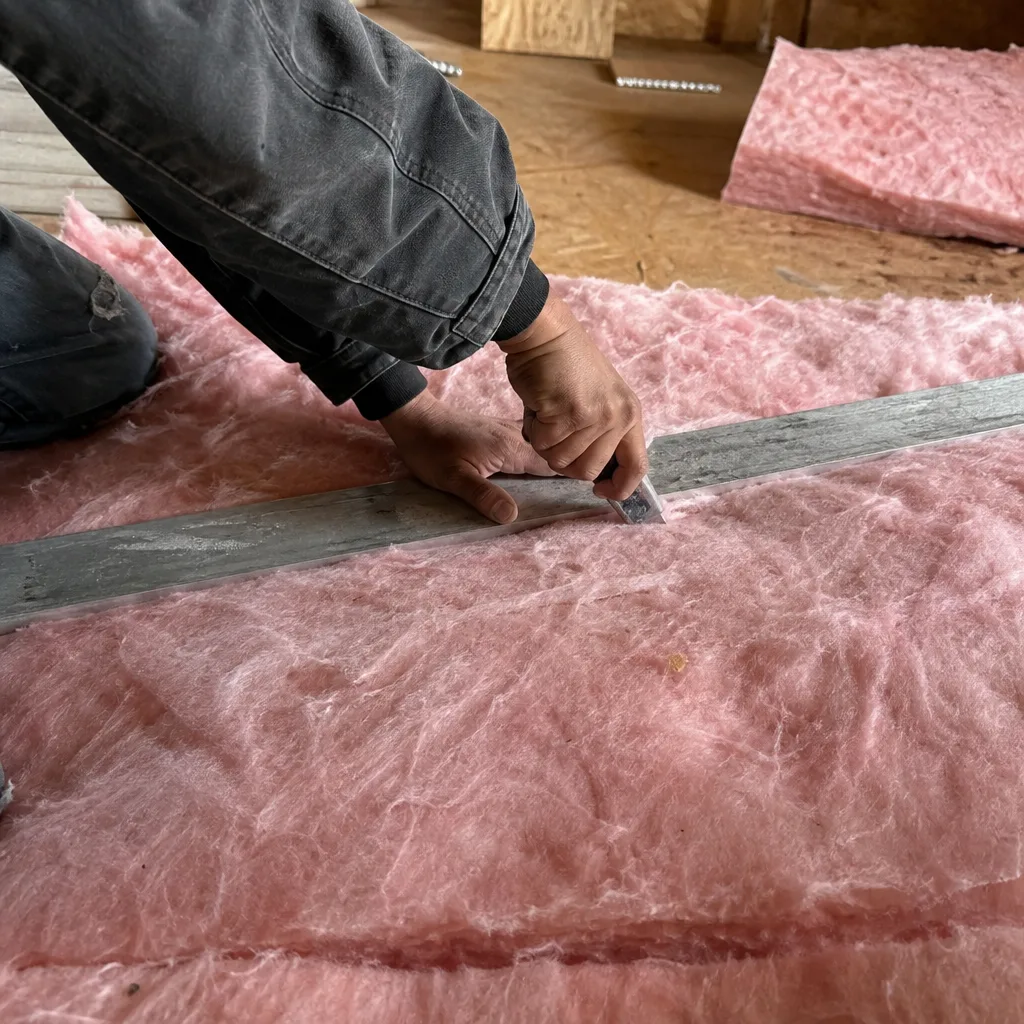
- Visual verification of installed R-value. The rater measures insulation depth at multiple locations, checks for gaps and compression, and verifies that the installed product matches the specification on the permit. For blown-in insulation, they use a depth gauge and photograph each measurement point.
- Air-leakage testing. For projects that include air sealing, the rater performs a blower-door test, a pressurization reading that shows, in one number, how much air your building envelope is losing. The 2022 standard tightened the maximum allowable leakage for altered buildings. The rater records CFM50, cubic feet per minute at 50 pascals of pressure, and compares it to the compliance threshold.
- Duct leakage testing. If ductwork is present in the conditioned space being insulated, the rater may perform a duct-blaster test to verify sealed-duct requirements.
- Documentation review. The rater checks that your contractor provided manufacturer specification sheets, ICC-ESR reports for the insulation product, and photos of critical details like top-plate sealing and can-light enclosures.
A contractor who resists third-party HERS verification is a red flag. We’ve encountered homeowners in Milpitas whose previous contractor insisted HERS was “just paperwork” and pressured them to skip it. Those homeowners lost their PG&E rebates and, in one case, had to remove and reinstall insulation to obtain compliance documentation for a refinance appraisal.
Under Haven Standard: Have it in writing, we coordinate HERS rater scheduling as part of every permitted job. The homeowner receives the rater’s full report, including blower-door numbers, as part of the Documented Photo Record delivered at job completion.
Rebate Programs and Required Documentation
Two programs dominate the Milpitas market: PG&E’s Energy Upgrade California and BayREN, the Bay Area Regional Energy Network. Both require code-compliant installation and specific documentation that many contractors fail to provide.
PG&E Energy Upgrade California
This program offers rebates for insulation, air sealing, and comprehensive home performance upgrades. The rebate amount varies by measure and home characteristics, but the documentation requirements are fixed:
- Pre-installation HERS assessment with blower-door baseline
- Permit application showing code-compliant scope
- Post-installation HERS verification with improved blower-door reading
- Contractor invoice itemizing materials and labor by measure
- Manufacturer specification sheets for all installed products
Missing any of these documents voids the rebate application. We’ve reviewed rebate denials where the contractor installed R-49 insulation but wrote the invoice as “attic insulation” without specifying R-value, or where the permit listed the 2019 R-38 standard and the rebate processor flagged the discrepancy.
BayREN Home+
BayREN serves the nine Bay Area counties and often layers with PG&E incentives. Their documentation adds:
- Participating contractor status (not all contractors qualify)
- Customer-signed scope of work before work begins
- Photo documentation of critical details, including attic access, baffles, and top-plate sealing
The photo requirement is where many contractors fail. BayREN reviewers check for specific details. A photo of fluffy insulation without visible top-plate sealing or baffle installation gets rejected. We include these photos in every Documented Photo Record, precisely because we’ve seen what happens when they’re missing.
For spray foam insulation in Milpitas, rebate documentation adds a layer. Spray foam requires ignition barrier documentation, thickness verification at multiple points, and confirmation that the product is listed for the application. Demilec and Icynene, two products we use, each have specific ICC-ESR reports that must accompany the rebate filing. A contractor who can’t produce these reports on request isn’t ready for rebate work.
Unpermitted Work: Liability and Resale Risk
California law requires sellers to disclose material facts affecting property value. Unpermitted insulation work falls into this category. The disclosure obligation exists whether the work was done by the current owner or a previous owner who failed to permit.
Here’s how the liability chain breaks down:
Who bears the risk: The current property owner at time of discovery. If you bought a home with unpermitted attic insulation and the issue surfaces during a refinance, sale, or insurance claim, you are responsible for bringing it into compliance. The contractor who did the original work may be unlicensed, out of business, or judgment-proof.
What triggers discovery: Refinance appraisals increasingly include permit history checks. Insurance adjusters may request permits for fire or water damage claims involving insulated assemblies. And any home sale in California now involves disclosure forms, specifically the Transfer Disclosure Statement and Natural Hazard Disclosure, where unpermitted work must be disclosed.
What compliance costs: In Milpitas, retroactive permitting requires opening walls or attic spaces for inspector access, potentially removing and reinstalling insulation. If the work doesn’t meet current code, it must be brought to current code, not the code in force when the work was originally done. A 2019 R-38 attic must be upgraded to R-49 if the permit is pulled retroactively in 2024 or later.
What we recommend: Before buying any home in Milpitas, request a permit history search from the Building Division. Cost is minimal. If unpermitted insulation work appears, obtain a contractor evaluation before closing. We’ve provided these evaluations for homebuyers in the Midtown and Berryessa areas, documenting what exists, what code requires, and what it would cost to bring into compliance.
How to Verify Your Contractor’s Compliance
California requires insulation contractors to hold a C-2 Warm-Air Heating, Ventilating and Air-Conditioning license or a B General Building license for insulation work that is part of a larger building project. A CSLB license check is free at cslb.ca.gov.
Beyond licensing, here’s what to verify before signing:
- Written scope specifying code version. The scope should state “2022 Title 24 Part 6, Climate Zone 4” and list exact R-values for each assembly. Vague language like “to code” or “R-38/R-49” is insufficient.
- Named insulation product with manufacturer documentation. “Owens Corning AttiCat blown fiberglass” with ICC-ESR number, not “blown-in insulation.”
- HES rater coordination plan. The contractor should name their preferred rater or confirm they’ll work with your chosen rater. “We’ll handle permits” without mentioning HERS is incomplete.
- Rebate documentation commitment. If you’re pursuing rebates, the contract should specify which documents the contractor will provide and when. We deliver all rebate documentation within 5 business days of final inspection.
- Proof of insurance and bonding. Request a certificate of insurance naming you as additional insured for the project duration.
We operate under Haven Standard: Have it in writing. Every Milpitas job begins with a written price, written scope, and written warranty before anyone lifts a tool. The scope includes the code version, the exact products, the HES rater coordination, and the rebate documentation timeline. No exceptions in 9,000+ jobs since 2016.
Common Mistakes to Avoid
- Assuming your 2019-permitted job meets 2023 rebate requirements. Rebate processors check the permit date against current standards. A 2019 permit with R-38 insulation fails 2023 rebate eligibility even if the installation was perfect.
- Accepting “R-38 plus” as R-49 compliance. Some contractors add a thin layer over R-38 and call it R-49. Title 24 requires the full assembly to meet the stated R-value, verified by measurement, not estimation.
- Letting the roofer handle attic insulation. Roofing contractors often bundle attic insulation after a re-roof. They’re rarely equipped for HES coordination, air-sealing detail, or rebate documentation. We’ve re-done dozens of these jobs in Milpitas when rebate applications failed.
- Ignoring the air-sealing prerequisite. Blowing insulation over an unsealed attic floor traps air leaks beneath the new layer, where they’re harder to fix later. The 2022 standard effectively requires air sealing as part of any insulation upgrade that triggers HES verification.
- Signing a contract without permit confirmation. We’ve seen homeowners pay deposits only to learn the contractor “forgot” to pull the permit and now wants an extra $800 to cover the fee and delay.
- Discarding documentation after final payment. Keep permits, HES reports, manufacturer specs, and invoices for the life of the home. These documents transfer with the property and protect against future disclosure issues.
When to Call a Professional
Call a professional when your project exceeds 200 square feet, alters the building envelope, increases R-value, or pursues rebates. Call when you need HES rater coordination, when you’re unsure which Title 24 version applies, or when you’re buying a home with undocumented insulation work.
Topside Attic Insulation Milpitas offers free estimates in Milpitas. We pull permits, coordinate HES raters, and deliver documented compliance for every job. Call (650) 770-8707. Every estimate includes a written scope and written price before any work starts, always, under Haven Standard Clause 1.
Frequently Asked Questions
Milpitas Building Division charges a base permit fee based on project valuation, typically $200 to $400 for residential attic insulation. The HES rater fee is separate, usually $300 to $600 depending on test complexity. Call us at (650) 770-8707 for a free estimate that includes all permit and compliance costs in one written price.
No, if the total area exceeds 200 square feet or the addition increases the assembly R-value. Milpitas treats R-value increases as alterations requiring permit and inspection. The 2022 Title 24 standard also requires that existing insulation be in “serviceable condition” before overlay, a determination the inspector makes visually.
The rater issues a correction notice listing specific deficiencies. Your contractor must remediate and schedule a re-inspection, at additional cost if the failure resulted from installation error. We’ve seen failures for compressed insulation, gaps around top plates, and missing baffles in Milpitas attics. Under our 365-Day Done Right Promise, we correct any HES failure at our expense.
Yes, if the work includes insulation installation, vapor barrier placement, or conversion from vented to unvented configuration. Crawl space encapsulation in Milpitas typically triggers both building and mechanical permits due to ventilation requirements. The permit must specify the vapor barrier permeance rating and any dehumidification or ventilation equipment.
Standard insulation permits review in 5 to 10 business days if the application is complete. Incomplete applications, common when contractors submit generic scopes without Title 24 compliance documentation, extend this to several weeks. We submit complete packages with energy compliance forms pre-completed, and most of our Milpitas permits approve within a week.
You can, but verify they understand CEC Climate Zone 4 requirements and have worked with Milpitas Building Division before. Out-of-area contractors often price to different climate zones, miss local amendment requirements, or lack relationships with Bay Area HES raters. We’ve re-permitted and corrected jobs originally handled by Central Valley and Central Coast contractors who didn’t account for Bay Area-specific rebate documentation.
The Bottom Line
California’s Title 24 insulation code is specific, enforceable, and frequently misunderstood. For Milpitas homeowners in Climate Zone 4, the 2022 standard requires R-49 attics, R-21 walls, and R-30 floors. Permits are required for most meaningful work, HES raters verify compliance independently, and rebate programs demand documentation that many contractors fail to provide. The cost of getting this wrong isn’t just a failed inspection; it’s lost rebates, resale disclosure problems, and potentially expensive retroactive compliance. Get the code version in writing, verify the permit scope, and keep every document, and explore more guides & resources for Milpitas homeowners.
Written by Wes Okafor, Owner at Topside Attic Insulation Milpitas, serving Milpitas since 2016.