
Blown-In Attic Insulation in Milpitas, CA
Blown-in attic insulation in Milpitas typically runs between $1,800 and $4,200 for a standard single-story home, installed in one day. The material – loose-fill cellulose or fiberglass – is pneumatically distributed across the attic floor to an even, measured depth, filling gaps that batt insulation simply cannot reach. At Topside Attic Insulation Milpitas, we don’t touch the blower until the attic floor is air-sealed: every top-plate gap, can-light penetration, and plumbing chase gets sealed first, because blown-in insulation over an unsealed floor is insulation over a hole. Learn more about our Attic Insulation services.
If you’re researching blown-in insulation as part of a broader attic project, our Attic Insulation in Milpitas page covers the full scope of what that work typically involves in this market. For questions about a specific job or to schedule a walkthrough, call us at (650) 770-8707 – a live person picks up, no voicemail loops.
Wes Okafor has led every Envelope Insulation Co. job under The Haven Standard since 2016. That means a written price before anyone lifts a tool, a documented photo record when the crew leaves, and before-and-after blower-door readings on every applicable job so you can see the performance change in a single measured number, not in marketing language.
When You Need Blown-In Attic Insulation
Milpitas sits at the southern end of the Bay, where summer afternoons can push past 95°F and marine air rolling in from the Alviso slough keeps humidity higher than most homeowners expect. That combination stresses under-insulated attics harder than the climate maps suggest. Here are the clearest signs that blown-in insulation is the right call:
- Your existing insulation is compressed or below R-30. Title 24, California’s energy code, currently requires R-38 minimum for attic floors in Climate Zone 4 – which covers most of Milpitas. If your batt insulation was installed before 2014 and hasn’t been touched since, it’s almost certainly under code. Compressed batts lose R-value fast, and blown-in material can be added over existing batts once the floor is sealed.
- Rooms on the top floor are noticeably hotter or colder than the rest of the house. In neighborhoods like Sunnyhills and Curtner, we regularly find single-story ranches where the master bedroom runs 8-12°F warmer than the living room in July – a reliable sign that the attic floor has both air leaks and inadequate depth.
- Your PG&E bills have crept up year over year without a clear reason. A blower-door test – a pressurization reading that shows, in one number, how much conditioned air your building envelope is losing – often reveals that the attic floor is the primary leak point. We’ve seen readings drop from 3,800 CFM50 to under 1,900 after sealing and blowing in one Milpitas attic.
- You’ve had attic insulation removed for pest remediation or rodent proofing and the floor is currently bare. This is the ideal moment to start clean: seal every penetration while the floor is visible, then blow in to the correct depth. Skipping the seal step here is the most common mistake we see from competing quotes.
- Your home was built between 1960 and 1990 and has never had insulation work done. A large portion of the housing stock in South Milpitas and the Alviso corridor was built during this window. Original insulation from that era is typically R-11 to R-19 fiberglass batt, often damaged by decades of foot traffic from HVAC servicing.
- You’re preparing for a home sale or refinance and want a documented energy-efficiency improvement. The written scope, photo record, and blower-door readings we produce on every job are transferable documentation – useful for disclosure packages and appraisals.
Our Blown-In Attic Insulation Process
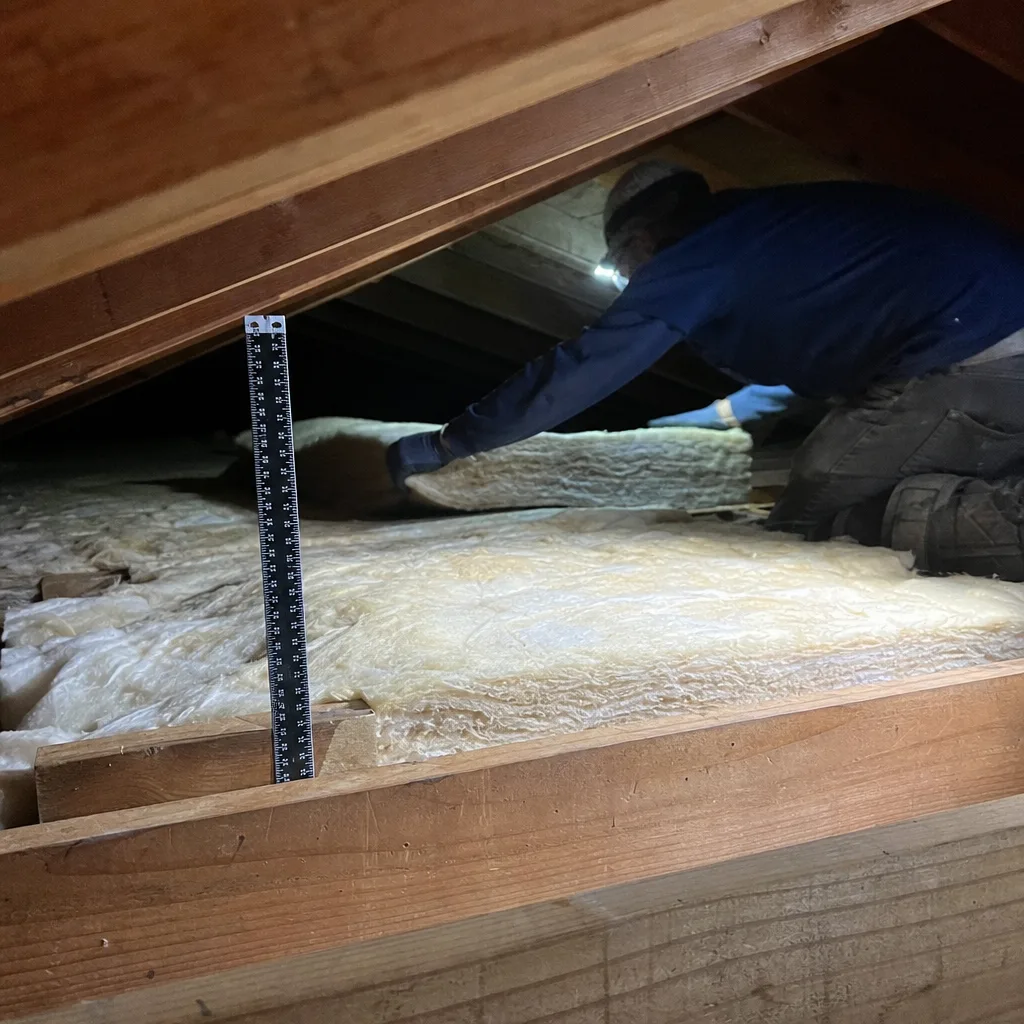
The order of operations matters more than most homeowners realize. Blown-in material fills voids and covers surfaces – it does not stop air movement. Sealing first, then insulating is the only sequence that produces a measurable result. Here’s exactly how we work:
- Pre-job blower-door baseline reading. Before anything is moved or sealed, we pressurize the home and record the CFM50 reading – the volume of air per minute escaping the building envelope at 50 pascals of pressure. This number is your before figure. It goes in your written documentation so you can verify what changed when we’re done. On jobs where an existing insulation layer makes attic-floor access difficult, we note that in writing before any work is scoped.
- Full attic-floor air sealing. Every top-plate gap – the space between interior wall framing and the attic floor – is sealed with fire-rated foam or caulk. Can lights, plumbing vents, electrical chases, and HVAC penetrations get the same treatment. This step is not optional and is never offered as a separate upsell at Topside Attic Insulation Milpitas. It is built into every blown-in job scope, in writing, before we start. In older Milpitas homes, it’s common to find 15 to 30 discrete unsealed penetrations per 1,200 square feet of attic floor.
- Depth-marker installation and R-value calculation. We set ruler stakes across the attic floor at measured intervals. The number of stakes and their placement is determined by the square footage, the target R-value (R-38 minimum for Milpitas under Title 24 Climate Zone 4), and the settled depth of any existing insulation we’re building on top of. GreenFiber cellulose, for example, settles approximately 20% after installation – so we blow to a calculated initial depth that accounts for that compression.
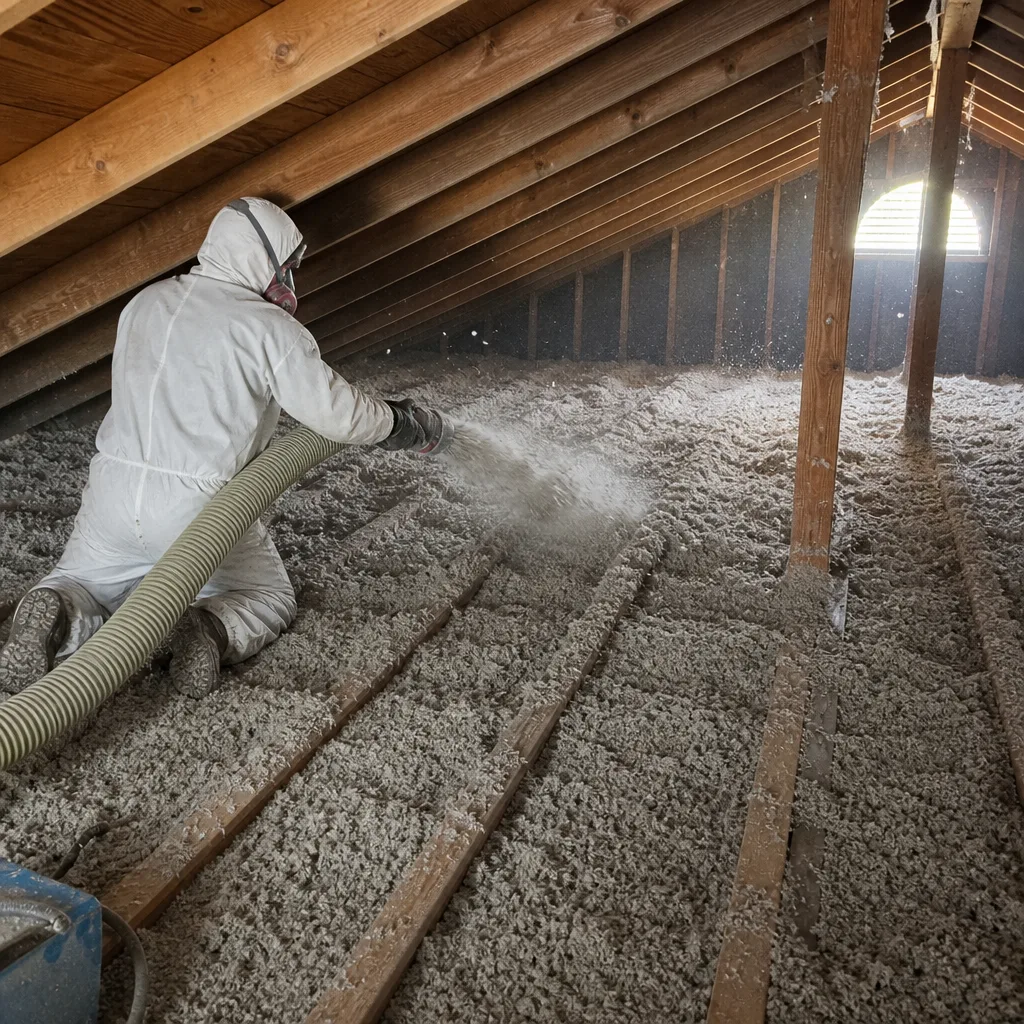
- Blown-in installation. We run the blower hose from the truck into the attic access point and distribute material in controlled passes from the far end of the attic toward the access hatch. Depth is checked against the ruler stakes as we work. For Milpitas homes with pull-down attic stairs rather than a fixed hatch – common in the Friendly Acres and Dixon Landing neighborhoods – we confirm that the hatch frame and door assembly are also insulated and weather-stripped before closing out the job.
- Post-installation blower-door reading and documentation. With the insulation settled and the attic sealed, we run a second blower-door test and record the CFM50 result. Both numbers – before and after – go into your written job record alongside the depth measurements, the R-value achieved, the materials used (manufacturer and product name), and the date of installation. You receive this documentation before the crew leaves the property. This is Haven Standard practice, not something you request separately.
- Photo record. Every accessible area of the completed attic floor is photographed. Sealed penetrations, depth stakes, and the finished insulation surface are all documented. These photos go into the same job file as the blower-door readings. If any question about the installation arises during the 365-Day Done Right Promise window, the documentation is already there.
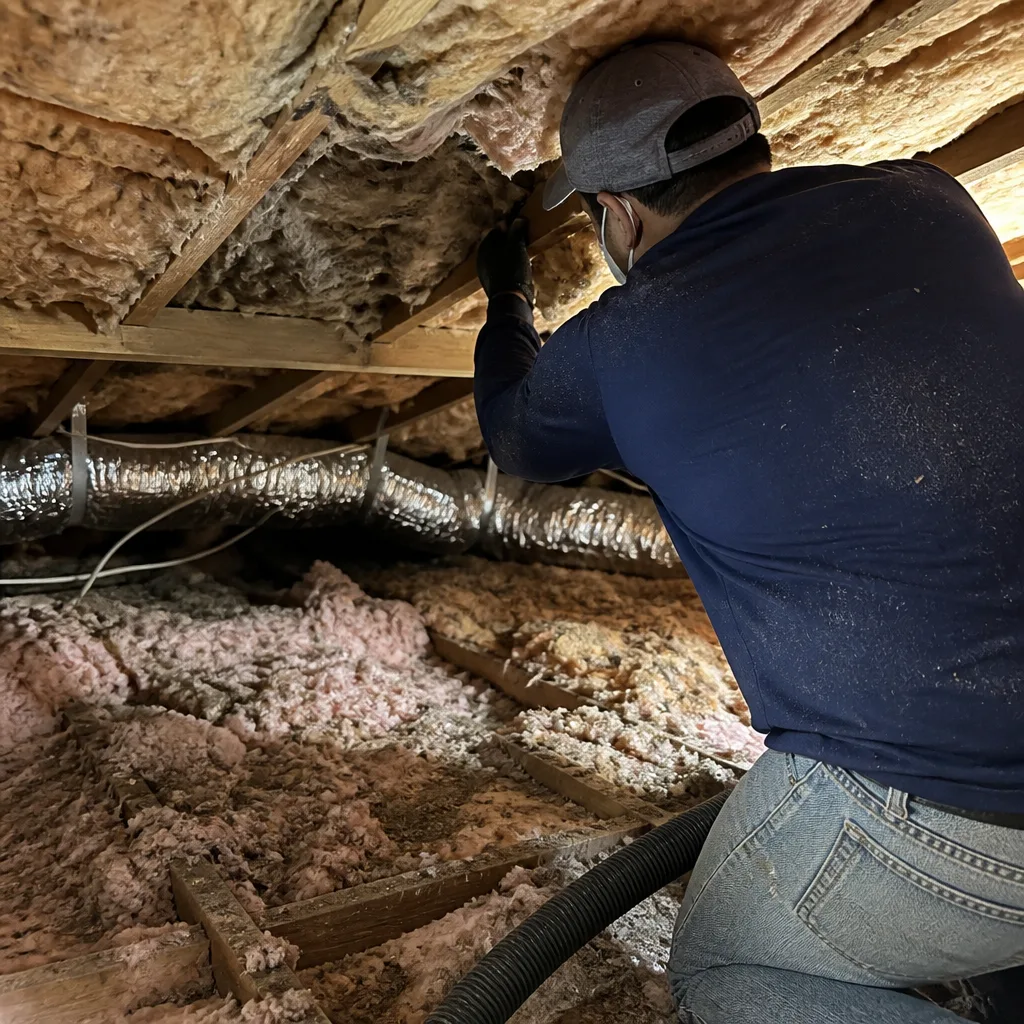 Before
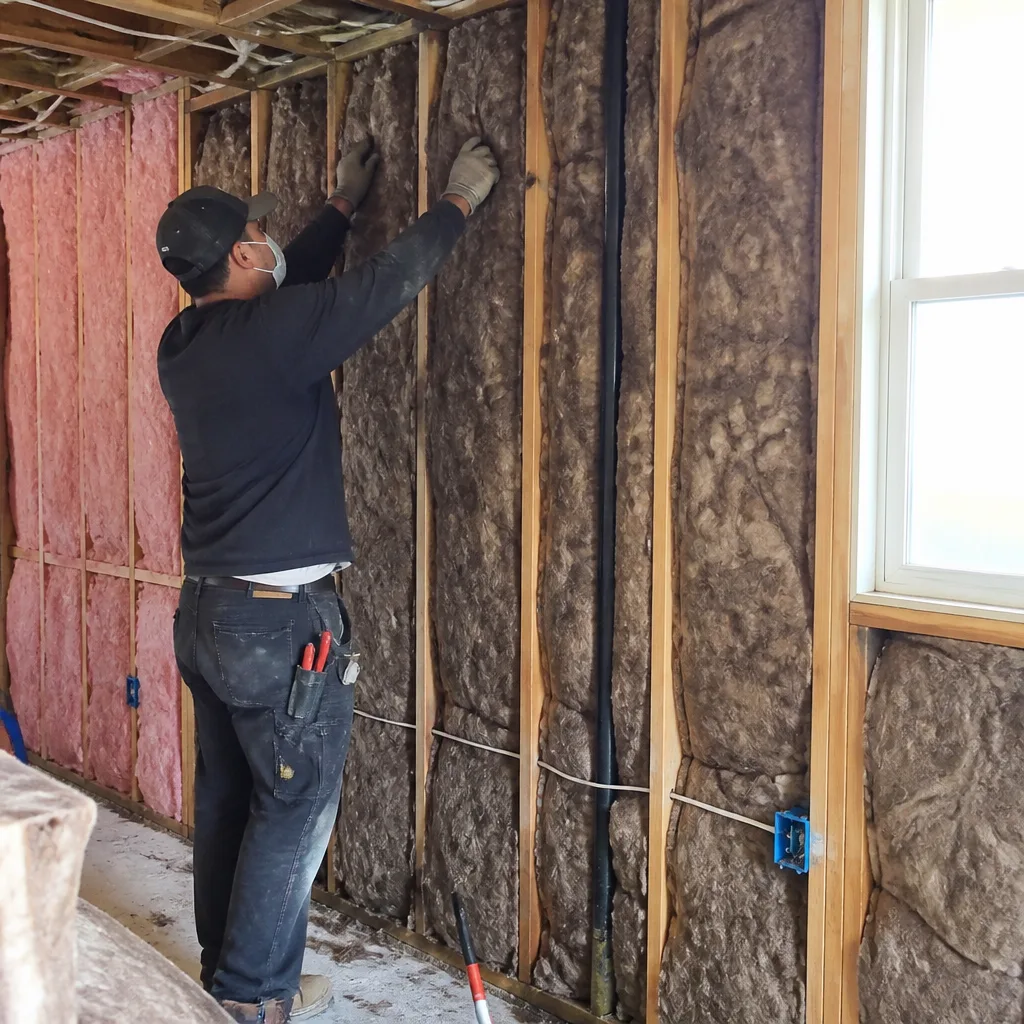 After
AfterBlown-In Attic Insulation Pricing in Milpitas
Most blown-in attic insulation jobs in Milpitas fall within the ranges below. These are flat-price ranges based on actual work scoped and completed under The Haven Standard since 2016 – not ballpark estimates used to get a foot in the door. For detailed pricing information, see How Much Does Attic Insulation Cost? (2026 Price Guide) - Milpitas, CA. Under Haven Standard Clause 1, you receive a written price before any work starts. The number you sign is the number you pay.
| Job Type | Typical Price Range | Notes |
|---|---|---|
| Air sealing + blown-in, 1,000-1,400 sq ft attic | $1,800 – $2,600 | Includes blower-door readings, documentation, and photo record |
| Air sealing + blown-in, 1,400-2,000 sq ft attic | $2,600 – $3,600 | Common range for Sunnyhills and Landess Ave corridor homes |
| Air sealing + blown-in, 2,000-2,800 sq ft attic | $3,400 – $4,800 | Larger footprints with more penetrations typically sit at the upper end |
| Blown-in only (attic already air-sealed and documented) | $900 – $2,200 | We verify prior sealing before scoping this option |
| Remove existing insulation, re-seal, re-blow | $2,400 – $5,500 | Post-rodent remediation or water-damage jobs; removal priced separately |
What moves the price
- Attic access difficulty. Attics with low pitch (under 3:12), obstructing HVAC ductwork, or a single 22×30-inch access point take longer to work safely and thoroughly. We note this in the written scope before the job starts.
- Number of unsealed penetrations. An older Milpitas ranch with original can lights can have 20 or more individual penetrations per room of attic floor. Each one adds time to the air-sealing step.
- Target R-value above minimum. Some homeowners opt for R-49 or R-60, particularly in two-story homes where the top floor has chronic comfort problems. Material volume increases proportionally.
- Material choice. GreenFiber recycled-content cellulose and Owens Corning fiberglass blown-in carry different per-bag costs and settle at different rates. We’ll price both options in your written estimate if you want to compare them directly.
If you have a written estimate from another contractor, bring it. We offer a Free Second Opinion on any written estimate – we’ll read the scope with you line by line, flag anything that looks incomplete (air sealing not included is the most common gap we see), and give you a written comparison. Call (650) 770-8707 to schedule.
FAQs – Blown-In Attic Insulation
What R-value do I need for blown-in attic insulation in Milpitas?
Milpitas falls in California Title 24 Climate Zone 4, which sets the minimum at R-38 for attic floors in existing homes. Most of our jobs target R-49 when the customer has chronic top-floor comfort problems or when the attic is being fully cleared and restarted, because the incremental material cost between R-38 and R-49 is small relative to the additional performance. New construction in Milpitas currently requires R-38 minimum under the 2022 Title 24 standards. We document the achieved R-value in your written job record so you have something verifiable on file. Call (650) 770-8707 and we can walk through what depth makes sense for your specific attic before you commit to anything.
Can blown-in insulation be added on top of existing attic insulation?
Yes, in most cases – but only after the attic floor underneath the existing insulation is confirmed to be properly air-sealed. If you’re adding on top of original Attic Batt Insulation, those batts cover the penetrations that need to be sealed. Our standard process for this situation is to verify the existing coverage depth, move material aside to access and seal every penetration, then blow new material on top to bring the total to the target R-value. We do not blow on top without confirming the seal first, and we put that confirmation in writing. If the existing insulation is damaged, contaminated, or too compressed to justify topping off, we’ll say so in the written scope before any work starts.
How long does a blown-in attic insulation job take in Milpitas?
Most standard jobs in Milpitas – air sealing plus blown-in on an attic between 1,200 and 1,800 square feet – are completed in one day, typically four to seven hours of on-site time. Larger attics, post-rodent cleanup jobs, or attics with severe access restrictions run longer. We give you a time estimate in the written scope, and under The Haven Standard we’ll text you when the technician is on the way with their name so you know who to expect. Before-and-after blower-door testing adds about 45 minutes to the job but is included in the scheduled window, not tacked on at the end.
Is blown-in insulation or batt insulation better for an attic?
For attic floors, blown-in insulation – cellulose or fiberglass loose-fill – consistently outperforms batts on coverage uniformity. Batts leave gaps at joists, around penetrations, and in irregular cavities; blown-in material fills those voids when installed to the correct depth. The performance difference is most visible in the blower-door numbers: homes we’ve completed in Milpitas after switching from deteriorated batts to blown-in cellulose typically show a 30-50% reduction in measured air leakage at the attic floor level, assuming the floor was properly sealed first. Batts still have a place in walls and in some cathedral-ceiling applications, but for a flat attic floor in a Milpitas home, blown-in is the more reliable choice from a coverage standpoint.
Why Milpitas Homeowners Work With Topside Attic Insulation
Since 2016, we’ve completed work on more than 9,000 homes across the Bay Area, every one of them under The Haven Standard: written price before work starts, documented photo record when we leave, blower-door readings published on every applicable job. Milpitas specifically presents a combination of climate factors – warm, dry summers from the Diablo Range side and persistent humidity from the bay margin – that makes attic performance more consequential than in inland California markets. We’ve worked in enough Milpitas attics to know that the Dixon Landing and Sunnyhills neighborhoods tend to have older can-light arrays with no fire-rated housings, which means more sealing time per job and more material used before a single inch of insulation gets blown. That’s something we account for in the written estimate, not something you find out about when the invoice comes in.
Wes Okafor reviews every job scope before it’s delivered to the homeowner. The 365-Day Done Right Promise covers every job we complete: if something isn’t right, we make it right, in writing, without a service-call fee. And if you found us because you’re comparing quotes, bring your written estimate from the other contractor. We’ll read it with you and tell you plainly what’s in it and what isn’t.
For everything else an attic project might involve – insulation removal, rodent proofing, radiant barrier installation, or a full energy audit – our home page lists the complete service line. Every service is scoped and priced the same way: written price first, documented record last, no exceptions.
To get a written estimate for blown-in attic insulation in Milpitas, call (650) 770-8707. A live person answers. There’s no intake form to complete before you can talk to someone, and the estimate visit is free.
Written by Wes Okafor, Owner at Topside Attic Insulation Milpitas, serving Milpitas.