
Last updated September 24, 2026
Insulation Warning Signs: A Milpitas Homeowner’s Reference Guide
A $40 monthly increase in summer cooling costs sounds modest, but at Milpitas electricity rates it typically represents the thermal equivalent of a 4-inch gap in ceiling coverage - a gap that the insulation layer above the drywall makes completely invisible from below. Most homeowners in Milpitas don’t realize their attic insulation is failing until the PG&E bill has already reflected the problem for 12 to 18 months. This guide - alongside our Complete Guide to Insulation in Milpitas - identifies the upstream indicators that show up in the attic, at the ductwork, and in room-by-room temperature patterns before the damage reaches your financial statement. You’ll learn how to read your insulation like a technician reads a blower-door test - with specific thresholds, visual markers, and the exact point where monitoring turns into action.
Quick Answer
The warning signs of failing insulation in a Milpitas home fall into three categories: attic-level visual indicators (compressed batts below R-19 effective, dark streaking on batts, visible bypasses, displaced blown material, duct sweating, and pest tunneling), room-temperature differentials greater than 4°F between interior spaces, and utility bill trends that outpace rate increases by 15% or more over 24 months. Most of these signs develop invisibly from the living space below and require a deliberate attic inspection to catch before energy costs compound.
Table of Contents
- The Six Attic-Level Warning Signs
- The Room-Temperature Differential Test
- Reading Your Utility Bill for Insulation Degradation
- The Hidden Risk After Rodent Treatment
- Monitor, Inspect, or Act: The Decision Thresholds
- How Milpitas Climate Accelerates Specific Failures
- Common Mistakes to Avoid
- When to Call a Professional
- Frequently Asked Questions
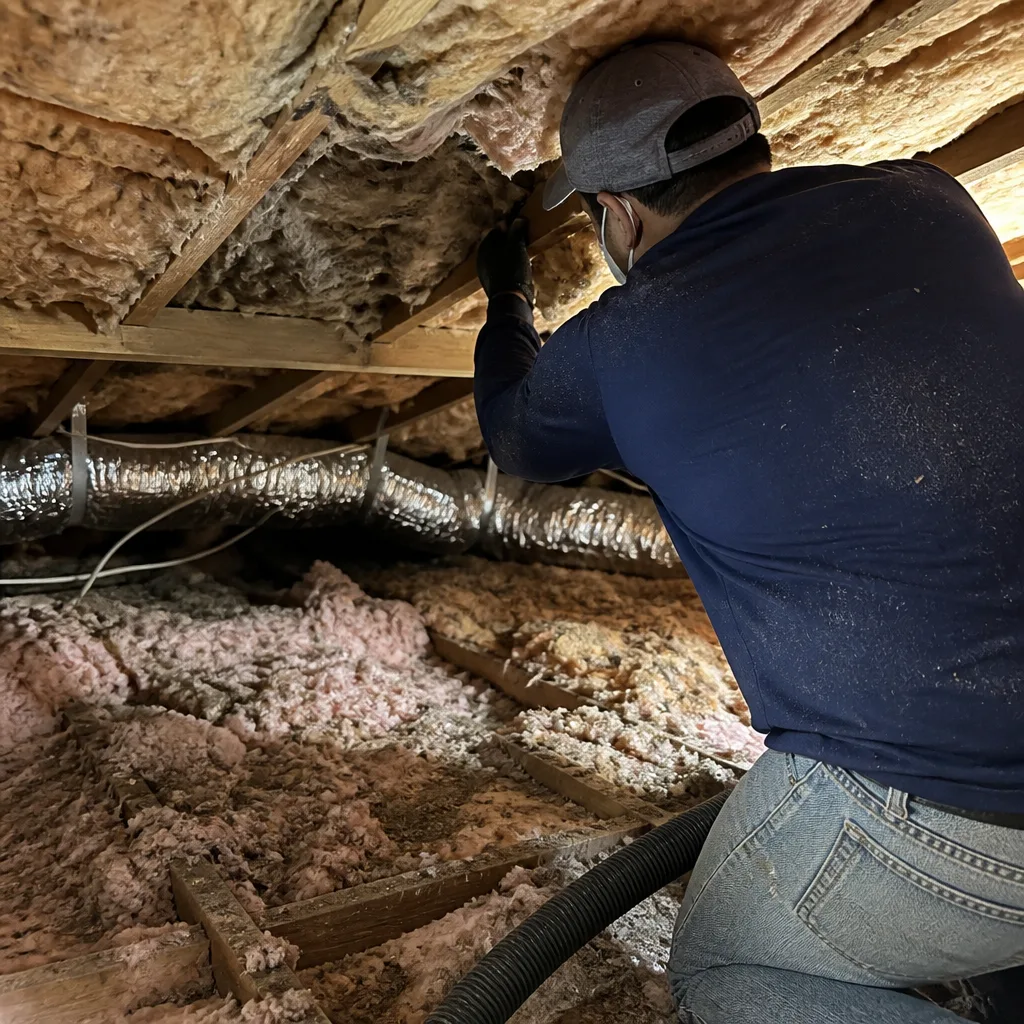 Before
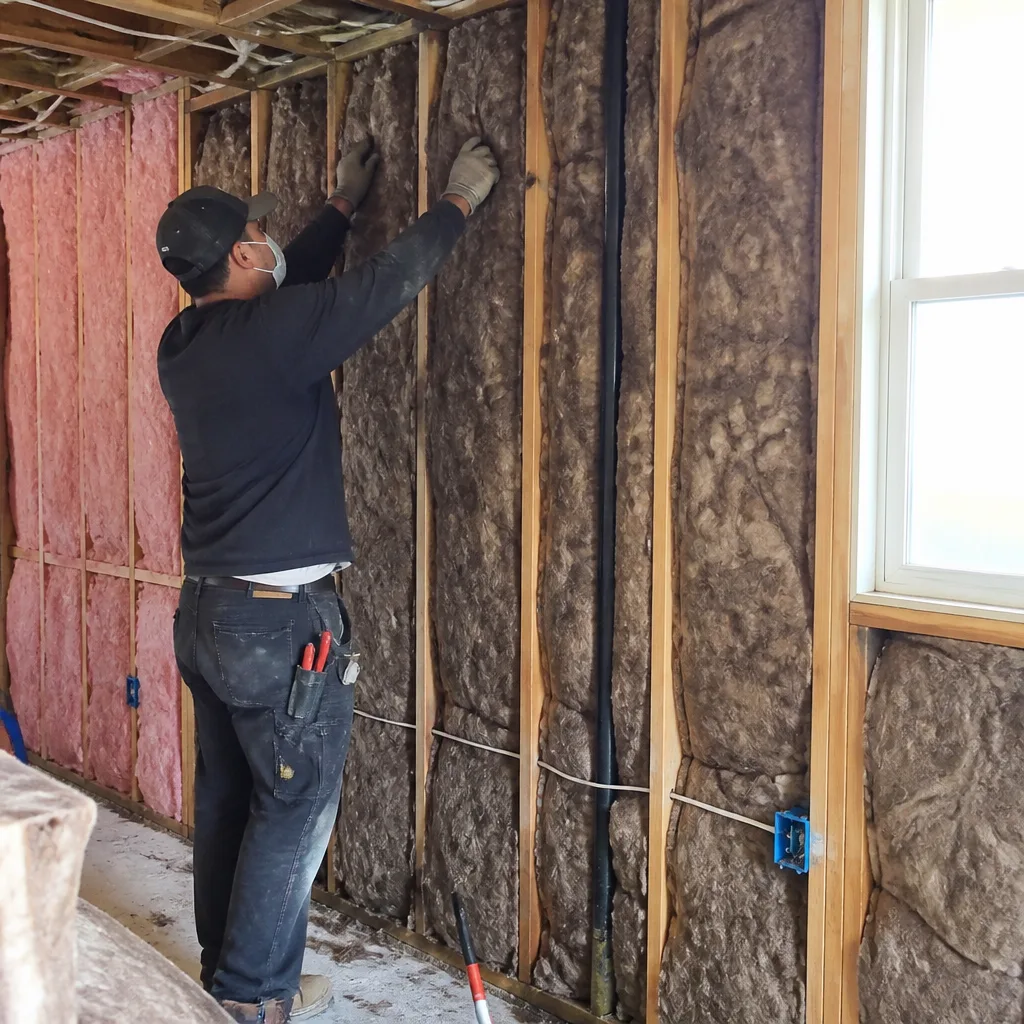 After
AfterThe Six Attic-Level Warning Signs
Every attic tells a story if you know what to read. In Milpitas, where summer attic temperatures regularly exceed 140°F and winter overnight lows dip into the 30s, insulation failures accelerate faster than in milder coastal zones. Here are the six visual and tactile markers we document on every attic inspection in Milpitas.
1. Compressed Batts Below R-19 Effective
Fiberglass batts lose R-value when compressed. A batt rated R-30 that has been walked on, stored against, or installed with inadequate clearance between joists may perform at R-19 or lower. The physical test: press your fingers into the batt. If it springs back to full loft, the fiber structure is intact. If it stays depressed or feels denser than a packed sleeping bag, the air pockets that provide thermal resistance have collapsed. In Milpitas homes built between 1965 and 1995 - common in the Midtown and Hillcrest neighborhoods - original batts are frequently compressed by decades of service access, HVAC maintenance, and homeowner storage.
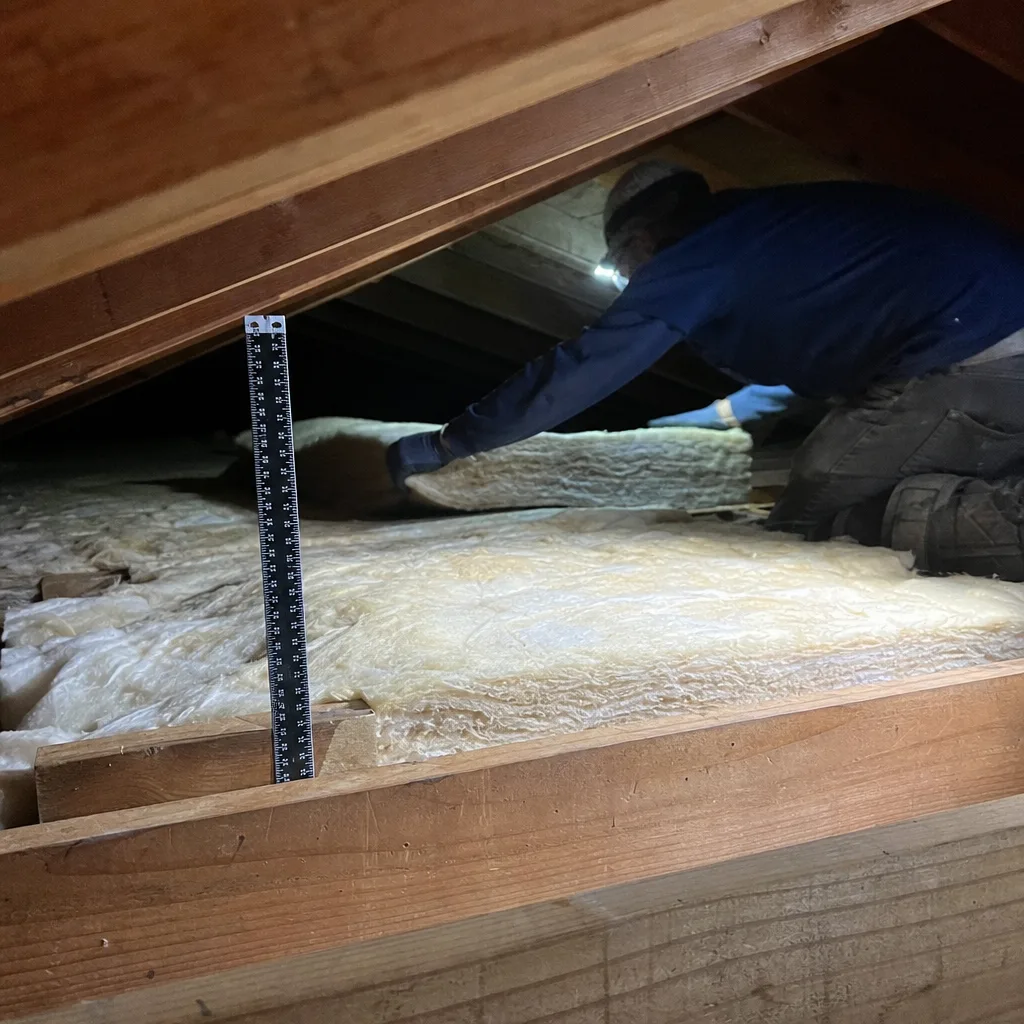
The threshold: any batt measuring less than 6 inches in settled thickness for fiberglass, or 5.5 inches for mineral wool products like Rockwool, is underperforming its labeled R-value. We measure with a ruler, not a guess, and we photograph the depth at multiple points for the Documented Photo Record.
2. Dark Streaking on Batts (Thermal Tracking)
Dark gray or brown streaking on the surface of fiberglass batts indicates air movement through the material, not just around it. This is thermal tracking - airborne dust and particulate depositing on fibers as conditioned air leaks from the living space below, passes through the batt, and escapes into the attic. The streaking pattern usually follows framing members, can lights, or top-plate junctions. In Milpitas, where seasonal temperature differentials are sharp and wind patterns channel through the Santa Clara Valley, thermal tracking develops distinctly along the north-facing eaves and ridge vents.
Dark streaking means your insulation is acting as a filter, not a barrier. The air is moving, and where air moves, energy follows. This sign almost always co-occurs with attic bypasses - the next item on this list.
3. Visible Attic Bypasses
An attic bypass is any pathway that allows conditioned air to move from the living space into the attic without passing through the thermal boundary. Common bypasses in Milpitas homes include: unsealed top plates (the horizontal framing member where interior walls meet the ceiling), unsealed penetrations for plumbing vents and electrical wiring, open chases around chimneys and flues, and dropped soffits over kitchen cabinets or shower surrounds. These bypasses are insulation killers. You can pile R-60 blown material over a bypass and still lose conditioned air at rates that make the insulation investment nearly worthless.
We identify bypasses with a smoke pencil during our home energy audits - a simple tool that makes invisible air movement visible. The Topside Attic Insulation Milpitas home assessment protocol includes a systematic top-plate inspection on every visit.
4. Displaced Blown Material
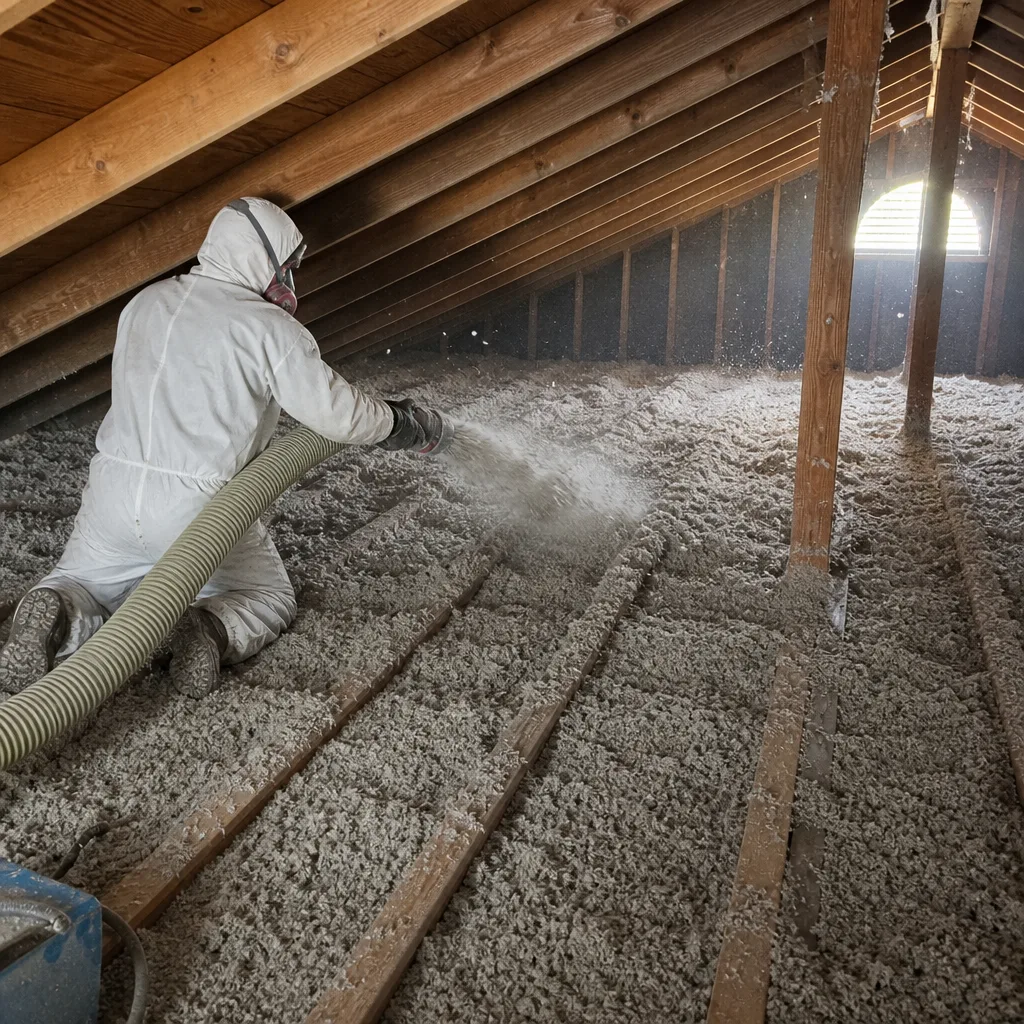
Blown-in cellulose and fiberglass settle over time, but displacement is different from settlement. Displacement shows directional movement - drifts against the north gable, bare spots near the attic hatch, or mounded areas where air currents have redistributed material. In Milpitas, the afternoon wind through the valley creates consistent pressure patterns that push loose-fill material toward the downwind eaves. We’ve measured 2-inch depths in some areas and 14-inch depths in others on the same attic floor, both resulting from the same installation.
The fix is never “add more.” The fix is air-seal first, then redistribute or replace with uniform coverage. Under The Haven Standard, we never blow new material over an unsealed attic floor - the displaced material is evidence of air movement that must be stopped at the source.
5. Duct Sweating
Flexible ductwork in unconditioned attacts develops condensation when the supply air temperature drops below the dew point of the surrounding attic air. In Milpitas, this happens predictably in July and August when attic humidity spikes and air conditioning runs continuously. The condensation soaks surrounding insulation, compresses it, and creates a cycle of thermal degradation and moisture damage. Duct sweating is visible as water staining on flex duct sleeves, mineral deposits on metal fittings, or mold spotting on nearby framing.
Sweating ducts indicate two simultaneous problems: inadequate attic insulation and duct leakage. The conditioned air escaping from duct seams lowers the local temperature enough to trigger condensation even when the main attic mass is above dew point. We seal ducts with mastic - a thick, brush-applied sealant - before addressing surrounding insulation.
6. Pest Tunneling Channels
Rodents, particularly roof rats and tree squirrels common in Milpitas hillside neighborhoods like Calaveras Hills and Summitpointe, tunnel through loose-fill insulation to create nesting cavities. The tunnels are visible as 3- to 4-inch diameter pathways through blown material, often following joist bays or leading to roof junctions. The displaced material is packed to the sides, creating thin spots directly above living spaces. Batts show chew marks, nesting debris, and concentrated urine staining.
Pest tunneling is never cosmetic. The compressed and contaminated material loses R-value, and the biological contamination creates indoor air quality concerns that standard insulation replacement alone won’t address. Crawl space encapsulation and vapor barrier work in Milpitas addresses the same class of problem below the floor plane.
The Room-Temperature Differential Test
You don’t need equipment to detect insulation continuity problems. You need a thermometer, a notepad, and a consistent time of day.
- Choose your test conditions. Run this test on a day when the outdoor temperature in Milpitas is above 85°F or below 50°F - the greater the temperature differential, the more pronounced the results. Close all windows and exterior doors two hours before testing. Set the thermostat to a single temperature and let the HVAC run for one full cycle.
- Measure at the same height in every room. Use a digital thermometer placed 36 inches above the floor, away from vents, windows, and exterior walls. Record the temperature in each room at the same moment.
- Calculate differentials. Subtract the lowest reading from the highest. In a well-insulated home with continuous thermal boundary and balanced ductwork, room-to-room variation should be 2°F or less.
- Map the pattern. Note which rooms run hot or cold. Rooms directly under thin or displaced attic insulation will track toward attic temperature. Rooms with duct leakage or inadequate wall insulation will show their own patterns.
A differential greater than 4°F indicates a meaningful discontinuity in the thermal boundary. In our experience across Milpitas homes, the most common cause is attic insulation variation - particularly in homes with original blown-in material installed before 2010, when installation densities and coverage verification were less standardized. A differential between 2°F and 4°F warrants monitoring; above 4°F, schedule an inspection per our Attic Insulation Maintenance Checklist for Milpitas Homeowners.
The temperature map also reveals duct problems. If a single room runs cold in heating season and the room is not at the end of a long duct run, suspect duct leakage or disconnection in the attic above. We’ve found fully disconnected flex ducts in Milpitas attics where the register blew conditioned air into the insulation for years without the homeowner realizing - the room was merely “slow to heat.”
Reading Your Utility Bill for Insulation Degradation
Utility bills are lagging indicators, but they’re the most honest ones. The key is isolating insulation degradation from rate changes, weather variation, and equipment aging. Here’s the analysis we recommend.
Step 1: Normalize for rates. Download 24 months of PG&E billing data. For each month, divide total therms or kilowatt-hours by the total cost to get an effective rate per unit. Apply that rate to your consumption to create a “constant-dollar” usage figure. This strips out rate increases, which in Milpitas have averaged 6-8% annually for electricity and 4-5% for gas.
Step 2: Normalize for weather. Compare each month’s usage to the same month in prior years, not to adjacent months. A hot August will always exceed a mild September; what matters is whether this August exceeded last August by more than weather alone explains. The National Weather Service maintains degree-day data for San Jose (the closest station to Milpitas); compare your usage trends against heating and cooling degree-day trends.
Step 3: Isolate the baseline. Your home has a baseline consumption for water heating, refrigeration, lighting, and plug loads that doesn’t vary with insulation. This baseline is visible in spring and fall months when HVAC use is minimal. If your spring/fall baselines are stable but your summer cooling and winter heating loads are growing disproportionately, the envelope - not the equipment - is the likely culprit.
Step 4: Calculate the insulation-specific trend. A 15% increase in weather-normalized heating or cooling consumption over 24 months, with stable equipment and no occupancy changes, strongly suggests envelope degradation. In Milpitas, where cooling loads dominate, we see this pattern most often in homes with attic insulation that has settled below effective R-30 or developed bypass pathways.
We provide this analysis as part of our home energy audits, with the 24-month trend chart included in the written report. The numbers don’t require interpretation - they show, in therms and kilowatt-hours, what the insulation is no longer doing.
The Hidden Risk After Rodent Treatment
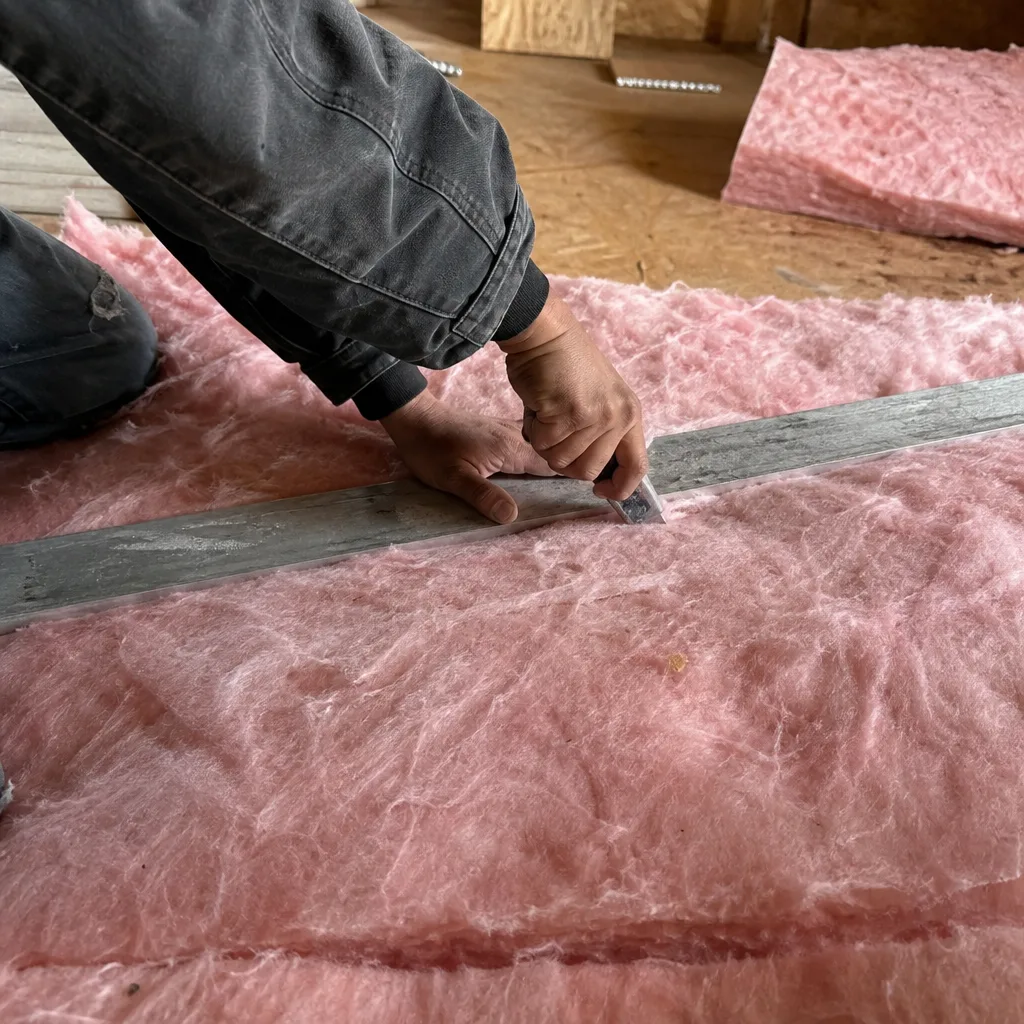
Rodent abatement solves the pest problem but often conceals an insulation problem. Here’s what happens: the pest control operator traps, excludes, and treats. The rodents are gone. The insulation looks the same from below. But in the attic, the material has been tunneled, compressed, contaminated with urine and feces, and in some cases soaked by rodent-carried moisture or roof leaks the pests exposed by gnawing.
We’ve inspected Milpitas attics where homeowners were told “the insulation is fine, just leave it” by well-meaning pest operators who don’t assess thermal performance. The material was indeed structurally present - it hadn’t disappeared - but effective R-value had dropped 40% from compression, and the biological contamination created particulate hazards every time HVAC air movement disturbed the fibers.
The threshold for action after rodent activity: if tunneling channels exceed 10% of attic floor area, or if contamination is visible on more than 5% of surface area, the material should be documented, not assumed clean. We photograph every square foot for the Documented Photo Record, test depth and density at representative points, and provide a written assessment of whether removal and replacement is warranted. Under Haven Standard Clause 1, you get that assessment as a written scope with a flat price before any work starts - not a verbal recommendation after the crew is already in your attic.
Materials we install for replacement include treated cellulose from GreenFiber, fiberglass batts from Owens Corning and Johns Manville, and mineral wool from Rockwool - selected for the application, not pushed from inventory. Spray foam insulation in Milpitas provides an alternative for homeowners who want both air sealing and insulation in a single application, particularly in complex attics with numerous bypasses.
Monitor, Inspect, or Act: The Decision Thresholds
Not every warning sign demands immediate replacement. Here are the specific numbers that define each action level.
| Warning Sign | Monitor | Schedule Inspection | Do Not Delay |
|---|---|---|---|
| Batt depth (fiberglass) | 8+ inches, full loft | 6-8 inches, partial compression | <6 inches or R-19 effective |
| Blown-in depth variation | <2 inch difference across 10 ft | 2-4 inch difference, no bare spots | >4 inch difference or bare spots >1 sq ft |
| Room temperature differential | ≤2°F peak variation | 2-4°F variation | >4°F variation |
| Utility bill increase (weather-normalized) | <10% over 24 months | 10-15% over 24 months | >15% over 24 months |
| Thermal tracking (dark streaking) | None visible | Localized to bypass areas | Widespread across >25% of surface |
| Duct sweating | None observed | Occasional, limited to peak days | Recurrent, with visible moisture damage |
| Pest tunneling/contamination | None | <10% floor area, no contamination | >10% floor area or any contamination |
| Estimated ACH50 (blower-door equivalent) | <7 air changes/hour | 7-10 air changes/hour | >10 air changes/hour |
The ACH50 figure - air changes per hour at 50 Pascals of pressure - is the blower-door test metric that shows, in one number, how much air your building envelope is losing. We measure this on every applicable job and provide before-and-after readings so you can verify the air-sealing result. A Milpitas home built to 1980s standards typically tests at 8-12 ACH50 before work; after comprehensive air sealing and insulation upgrade, 4-6 ACH50 is achievable and cost-effective.
How Milpitas Climate Accelerates Specific Failures
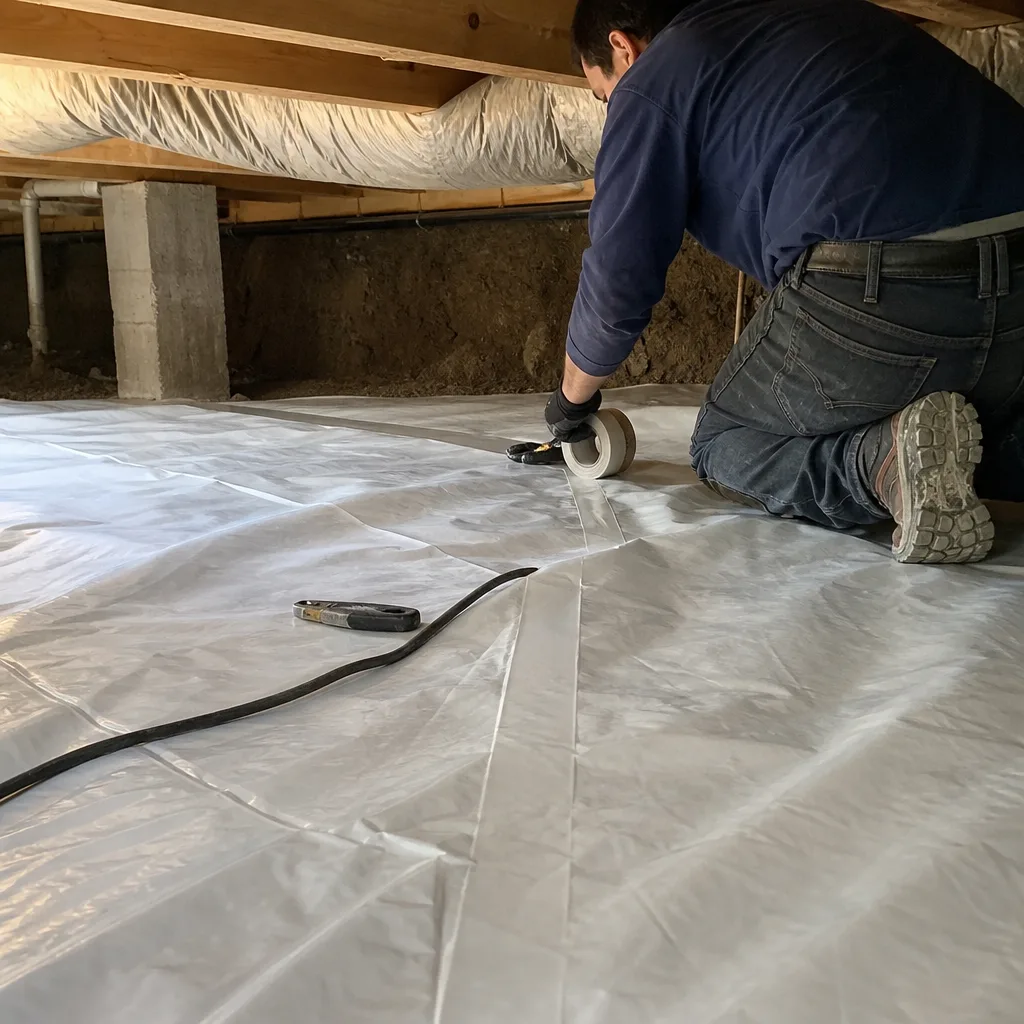
Milpitas sits in the Santa Clara Valley with a climate that amplifies certain insulation failure modes. Understanding these local factors helps interpret warning signs correctly.
Diurnal temperature swing. Summer days in Milpitas routinely hit 85-95°F while nights drop to 55-60°F. This 30°F daily swing creates repeated expansion and contraction in attic framing and insulation materials, accelerating compression in loose-fill products and loosening batt friction-fits against top plates.
Valley wind patterns. Afternoon winds channel northwesterly through the valley, creating consistent pressure differentials across attic vents. Homes with ridge-and-soffit ventilation experience more rapid redistribution of blown material than homes with gable vents alone. The Summitpointe and Calaveras Hills areas, elevated above the valley floor, see wind speeds 15-20% higher - and correspondingly more displacement.
Marine layer intrusion. Morning fog from San Francisco Bay reaches Milpitas regularly May through August, introducing moisture into attic spaces through vent pathways. This moisture doesn’t typically cause visible mold on framing, but it elevates attic humidity enough to trigger duct sweating on marginal systems and to accelerate degradation of Kraft-paper batt facings.
Solar gain on dark roofs. Many Milpitas neighborhoods, particularly the older tracts near Main Street and Jacklin Road, have dark composite shingle roofs with limited reflectance. Attic temperatures under these roofs reach 150°F in July, stressing insulation binders and accelerating settling in fiberglass products installed before 2005, when temperature-stable binders became standard.
These factors don’t change the warning signs - they change how fast the signs develop and which signs appear first. A Milpitas homeowner should inspect attic insulation every 3-4 years, not the 5-7 year interval adequate in milder climates.
Common Mistakes to Avoid
- Adding insulation over unsealed bypasses. This is the most common error we correct in Milpitas. The new material performs at a fraction of rated R-value because conditioned air continues to flow through the bypass, and the added depth makes future air-sealing access more difficult and expensive.
- Treating pest contamination with surface disinfectant only. Surface treatment doesn’t restore compressed R-value or remove particulate reservoirs. The insulation must be assessed for thermal performance, not just biological hazard, and replaced when both are compromised.
- Using attic temperature as a proxy for insulation performance. A hot attic is normal in Milpitas summer. What matters is the temperature difference between attic and living space, and whether that difference is maintained by the thermal boundary. A 140°F attic with good insulation and air sealing is fine; a 110°F attic with massive bypasses is not.
- Ignoring the hatch. The attic hatch is often the largest single uninsulated area in the ceiling plane. A 2’×3′ hatch with no weatherstripping or insulation can leak as much conditioned air as a 6-inch diameter hole in the wall. We build insulated hatch covers with compression seals as standard practice.
- Comparing bills month-to-month without weather normalization. A July bill will always exceed a May bill. The relevant comparison is July 2024 versus July 2023, adjusted for degree-days and rate changes. Homeowners who skip this step often misattribute insulation problems to “rates went up again.”
- Assuming uniform insulation age means uniform condition. Even insulation installed at the same time degrades unevenly based on traffic patterns, duct proximity, and roof orientation. The south-facing slope of a Milpitas attic typically shows more compression and thermal tracking than the north slope due to greater temperature cycling.
- Waiting for visible interior signs. By the time ceiling discoloration, wall thermal tracking, or noticeable drafts appear, insulation failure has typically progressed for 18-24 months. The attic-level indicators in this guide appear 12-18 months earlier.
When to Call a Professional
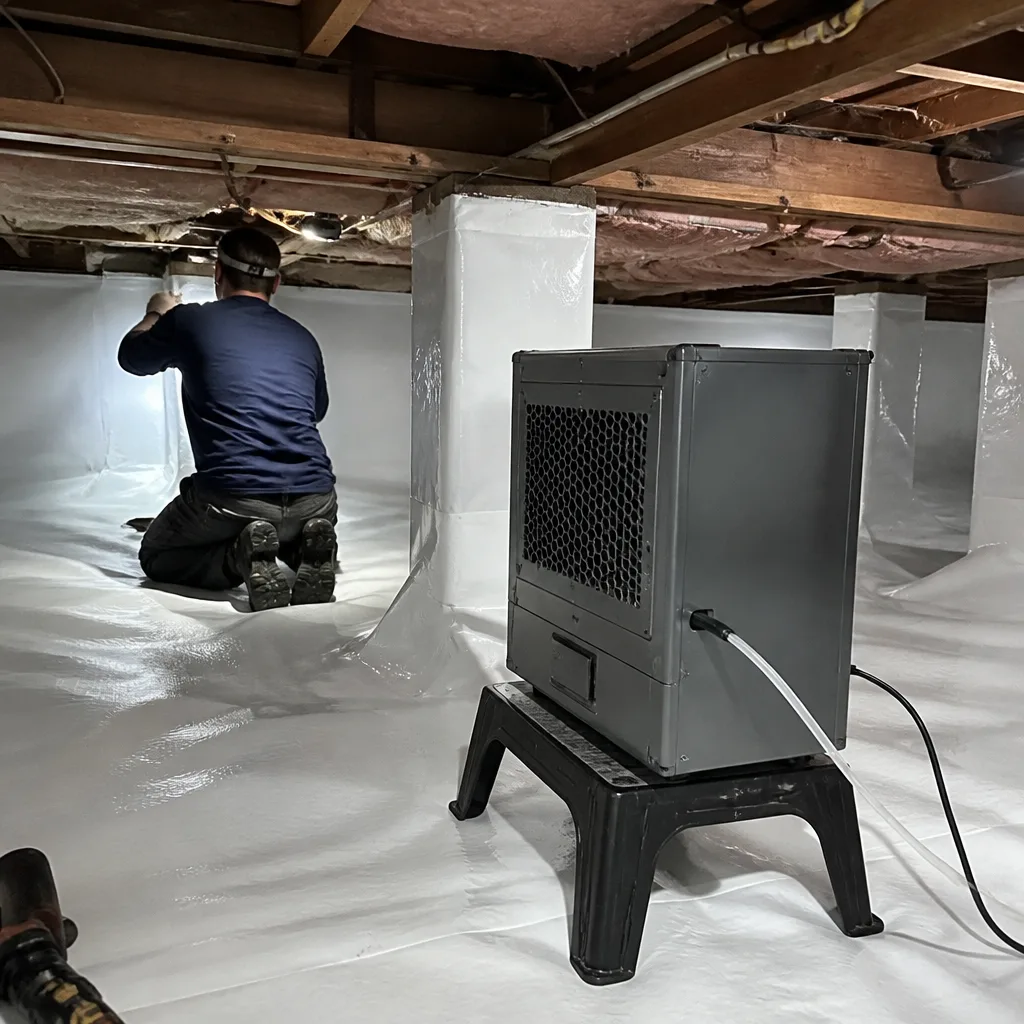
Schedule an inspection when any “Schedule Inspection” threshold from the table above is reached, or when multiple “Monitor” thresholds cluster in the same attic. Do not delay when any “Do Not Delay” threshold is crossed - the cost of waiting compounds monthly in energy waste and can accelerate into moisture damage or structural issues.
Topside Attic Insulation Milpitas offers free estimates in Milpitas. Every assessment includes a written scope, flat price, and Documented Photo Record before any work starts - Haven Standard Clause 1, no exceptions. For more guides & resources, or for homes with complex histories - previous pest treatment, multiple insulation layers, or HVAC modifications - we also offer a Free Second Opinion on any written estimate from another contractor. We’ll read the competing quote with you and identify what’s specified, what’s omitted, and what questions to ask.
Call (650) 770-8707 to schedule. A live person answers 24/7. You’ll get a named technician, a text when they’re on the way, and before-and-after blower-door numbers on every applicable job so you can see the performance change you paid for.
Frequently Asked Questions
Most complete attic insulation replacements in Milpitas run between $3,200 and $7,800 for a single-story home between 1,200 and 2,400 square feet, depending on existing material removal needs, air sealing complexity, and insulation type selected. Spray foam applications from Icynene or Demilec typically fall at the higher end of this range due to material cost and application labor. We provide a written price before any work starts - no exceptions - and offer a Free Second Opinion on any competing written estimate. Call (650) 770-8707 for an exact quote; estimates are free.
You can, but you shouldn’t - not until the attic floor is air-sealed. Adding blown fiberglass or cellulose over unsealed top plates, can lights, and penetrations is like adding a thicker blanket over a window you left open. The new material will filter air, not stop it, and you’ll pay for R-value you don’t actually get. Under The Haven Standard, we seal first, then insulate - in that order. The blower-door test proves the seal before we add material.
Look for tunneling channels 3-4 inches in diameter through loose-fill material, compressed pathways along joist bays, dark staining from urine, and nesting debris (shredded paper, plant material, or plastic fragments). Surface appearance from below the ceiling is not a reliable indicator - the damage is in the attic, not visible from the living space. If you’ve had any rodent activity in the past three years, schedule an attic inspection to assess thermal performance and contamination. We document everything with photographs and provide a written assessment.
A consistent single-room temperature differential greater than 4°F from the rest of the house indicates a localized failure in the thermal boundary, duct imbalance, or both. In Milpitas, the most common cause is thin or displaced attic insulation above that room - often from original installation variation, subsequent HVAC service traffic, or pest activity. The room-temperature differential test described in this guide will confirm the pattern. An inspection identifies whether the fix is insulation redistribution, air sealing, duct repair, or a combination.
Fiberglass batts and loose-fill fiberglass maintain labeled R-value for 20-30 years if undisturbed, but Milpitas’s temperature swings, wind patterns, and attic traffic typically reduce effective performance after 10-15 years. Cellulose settles 10-15% in the first year and continues gradual compression; in Milpitas attics with significant temperature cycling, we measure 20-25% settlement after 10 years. The critical factor is not age but condition - compressed, displaced, or bypass-compromised insulation of any age underperforms. We assess based on measured depth and density, not installation date.
A blower-door test is a pressurization measurement that shows, in one number, how much air your building envelope is losing. A powerful fan mounts in an exterior door, depressurizes the house to 50 Pascals, and measures the airflow required to maintain that pressure - reported as CFM50 (cubic feet per minute at 50 Pascals) or ACH50 (air changes per hour). We perform this test before and after air sealing on every applicable job so homeowners can verify the result. For a Milpitas home with any of the warning signs in this guide, a blower-door test provides the definitive baseline for prioritizing improvements. We include it in our comprehensive home energy audits.
The Bottom Line
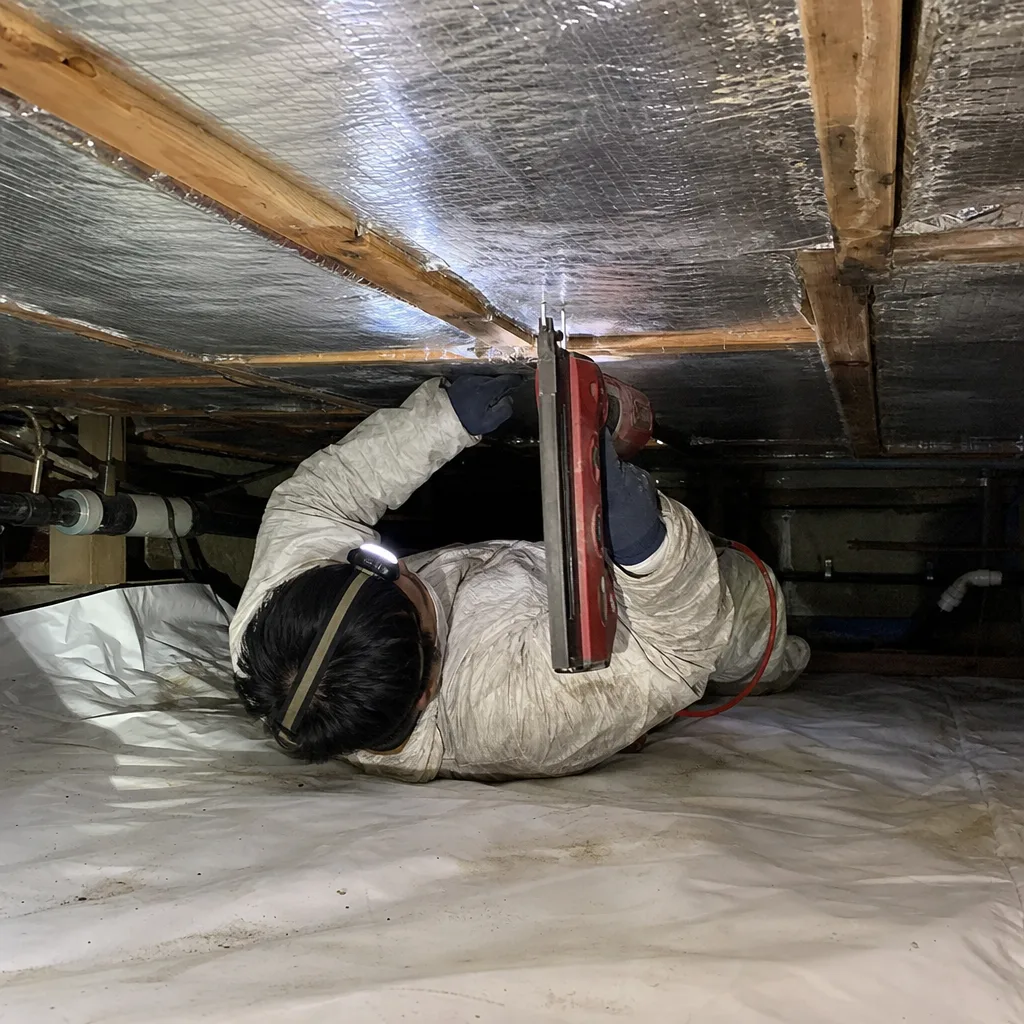
Insulation failure in Milpitas homes is a silent process that precedes visible discomfort by 12 to 18 months and precedes major cost impact by even longer. The upstream indicators - compressed batts, thermal tracking, attic bypasses, displaced blown material, duct sweating, and pest tunneling - are all readable in the attic before they register on the thermostat or the utility bill. The room-temperature differential test and 24-month utility trend analysis give homeowners tools to catch degradation early, without equipment or professional help. When thresholds are crossed, the inspection should include air sealing assessment, not just insulation depth measurement, because air movement is what undermines thermal performance regardless of R-value. Documented evidence - photographs, blower-door numbers, written scope - is what separates a genuine assessment from a sales pitch. That’s the Haven Standard, and it’s how we’ve approached every one of the 9,000+ homes we’ve sealed and insulated since 2016.
Written by Wes Okafor, Owner at Topside Attic Insulation Milpitas, serving Milpitas since 2016.